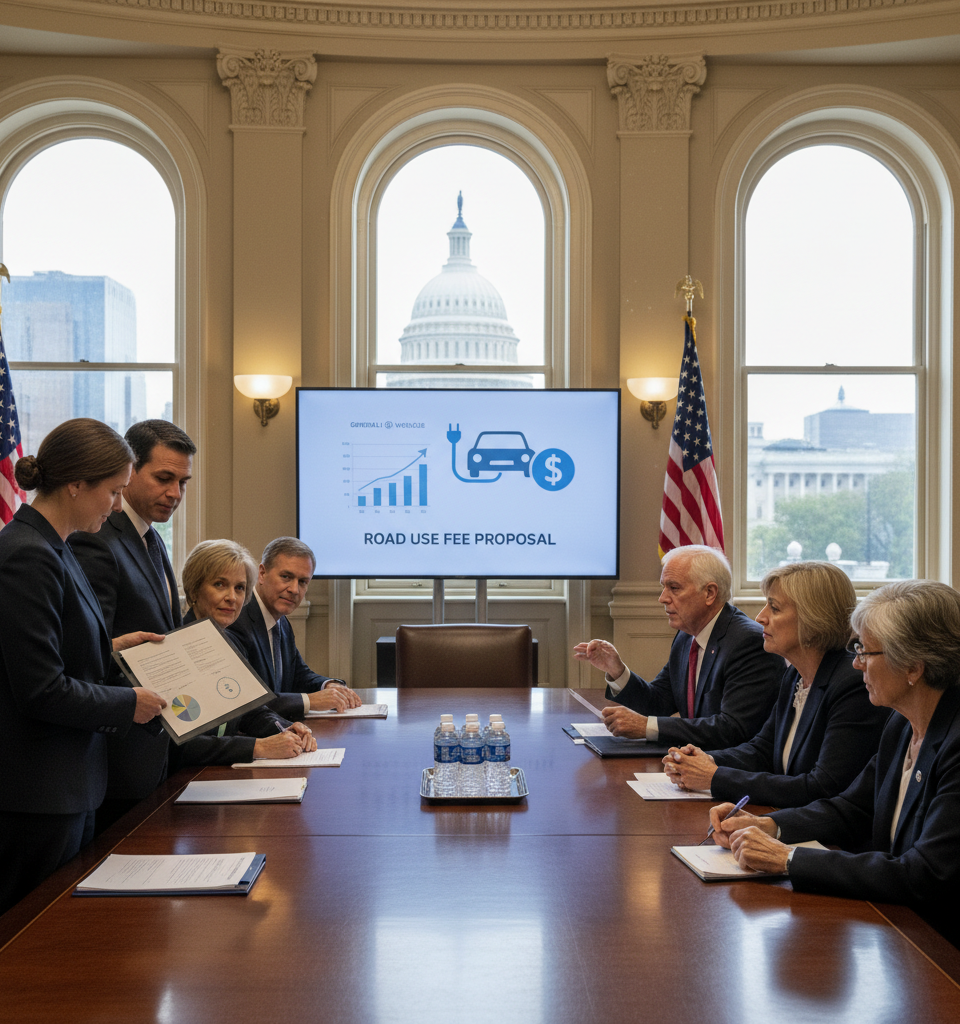
WASHINGTON D.C. – A formidable alliance representing the core of the American automotive industry has unveiled a provocative new strategy to overhaul national transportation funding, advocating for a direct vehicle miles traveled (VMT) fee to replace the aging federal gasoline tax. This significant proposal, detailed in a recent policy white paper and presented to key congressional committees this month, comes as the nation grapples with crumbling infrastructure and the existential threat of declining fuel tax revenues driven by the burgeoning electric vehicle (EV) market.
The Urgent Need for a New Funding Model
The existing federal Highway Trust Fund, the primary mechanism for financing road and bridge projects, has for decades relied precariously on per-gallon taxes on gasoline and diesel. However, the rise of fuel-efficient internal combustion engines and, more dramatically, the rapid adoption of electric vehicles, has eroded this revenue stream. Projections from the Congressional Budget Office indicate that without intervention, the Trust Fund faces chronic shortfalls, potentially requiring billions in general fund transfers to remain solvent. The auto industry coalition, including giants like General Motors, Ford, and Stellantis, alongside major parts suppliers and dealership associations, argues that a move to a VMT system is not merely an option but an economic imperative to ensure equitable contributions from all road users, regardless of vehicle powertrain.
Proposal Details and Industry Rationale
The proposed VMT system envisions a per-mile charge levied on all vehicles, with rates potentially varying by vehicle type, weight, or even congestion pricing in urban areas. While specific figures are still under negotiation, preliminary discussions suggest a potential range of 1 to 2 cents per mile nationwide, which analysts estimate could generate upwards of $40-60 billion annually, effectively offsetting and potentially surpassing current fuel tax receipts. The industry coalition emphasizes that such a system would provide a more predictable and sustainable funding source, crucial for long-term infrastructure planning and investment. They also highlight the fairness aspect, ensuring that owners of zero-emission vehicles, who currently pay no federal fuel taxes, contribute their share to road maintenance.
Economic and Market Implications
Implementing a VMT fee would send ripples throughout the automotive and transportation sectors. For consumers, it signifies a shift from point-of-sale taxation to ongoing usage-based fees, possibly impacting purchasing decisions and driving habits. Automakers, while advocating for the change, recognize the need for seamless implementation, potentially requiring new in-vehicle telematics or external devices for mileage tracking. The proposal could also create new opportunities for technology providers specializing in mileage reporting and payment systems. Furthermore, it levels the playing field between traditional internal combustion vehicles and EVs, ensuring all vehicles contribute to the infrastructure they utilize, potentially reducing the financial disincentives some states have adopted for EV owners through registration surcharges.
Expert Perspectives and Challenges Ahead
Transportation policy experts largely acknowledge the logical necessity of transitioning from a fuel tax to a VMT system. Dr. Evelyn Clarke, a Senior Fellow at the Institute for Transportation Policy, notes, "The gas tax is a relic of a bygone era. A VMT scheme is the most equitable and sustainable long-term solution, aligning user fees with actual road usage." However, she cautions about significant implementation hurdles, including privacy concerns related to mileage tracking, potential disproportionate impacts on rural drivers, and the sheer administrative complexity of collecting and managing billions of individual mileage records. Political consensus remains a formidable obstacle, with previous pilot programs encountering public resistance and partisan division.
The Path Forward: Legislation and Public Acceptance
The auto industry's proposal marks the beginning of what promises to be a protracted legislative battle. While the concept of a VMT has bipartisan support among some policy wonks, translating that into actionable legislation will require overcoming significant public perception challenges and addressing privacy concerns. The industry expects robust congressional debate, with potential legislation introduced in the upcoming congressional session. The success of this initiative hinges on effective public education campaigns, robust data privacy frameworks, and careful calibration of fee structures to ensure fairness and economic viability for all Americans. The future of U.S. infrastructure funding hangs in the balance, with the automotive sector pushing for a bold, albeit complex, new direction.