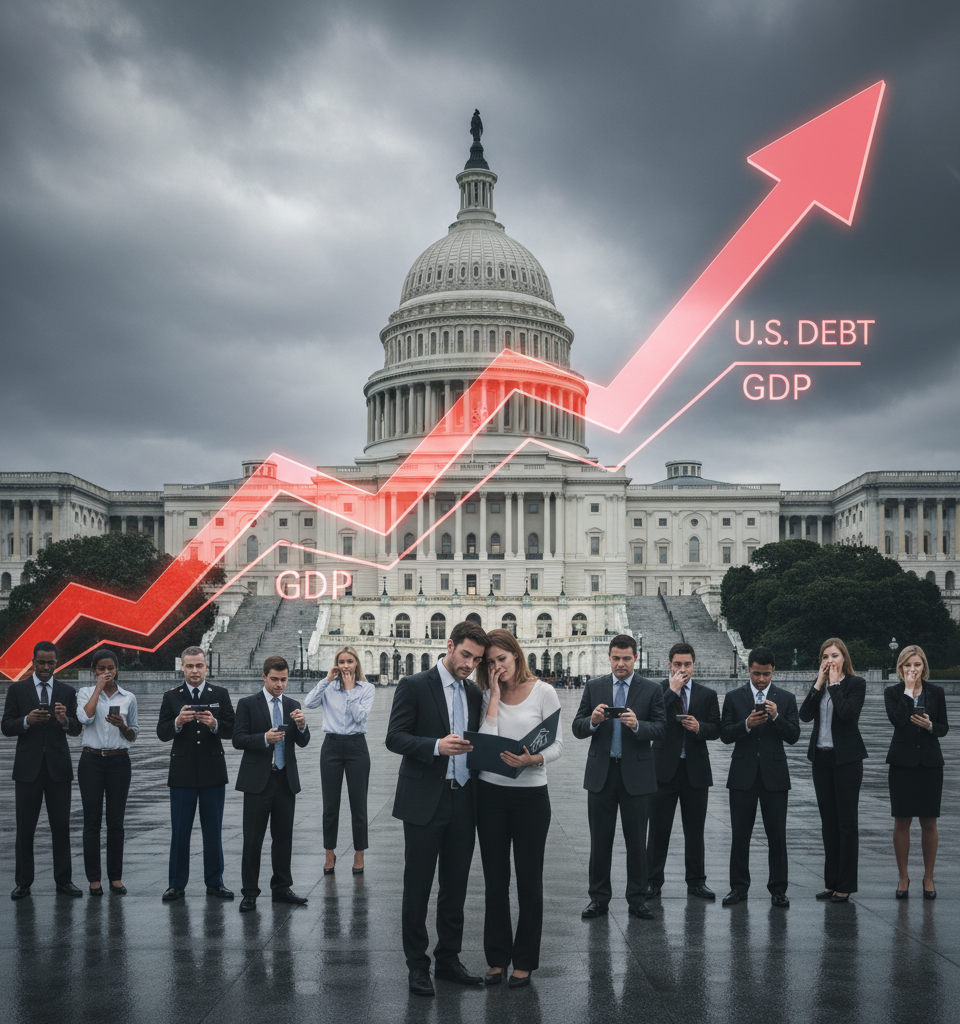
The United States national debt has reached a critical inflection point, exceeding its annual Gross Domestic Product (GDP) — a statistical parallel to the nation's financial state at the close of World War II. The latest Treasury Department data reveals the total public debt outstanding has soared past $34 trillion, eclipsing a nominal GDP recently estimated around $27 trillion. This significant fiscal imbalance underscores deepening concerns among economists and policymakers regarding the nation's long-term economic stability and its ability to service growing obligations.
Historical Context and Economic Implications
The last time the U.S. debt-to-GDP ratio reached such heights was in 1946, a period marked by massive government spending to finance the war effort. While that post-war era saw rapid economic growth and a gradual reduction of the debt burden, today's landscape presents a different set of challenges. Factors contributing to the current surge include persistent budget deficits stemming from increased social spending, tax cuts, and substantial stimulus packages enacted during the COVID-19 pandemic. The Congressional Budget Office (CBO) projects that this trend is set to continue, with the debt-to-GDP ratio potentially reaching 116% by 2034 and a staggering 172% by 2054 under current policy settings.
Key Figures and Debt Drivers
The national debt, which stood at approximately $22.7 trillion at the beginning of 2019, has ballooned by over $11 trillion in just five years. This acceleration is driven not only by primary deficits but also by escalating interest payments on the debt. In fiscal year 2023, the U.S. government spent an estimated $659 billion on net interest payments, a figure that is projected to reach over $1 trillion annually within the next few years. This rapidly increasing cost of debt service diverts funds from other critical public investments and places additional strain on the federal budget. The CBO notably stated that “large and sustained deficits would pose several risks to the nation, including the risk of increasing the likelihood of a fiscal crisis.”
Impact on the Mortgage Market
The nexus between a burgeoning national debt and mortgage rates is a significant area of concern for economists. A higher national debt typically requires the U.S. Treasury to issue more bonds to finance its borrowing needs. This increased supply of government debt can put upward pressure on overall interest rates, including the yields on long-term Treasury bonds, which serve as a benchmark for 30-year fixed-rate mortgages. As government borrowing competes with private sector borrowing, the cost of capital generally rises. Analysts warn that if the market perceives a lack of fiscal discipline or a higher risk of inflation, long-term bond yields could spike, leading to a substantial — and potentially spiraling — increase in mortgage rates from their current levels. This would further dampen an already struggling housing market, reducing affordability and slowing economic activity.
Expert Perspectives
Economists and financial strategists are voicing increasing alarm. Janet Yellen, the U.S. Treasury Secretary, has repeatedly acknowledged the unsustainable fiscal path and the need for action. Meanwhile, independent analysts like David Kelly, Chief Global Strategist at J.P. Morgan Asset Management, have warned that persistent deficits could lead to a “crowding out” effect, where government borrowing absorbs a disproportionate share of available capital, leaving less for private investment and driving up borrowing costs for businesses and consumers. Others point to the potential for a loss of investor confidence in U.S. fiscal management, which could trigger a flight from U.S. assets and further destabilize financial markets.
The Looming Threat of Fiscal Crisis
The implications of a spiraling debt-to-GDP ratio extend beyond just mortgage rates. Unchecked debt growth can lead to increased inflation, as the Federal Reserve might be pressured to monetize debt. It also diminishes the government's flexibility to respond to future economic crises or geopolitical challenges. Furthermore, a significant portion of U.S. debt is held by foreign entities, making the nation vulnerable to shifts in global investor sentiment. The recent downgrade of the U.S. credit rating by Fitch Ratings in August, citing “the expected fiscal deterioration over the next three years” and a “high and growing general government debt burden,” underscores these concerns.
What's Next: Policy Debates and Potential Solutions
Addressing this fiscal challenge will require difficult policy choices. Potential solutions include a combination of spending cuts, revenue enhancements through tax reforms, and sustained economic growth. However, achieving political consensus on these measures remains a significant hurdle in Washington. Upcoming budget negotiations and the ongoing debate over the federal debt ceiling will be critical junctures. The stakes are high: failure to rein in the national debt could lead to sustained higher interest rates, exacerbate inflation, stifle economic growth, and potentially trigger a wider financial crisis, profoundly impacting the daily lives of American citizens for generations to come. The trajectory of this debt crisis is poised to dominate economic discourse and policy decisions for the foreseeable future.