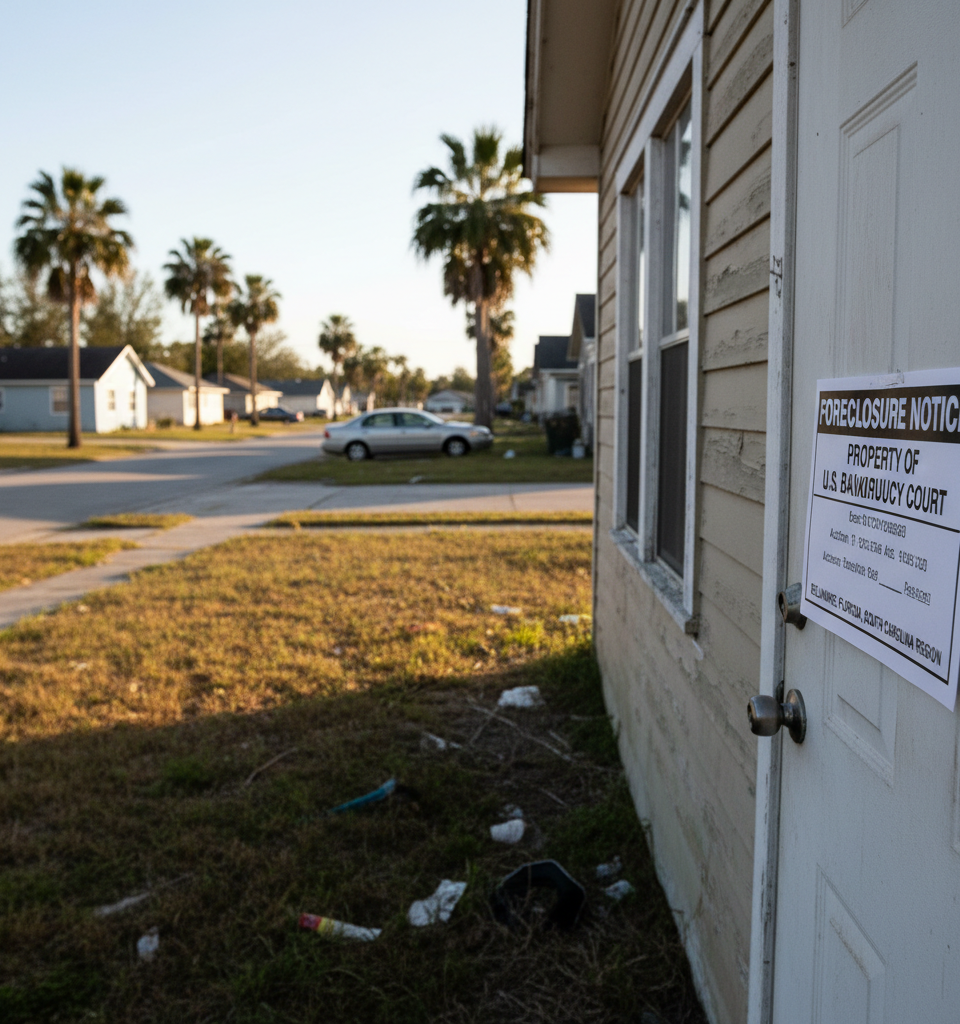
Foreclosure filings across the United States experienced a notable surge in April, climbing 18% from the same period last year. This uptick, reported recently, indicates a potential weakening in housing market stability, particularly in specific states. Delaware, South Carolina, and Florida have emerged as the leading hotspots, registering the highest foreclosure rates nationwide, raising concerns among homeowners, lenders, and policymakers alike.
Understanding the Trend
This recent increase, encompassing default notices, scheduled auctions, and bank repossessions, represents a stark departure from the suppressed foreclosure activity observed during the pandemic, heavily influenced by government moratoriums and forbearance programs. While the overall numbers remain below pre-pandemic levels, the significant year-over-year leap suggests that some homeowners are struggling to keep up with mortgage payments as economic headwinds persist and pandemic-era protections fully recede. The rising interest rates and persistent inflation are exacerbating financial pressures on vulnerable households, pushing some toward default.
Key Data and Regional Impact
According to ATTOM, a leading curator of real estate data, a total of 34,719 U.S. properties had foreclosure filings in April. This figure, while 7% lower than the previous month, marks the substantial 18% increase year over year. A closer look at the data reveals that Delaware leads the nation with one in every 2,058 housing units having a foreclosure filing. South Carolina follows closely with one in every 2,130 housing units, and Florida registers one in every 2,168 housing units. Other states experiencing elevated foreclosure rates include Maryland (one in 2,525) and New Jersey (one in 2,538). This geographical concentration points to localized economic factors, differing state foreclosure processes, and perhaps varying levels of homeowner equity and financial health in these areas.
Market Implications
The rising foreclosure rates, though still historically low compared to the 2008 financial crisis, could have several implications for the broader housing market. An increase in foreclosed properties coming onto the market has the potential to add inventory, which could temper home price growth or even lead to localized price corrections in affected areas. For investors, it may present opportunities, while for existing homeowners, it could signal a slowdown in equity appreciation. Lenders are also closely monitoring the situation, re-evaluating risk assessments and lending criteria to mitigate potential losses.
Expert Analysis
Industry experts suggest that the current rise is a combination of factors. "We are seeing the unwinding of various pandemic-era safety nets coupled with the impact of higher interest rates and inflationary pressures," commented Mark Johnson, a senior economist specializing in real estate. "While the overall numbers aren't a cause for immediate panic on a national level, the concentration in certain states needs careful monitoring. It suggests that economic vulnerabilities are not evenly distributed, and some local markets are more susceptible to financial distress." He added that the speed of the foreclosure process, which varies by state, can also influence these numbers, making direct state-to-state comparisons complex.
Looking Ahead
The trend of increasing foreclosure filings is expected to continue for the foreseeable future, albeit at a measured pace, as the housing market normalizes further. Analysts will be closely watching new economic data, particularly employment figures and interest rate decisions by the Federal Reserve, which could either alleviate or exacerbate the financial strains on homeowners. States with high foreclosure rates may also see increased initiatives from housing counseling agencies and state governments to assist struggling homeowners. The market will likely remain in a state of cautious observation, balancing the ongoing demand for housing with the rising tide of financial distress among a segment of homeowners.
The trajectory of these foreclosure rates in the coming months will be a critical indicator of the overall health and resilience of the U.S. housing market and the broader economy. Stakeholders from policymakers to individual homeowners will be attuned to these developments, preparing for potential impacts on property values, lending practices, and community stability.