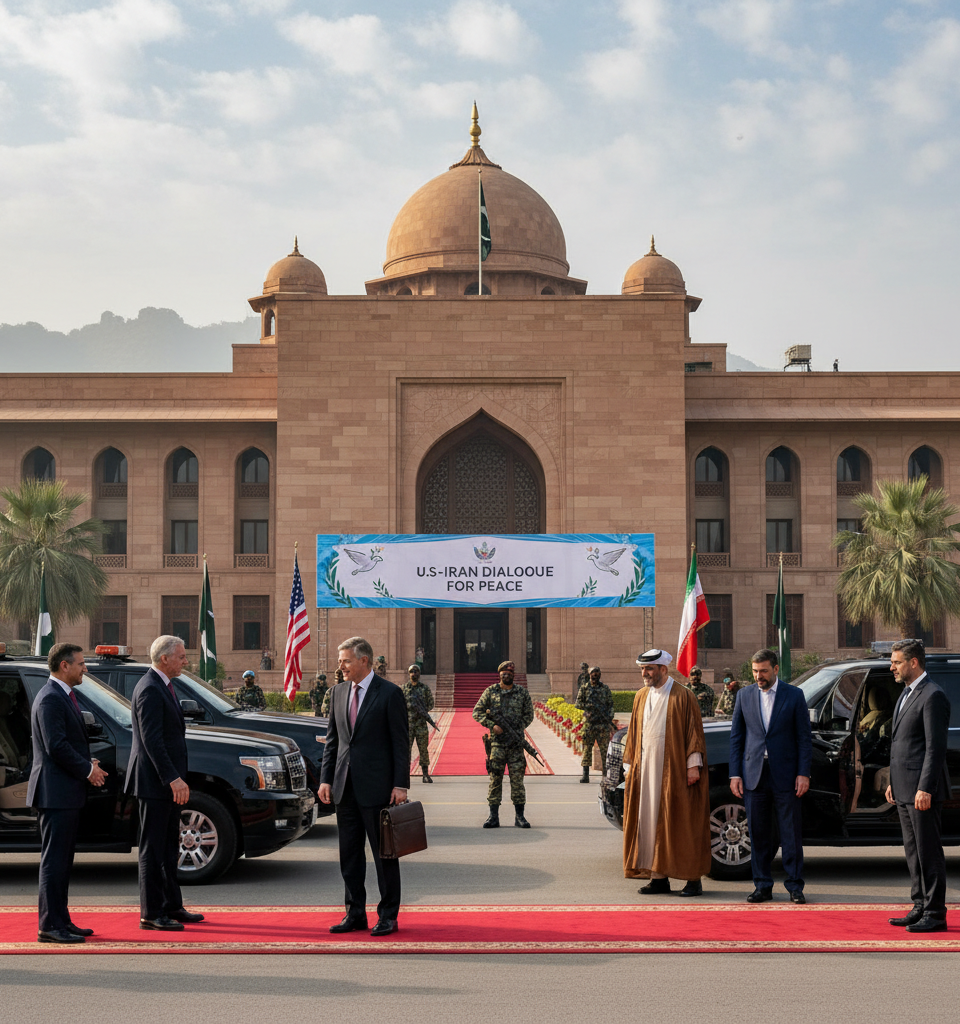
ISLAMABAD, Pakistan – Diplomatic circles are abuzz as high-level delegations from the United States and Iran have arrived in Islamabad, Pakistan, setting the stage for anticipated bilateral talks. The Pakistani government has officially confirmed the presence of Iran's Parliament Speaker and Foreign Minister, who are reportedly prepared to engage with the American delegation led by Vice President JD Vance.
These impending discussions mark a significant development in the complex and often fraught relationship between Washington and Tehran. The choice of Islamabad as a neutral ground underscores Pakistan's role as a regional mediator and its efforts to facilitate dialogue between two nations whose interactions have profoundly shaped Middle Eastern politics for decades. The exact agenda for the talks remains undisclosed, but observers widely expect a range of pressing issues to be on the table, from regional security concerns to potential pathways for de-escalation.
Geopolitical Undercurrents and Strategic Significance
The talks arrive at a critical juncture, with both the U.S. and Iran facing evolving domestic and international pressures. For the United States, the engagement represents an opportunity to explore diplomatic solutions to long-standing impasses, potentially aiming to stabilize a volatile region and address concerns related to nuclear proliferation and maritime security. Vice President Vance's direct involvement suggests a high-level commitment from the Biden administration to these prospective negotiations.
On the Iranian side, the presence of both the Parliament Speaker and the Foreign Minister signals a unified and serious approach to the discussions. This combined diplomatic and legislative representation could indicate a broader national consensus on the necessity of these talks. Iran's leadership will likely seek to articulate its long-held grievances regarding sanctions and perceived external interference, while also exploring avenues for economic relief and greater regional influence. The specifics of the delegations' arrival times were closely guarded, but Pakistani officials confirmed their presence earlier today.
Regional Implications and International Scrutiny
The mere fact that these talks are scheduled to occur has significant implications for regional stability. Neighboring countries, along with major global powers, will be closely monitoring the developments in Islamabad. Any progress, however incremental, could have a ripple effect on conflicts and alliances across the Middle East, potentially influencing dynamics in Yemen, Syria, and Iraq, among other flashpoints. Conversely, a lack of progress or a breakdown in communication could exacerbate existing tensions.
The Pakistani capital, known for its strategic location, provides a relatively neutral environment conducive to sensitive negotiations. Pakistan's Foreign Ministry has been instrumental in arranging the logistical and security aspects for both delegations, emphasizing its commitment to facilitating peaceful discourse. While no official details have been released regarding the duration or specific venues within Islamabad, preparations are understood to be extensive.
Prospects for Dialogue Amid Deep-Seated Distrust
The history of U.S.-Iran relations is fraught with periods of intense hostility and limited direct engagement. This backdrop of deep-seated distrust and ideological differences presents a formidable challenge to the success of the impending talks. Past attempts at de-escalation or negotiation have often been met with skepticism and have yielded mixed results.
However, the current geopolitical landscape might compel both sides to genuinely seek common ground. The increasing complexity of global challenges, from energy security to climate change, could provide new frameworks for cooperation, even if limited. The mere act of establishing a direct dialogue at such a senior level is itself a significant step, opening a channel that has often been closed. The international community will be watching with bated breath to see if these negotiations can pave the way for a more stable and predictable relationship between two pivotal global actors. Further details on the commencement and progress of these dialogues are expected to emerge in the coming days.