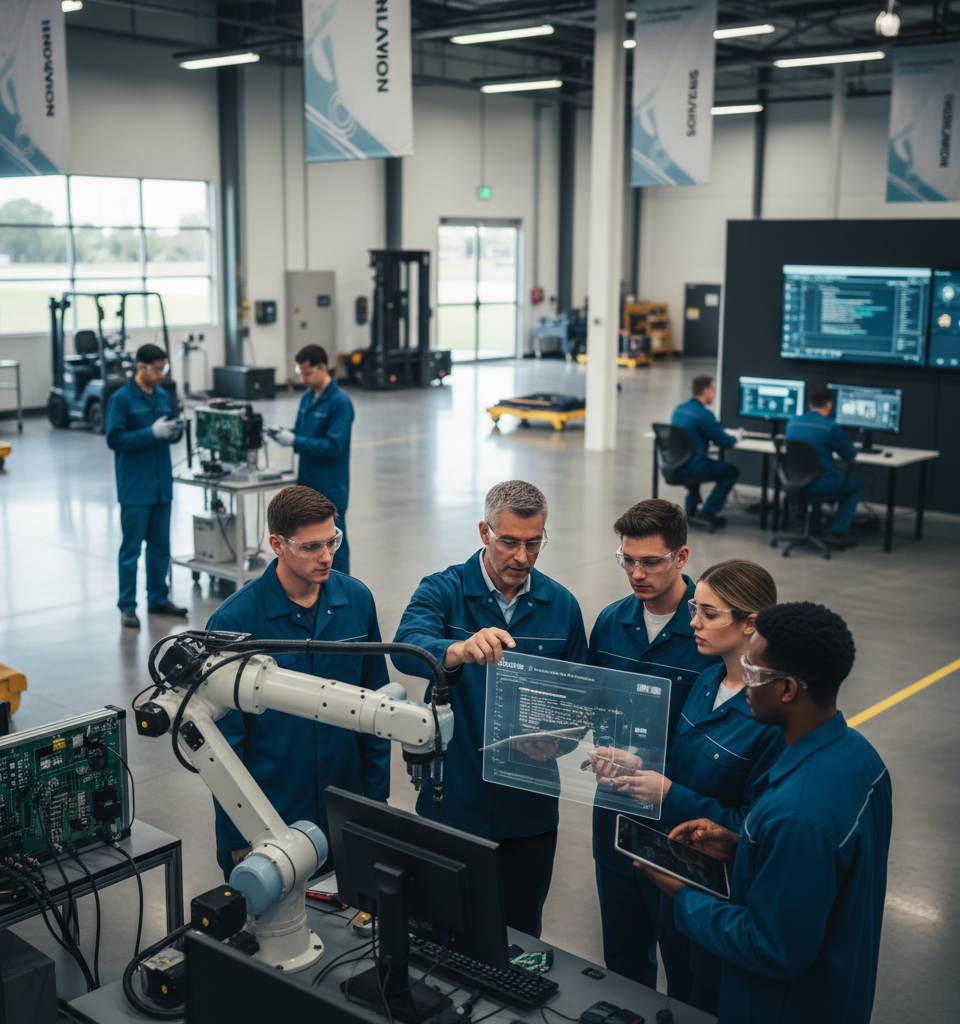
U.S. manufacturing companies are dramatically scaling up their investment in workforce development, spending an approximate $32 billion annually on training initiatives for their employees. This substantial expenditure, revealed in a recent survey by The Manufacturing Institute, underscores a strategic pivot by the sector to address ongoing challenges related to talent acquisition and retention. The report highlights a significant increase in training intensity, with manufacturers now allocating nearly five more hours per employee to training compared to 2019 levels, signaling a deepening commitment to upskilling and reskilling their workforces.
Context and Industry Imperatives
This heightened investment arrives amidst a protracted period of labor scarcity and a pronounced skills gap within the American manufacturing landscape. The sector has grappled with the 'silver tsunami' of retiring baby boomers and a perceived lack of interest among younger generations in industrial careers. The COVID-19 pandemic exacerbated these issues, disrupting supply chains and accelerating the adoption of advanced manufacturing technologies, which, in turn, demand a more highly skilled workforce. This financial commitment reflects a recognition among industry leaders that homegrown talent development is not merely a beneficial practice but a critical survival strategy for navigating an increasingly complex and competitive global environment. The Manufacturing Institute has consistently advocated for policies and initiatives that support workforce development, positioning this report as a crucial gauge of industry response.
Key Findings and Data The Manufacturing
Institute's latest workforce survey, which polled hundreds of manufacturers across various sub-sectors, provides granular insights into this investment. The $32 billion figure represents a significant uptick from previous estimates, indicating a clear, upward trend in training budgets. Beyond the monetary commitment, the report emphasizes the qualitative shift in training methodologies. Companies are not just spending more money, but also more time, dedicating an average of 50 hours per employee to training, an increase of nearly 11% over 2019's reported figures. This expanded time commitment suggests a move towards more comprehensive and intensive training programs, encompassing areas such as advanced robotics, data analytics, automation, and lean manufacturing principles. The survey also noted a growing focus on soft skills, including problem-solving, critical thinking, and teamwork, recognizing their importance alongside technical competencies.
Broader Economic and Market Impact
The ripple effects of this substantial investment extend beyond individual firms. On a macro level, it can contribute to enhanced productivity, innovation, and competitiveness for the entire U.S. manufacturing sector. A more skilled workforce is better equipped to adopt new technologies, improve operational efficiencies, and drive product development. This proactive approach to talent development also plays a crucial role in mitigating supply chain vulnerabilities, as domestic production capabilities are strengthened by a robust and adaptable labor pool. Furthermore, by investing in their employees, manufacturers are potentially fostering higher employee morale, reducing turnover rates, and building a more resilient industrial base capable of weathering future economic fluctuations and technological shifts.
Expert Perspectives on Future-Proofing
Industry analysts and economists view this trend as a necessary and positive development. Dr. Emily Carter, a labor market economist specializing in industrial sectors, stated, "This $32 billion investment isn't just about filling immediate vacancies; it's a strategic move to future-proof the American manufacturing workforce. Companies are recognizing that technology is evolving at an unprecedented pace, and continuous upskilling is no longer optional." Other experts point to the collaborative efforts between manufacturers, educational institutions, and government agencies as essential enablers of this training boom, with apprenticeships and vocational programs gaining renewed traction. The consensus is that while the financial outlay is significant, the long-term benefits in terms of national economic security and global competitiveness far outweigh the costs.
The Road Ahead: Continued Evolution
The future of manufacturing workforce development will likely involve even greater integration of digital tools and personalized learning pathways. Expect to see increased adoption of virtual reality (VR) and augmented reality (AR) for hands-on training simulations, as well as AI-powered platforms that tailor learning content to individual employee needs. The collaborative ecosystem approach, involving community colleges, technical schools, and industry consortia, is also expected to deepen, creating more fluid pipelines for talent development. As the pace of technological change shows no sign of slowing, manufacturers will be under continuous pressure to evolve their training strategies, ensuring their workforces remain agile, adaptable, and equipped for the innovations of tomorrow. The $32 billion investment today is merely a foundation for what promises to be a sustained commitment to human capital in the industry.