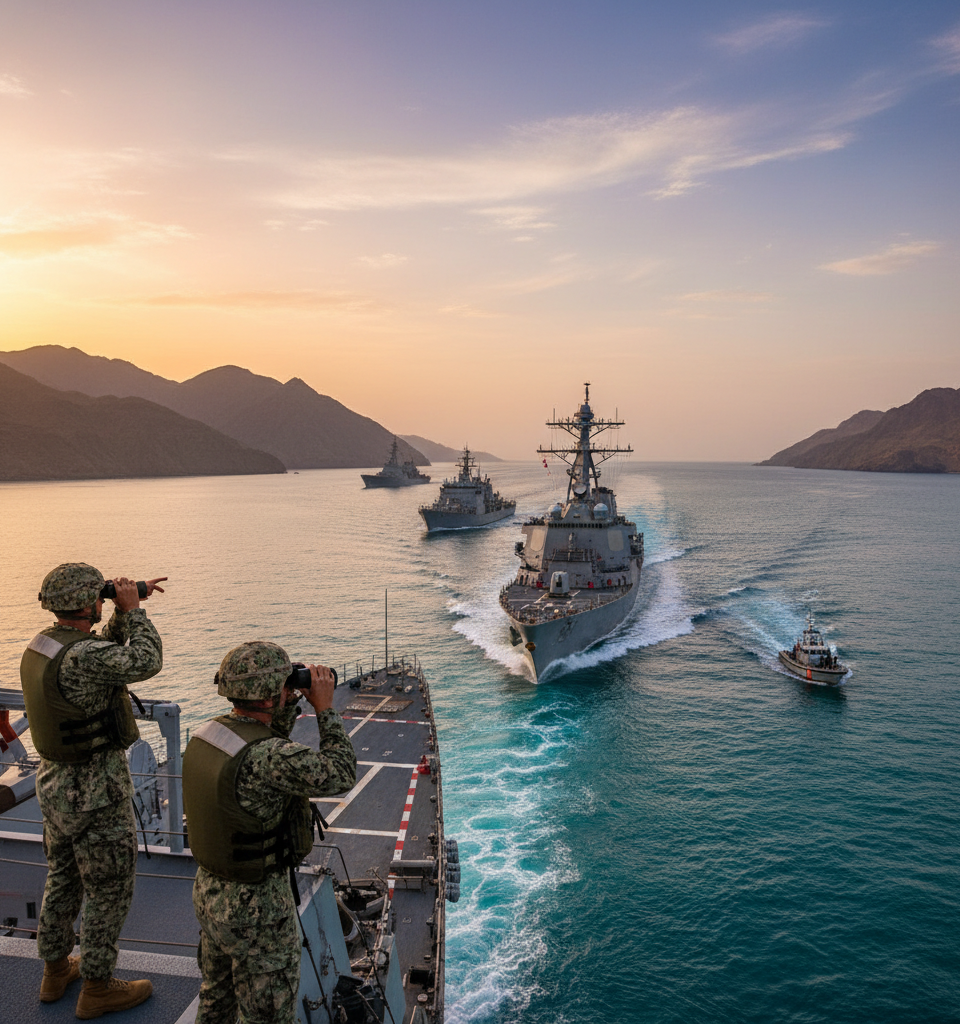
U.S. Navy vessels have commenced transit through the Strait of Hormuz, marking the initial phase in the establishment of a new maritime passage. This critical undertaking precedes a comprehensive mine-clearing operation aimed at bolstering security in one of the world's most vital shipping lanes. The announcement, made by naval authorities, underscores a proactive approach to maintaining stability and ensuring the free movement of goods through this strategic choke point.
"Today, we began the process of establishing a new passage and we will share this safe pathway with the maritime industry soon to encourage the free flow of commerce," a naval spokesperson confirmed. This statement highlights the immediate objective of creating a validated, secure route, with the broader intention of providing assurances to the global shipping community. The Strait of Hormuz, a narrow waterway between the Persian Gulf and the Gulf of Oman, is notoriously challenging due to its confined geography and its pivotal role in international energy markets.
Strategic Importance of the Strait
The Strait of Hormuz is recognized as the world's most important oil transit chokepoint, with approximately one-fifth of the world's total petroleum liquids consumption and a significant portion of global liquefied natural gas (LNG) transiting through it. Any disruption to traffic in this area has immediate and far-reaching consequences for global energy prices and supply chains. The U.S. Navy's current actions are therefore not merely a localized military operation but a broader strategic move to safeguard international trade and energy security. The commitment to sharing this newfound 'safe pathway' with the maritime industry emphasizes a cooperative approach to regional security, leveraging military capabilities for civilian economic benefit.
The establishment of this new passage is a meticulous process, likely involving hydrographic surveys, threat assessment, and potentially the deployment of specialized mine countermeasures units. While specific details of the technical aspects of the passage creation were not publicly disclosed, the emphasis on a 'safe pathway' suggests a thorough and systematic methodology to de-risk commercial shipping. This initiative will provide crucial data and confidence to shipping companies, insurers, and commodity traders who rely heavily on the predictability and security of transit through the Strait.
Broader Regional Implications
This concerted effort by the U.S. Navy arrives amid ongoing geopolitical complexities in the region. Maintaining open and secure maritime routes is paramount for global stability and economic prosperity. The declaration of establishing a new passage serves as a tangible demonstration of naval power and a commitment to upholding international maritime law, which dictates freedom of navigation. The initiative sends a clear message about the unwavering resolve to protect commercial interests that depend on unhindered access through the waterway.
The mine-clearing mission, which this current action precedes, is intended to further solidify the safety of the Strait. Mines, whether naval or improvised, pose a significant and indiscriminate threat to all maritime traffic, regardless of flag or cargo. By proactively establishing secure routes and subsequently clearing potential explosive hazards, the U.S. Navy aims to mitigate risks that could escalate into regional or international crises. This preventative approach is crucial for maintaining the delicate balance of power and fostering economic stability in an often volatile part of the world.
Economic Reassurance for the Maritime Industry
For the maritime industry, the prospect of a newly validated and secure passage, coupled with an impending mine-clearing operation, offers significant reassurance. Shipping companies have historically faced increased insurance premiums and operational complexities when geopolitical tensions rise in the Strait of Hormuz. The proactive measures by the U.S. Navy are likely to be welcomed by stakeholders seeking to minimize risks and maintain cost-effective transport routes. The explicit intention to share the details of this safe pathway with commercial entities underscores a significant civilian-military cooperation aspect of this mission.
The long-term impact of these actions could extend beyond immediate security benefits, potentially influencing future maritime traffic patterns and enhancing the region's appeal as a stable transit hub. By investing in the safety infrastructure of the Strait, the U.S. Navy is not only responding to immediate security needs but also contributing to the enduring economic viability of a critical global artery. As the process of establishing the new passage unfolds, the maritime world will be keenly observing developments, anticipating the operational insights and reassurances that these efforts are expected to deliver.