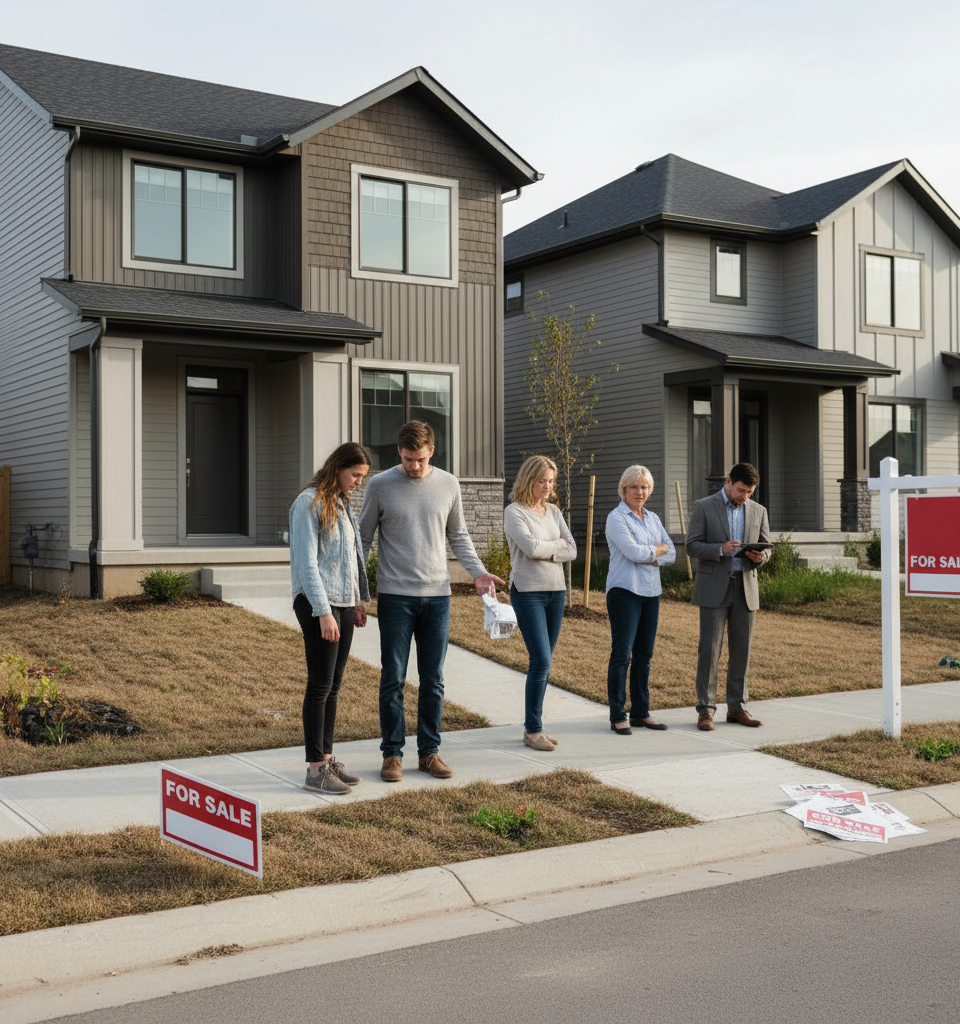
New home sales across the United States saw a significant contraction in April, indicative of mounting pressures within the housing market. The seasonally adjusted annual rate (SAAR) for new single-family home sales dropped to 622,000 units, a substantial 6.2% decrease when compared to March's figures. This downturn underscores a persistent challenge in the market, with sales also registering an 11.3% decline year-over-year, suggesting systemic issues rather than a temporary blip.
Context of Rising Affordability Concerns
This latest data arrives amidst a period of sustained high housing costs and elevated interest rates, which continue to squeeze prospective buyers. The housing market has been grappling with a delicate balance between demand and supply, heavily influenced by macroeconomic factors. The consistent rise in home prices has priced out a significant segment of the population, impacting both first-time homebuyers and those looking to upgrade. This trend has been exacerbated by the broader inflationary environment that has affected consumer purchasing power across various sectors.
Key Market Indicators
The median price of a new home continued its upward trajectory, reaching a new high of $422,500 in April. This represents a critical data point, as the escalating price tag directly correlates with the observed slowdown in sales. Concurrently, the supply of new homes on the market increased, reaching 9.4 months at the current sales pace. While an increase in inventory might typically suggest easing price pressures, in this context, it appears to reflect homes staying on the market longer due to a shrinking pool of eligible buyers, rather than a robust expansion of available and affordable housing options. The balance between inventory and sales is a key indicator of market health, and the current dynamic points to a misalignment driven by affordability.
Impact on the Broader Housing Sector
The sustained weakness in new home sales has broad implications for the residential construction industry, real estate developers, and related sectors such as building materials and home furnishings. A slowdown in sales can lead to reduced construction activity, potentially impacting job growth in these areas. For developers, increasing inventory coupled with slower sales translates to longer carrying costs and potentially revised project timelines. Mortgage lenders also feel the impact, as fewer transactions mean reduced originating volumes. The current environment necessitates a cautious approach from developers and a potential re-evaluation of pricing strategies to adapt to evolving buyer capabilities.
Expert Analysis on Market Dynamics
Market analysts are increasingly pointing to affordability as the primary impediment to a more robust housing recovery. Experts suggest that while consumer demand for homeownership remains strong, particularly among younger demographics, the financial hurdles — specifically elevated home prices and higher mortgage rates — are proving insurmountable for many. This bottleneck creates a challenging environment where the market struggles to find an equilibrium. There is a perceived disconnect between the available housing stock and what the average buyer can realistically afford, leading to the observed stagnation in sales despite an increasing supply.
Future Outlook and Potential Adjustments
Looking ahead, the trajectory of new home sales will largely depend on several key factors. Any significant moderation in home prices or a reduction in interest rates could provide much-needed relief to potential buyers, potentially stimulating sales activity. However, absent these shifts, the market is likely to continue experiencing affordability-driven headwinds.
Industry stakeholders will be closely watching macroeconomic indicators, particularly inflation data and Federal Reserve policy decisions, which directly influence mortgage rates. Developers may need to adapt by exploring more affordable housing types or adjusting their pricing strategies to better align with prevailing market conditions and buyer capacities. The coming months will be critical in determining whether the housing market can regain its footing or if these affordability challenges will become a more entrenched feature of the landscape.