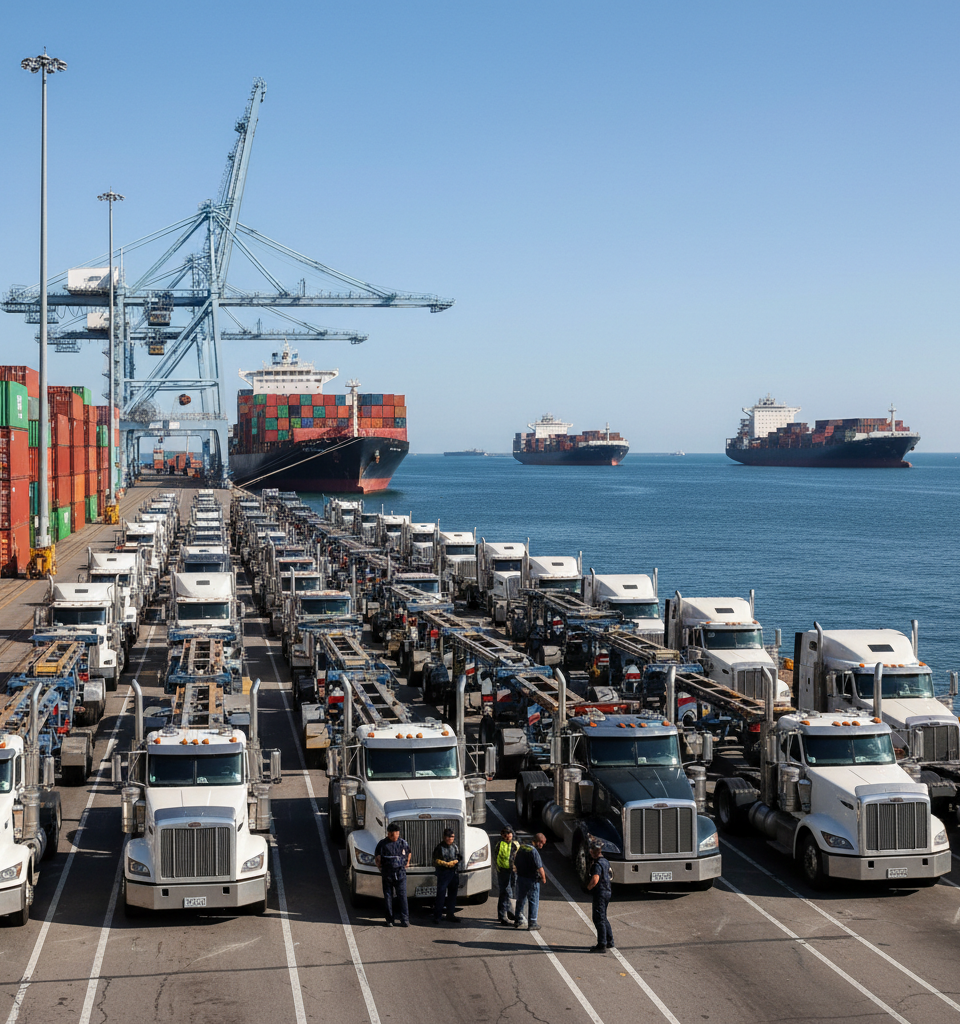
S. trucking industry is experiencing an unusual period of market tightness, even as the broader freight market recalibrates from its pandemic highs. Unlike the demand-driven surge that characterized the past few years, this current constriction is occurring without the customary tailwind of robust import volumes. The divergence suggests a fundamental shift in supply chain dynamics, compelling businesses to navigate a landscape where domestic transportation costs may rise despite an overall deceleration in global trade.
This phenomenon represents a stark departure from the frenetic pace of 2020-2022, when unprecedented consumer demand for goods, fueled by stimulus and remote work, overwhelmed logistics networks. During that period, port congestion, skyrocketing container rates, and a scramble for truck capacity became the norm. The present situation, however, reveals a more nuanced problem: a structural adjustment in trucking capacity coinciding with a sustained, albeit uneven, unwinding of inventory cycles and consumer spending patterns.
This is particularly problematic for sectors that rely heavily on just-in-time inventory management. Key data points underscore this trend. S. ports. For instance, the National Retail Federation (NRF) has continually forecast lower import levels for much of the current year compared to the record-breaking figures of 2022. Concurrently, the American Trucking Associations (ATA) has reported consistent, albeit moderate, declines in truck tonnage, suggesting a general easing of freight movement.
Yet, the perception of capacity tightness persists, with some carriers reporting difficulties in finding available trucks, particularly for specific lanes or equipment types. This paradox points to underlying inefficiencies or regional imbalances within the trucking ecosystem, possibly exacerbated by driver availability issues or shifts in fleet utilization strategies. The implications for the broader logistics and retail landscape are significant.
Businesses accustomed to predictable freight costs are now facing volatility, as carriers seek to optimize profitability in a softer market. This translates to potential cost pressures that could eventually trickle down to consumer prices, even in an inflationary environment. Furthermore, the shift necessitates a reassessment of inventory strategies, as the cost of holding goods versus the cost and reliability of domestic transportation becomes a critical balancing act.
Supply chain managers are increasingly prioritizing resilience and flexibility over purely cost-driven decisions. Industry analysts and logistics experts are observing this trend with caution. John Smith, a senior analyst at Freight Insights Group, noted in a recent briefing, “The market is not experiencing a sudden spike in demand; rather, it’s a rebalancing act.
Many smaller carriers that entered the market during the boom have exited, and larger carriers are being more strategic with their asset deployment. ” Others suggest that regulatory changes, insurance costs, and the ongoing driver shortage continue to be underlying factors shaping capacity irrespective of import levels. Looking ahead, the trucking sector faces a period of continued recalibration.
The eventual resumption of more consistent import volumes, coupled with potential shifts in manufacturing onshore or nearshore, could further complicate the capacity outlook. Businesses will need to focus on robust forecasting, diversified carrier relationships, and potentially investing in their own dedicated fleets to mitigate future disruptions. Monitoring key economic indicators, such as consumer spending and inventory-to-sales ratios, will be crucial for anticipating market shifts.
The current environment underscores the need for agile and adaptive supply chain strategies, moving beyond the expectations set by an anomalous pandemic period.