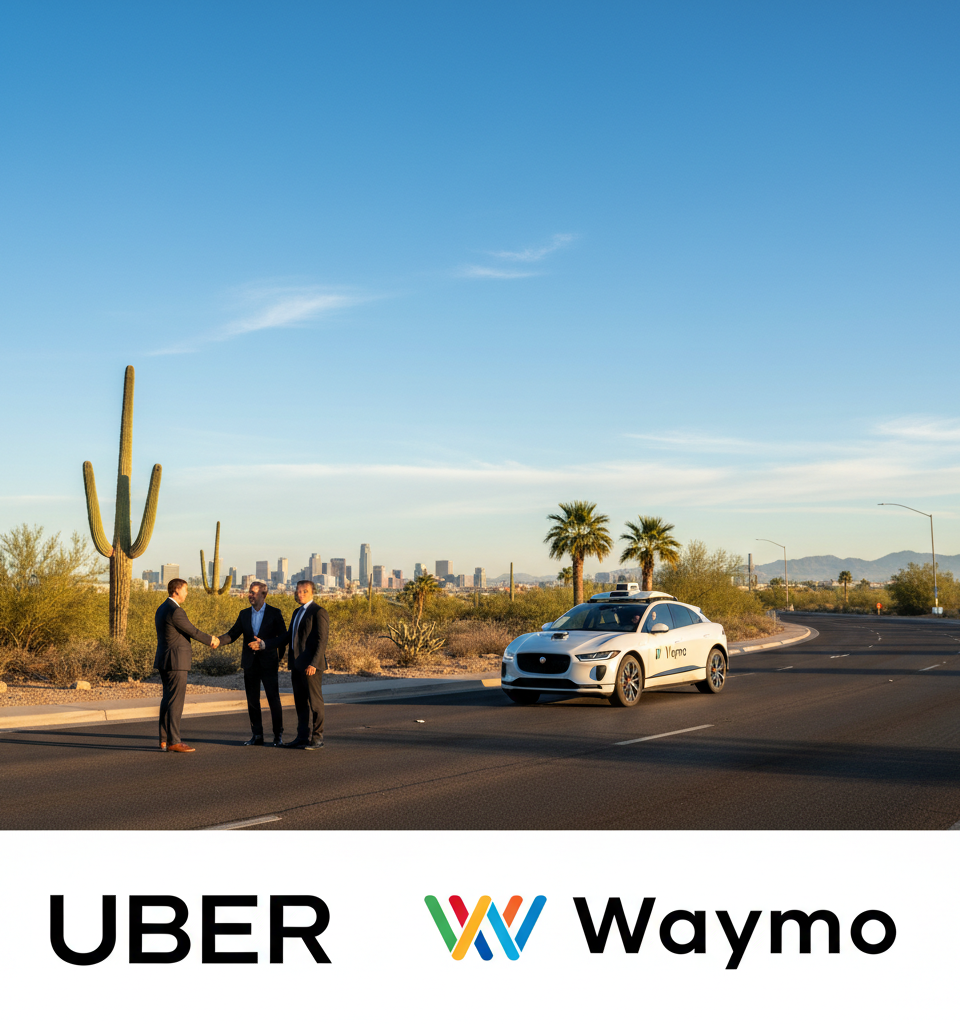
Uber Technologies has officially concluded its robotaxi pilot program in Phoenix, which integrated autonomous vehicles operated by Alphabet Inc.'s Waymo onto the Uber platform. The winding down of this collaboration signifies a notable shift in the dynamic between the two industry giants, highlighting the ongoing evolution of strategies within the nascent autonomous vehicle sector.
Background of the Collaboration
This partnership, initially launched with significant fanfare, aimed to leverage Waymo's advanced self-driving technology with Uber's expansive ride-hailing network. The pilot program in Phoenix was designed to offer Uber users the option to hail Waymo's autonomous vehicles for rides within a defined service area. The collaboration was particularly intriguing given the historical rivalry and past legal disputes between Uber and Waymo concerning autonomous vehicle technology. Initiated as a strategic alliance, it aimed to accelerate the adoption of robotaxi services and explore operational synergies. The program's cessation comes after a period of evaluation, with both companies presumably assessing the pilot's effectiveness and alignment with their long-term independent strategies.
Operational Details and Market Impact
During its operation, the Phoenix pilot allowed a select group of Uber users to experience Waymo's self-driving cars, providing valuable data on consumer acceptance, operational efficiency, and the technical performance of the autonomous systems in a real-world ride-hailing environment. While specific user engagement figures or operational metrics have not been publicly disclosed regarding the pilot's performance, such collaborations are crucial for gathering insights into the practical challenges and opportunities of scaling autonomous mobility services. The conclusion of this pilot suggests that both companies may be recalibrating their approaches to autonomous deployment, possibly favoring more insular developmental paths or exploring new, independent partnerships.
Broader Industry Implications
The termination of this high-profile pilot could signal a strategic re-evaluation across the autonomous vehicle industry. While partnerships remain a core component of accelerating development and deployment, companies may increasingly opt for tighter vertical integration or more exclusive collaborations to protect intellectual property and maintain control over their user experience. For Uber, this might mean a renewed focus on its own autonomous driving endeavors or a pivot towards different technology providers. For Waymo, it underscores its established market presence in Phoenix and its direct-to-consumer service growth, potentially allowing greater control over its operational model and customer interactions without an intermediary platform like Uber.
Future Trajectories for Uber and Waymo
The move suggests that Uber may be seeking greater control or flexibility in its autonomous vehicle strategy. While Uber has previously made substantial investments in its own self-driving division, it has also shown a willingness to partner to accelerate deployment and reduce capital expenditure. The end of the Waymo pilot could lead Uber to explore new alliances with other autonomous technology developers or to intensify its focus on its core ride-sharing business while closely monitoring the maturation of autonomous fleets.
For Waymo, Phoenix remains a critical market where it operates a significant number of fully autonomous rides commercially. This conclusion allows Waymo to consolidate its direct service offerings and continue refining its technology independently, potentially paving the way for expansion into other markets without the complexities of platform integration with a ride-sharing giant.
Evolving Autonomous Landscape
The autonomous vehicle landscape is characterized by constant strategic adjustments, competitive dynamics, and technological breakthroughs. The conclusion of the Uber-Waymo pilot sheds light on the challenges of sustained collaboration between major players with distinct technological roadmaps and business objectives. As companies navigate the path to widespread autonomous deployment, strategic alliances are continually being formed, reassessed, and sometimes disengaged. This decision by Uber and Waymo reflects the ongoing, dynamic process of market determination and strategic positioning within the fiercely competitive and capital-intensive autonomous mobility sector.