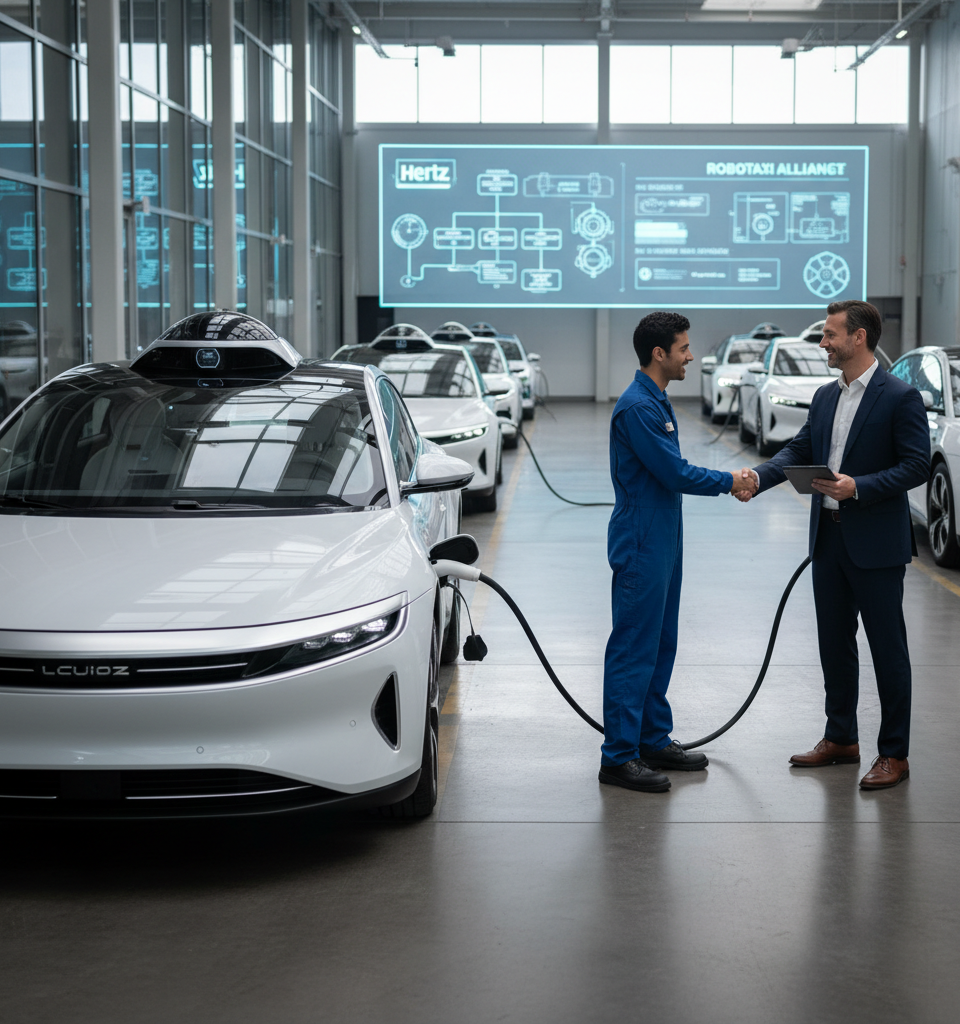
Uber Technologies has announced a significant strategic collaboration with Hertz Global Holdings, leveraging the rental car giant's newly established subsidiary, Oro Mobility, to manage and maintain its burgeoning robotaxi fleet. This multifaceted partnership will see Oro Mobility providing cleaning, charging, and maintenance services for Uber's autonomous vehicles, beginning with its fleet of Lucid Motors cars. The agreement marks a critical step for Uber in scaling its self-driving ambitions, offloading complex operational logistics to a seasoned fleet management provider.
Context and Background
This alliance arrives at a pivotal time for the autonomous vehicle sector, which has grappled with the immense operational challenges of deploying and sustaining large-scale driverless fleets. While much of the industry's focus traditionally centered on enhancing AI capabilities and sensor technology, the practicalities of fleet management—from charging infrastructure for electric robotaxis to routine servicing and unexpected repairs—have emerged as significant hurdles. Uber's decision to outsource these functions to Hertz, a company with over a century of experience in vehicle logistics, underscores a pragmatic shift towards specialized partnerships to overcome these operational bottlenecks. The introduction of Oro Mobility as a dedicated entity signals Hertz's strategic pivot into the high-growth mobility-as-a-service market, broadening its traditional car rental purview.
Key Details of the Partnership
The agreement stipulates that Oro Mobility will be responsible for a comprehensive suite of services. This includes daily cleaning and sanitization of the robotaxis, essential for maintaining customer satisfaction in a public-facing service. Crucially, Oro Mobility will also manage the charging infrastructure and processes for Uber's electric autonomous vehicles, ensuring they remain operational and available.
Furthermore, the affiliate will handle routine maintenance checks and facilitate repairs, directly addressing potential downtime and operational inefficiencies. While the initial focus is on the Lucid Motors vehicles currently being integrated into Uber's pilot programs, the framework suggests potential expansion to other vehicle manufacturers as Uber's robotaxi fleet diversifies and scales. Financial terms of the agreement were not disclosed, but industry analysts anticipate a revenue-sharing or service-fee model, reflecting the long-term nature of the partnership.
Industry and Market Impact
This collaboration could set a new precedent for how autonomous vehicle companies manage their fleets. By partnering with Hertz, Uber is arguably standardizing a model where AV developers focus on software and core technology, while established logistics companies handle the physical infrastructure and maintenance. This specialization could accelerate the broader adoption of robotaxis by reducing the capital expenditure and operational complexity for AV firms. For Hertz, Oro Mobility represents a significant diversification beyond its traditional retail rental business, positioning it as a key infrastructure provider in the future mobility landscape. The move could pressure other rental car giants and logistics firms to develop similar specialized services, potentially creating a new sub-segment within the automotive services market estimated to be worth billions.
Expert Perspective
Industry experts view this partnership as a highly strategic and mutually beneficial move. "Uber is wisely offloading non-core yet critical functions to an experienced player," comments Dr. Elena Petrov, an automotive technology analyst at Quantum Insights. "This allows them to channel resources and talent into refining their autonomous driving technology, which is their true competitive differentiator." Petrov also noted, "For Hertz, it's a brilliant expansion. They can leverage existing infrastructure, real estate, and mechanical expertise to tap into the high-growth robotaxi market, mitigating the risks of direct AV development themselves." Analysts predict that such partnerships will become increasingly common as autonomous technology matures, highlighting the importance of robust operational frameworks for successful commercialization.
What's Next
The immediate next steps involve the phased integration of Oro Mobility's services with Uber's existing autonomous vehicle pilot programs, particularly in cities where Lucid Motors vehicles are being deployed. Both companies are expected to closely monitor efficiency metrics and customer feedback to refine the service offerings. Looking further ahead, the success of this partnership could inform future collaborations between Uber and Oro Mobility, potentially expanding to a wider range of vehicle types or even different geographic markets as Uber's robotaxi footprint grows. The long-term implications suggest a future where mobility service providers like Uber can rapidly scale their autonomous offerings by relying on established infrastructure and logistics partners, accelerating the transition to a fully autonomous transportation ecosystem.