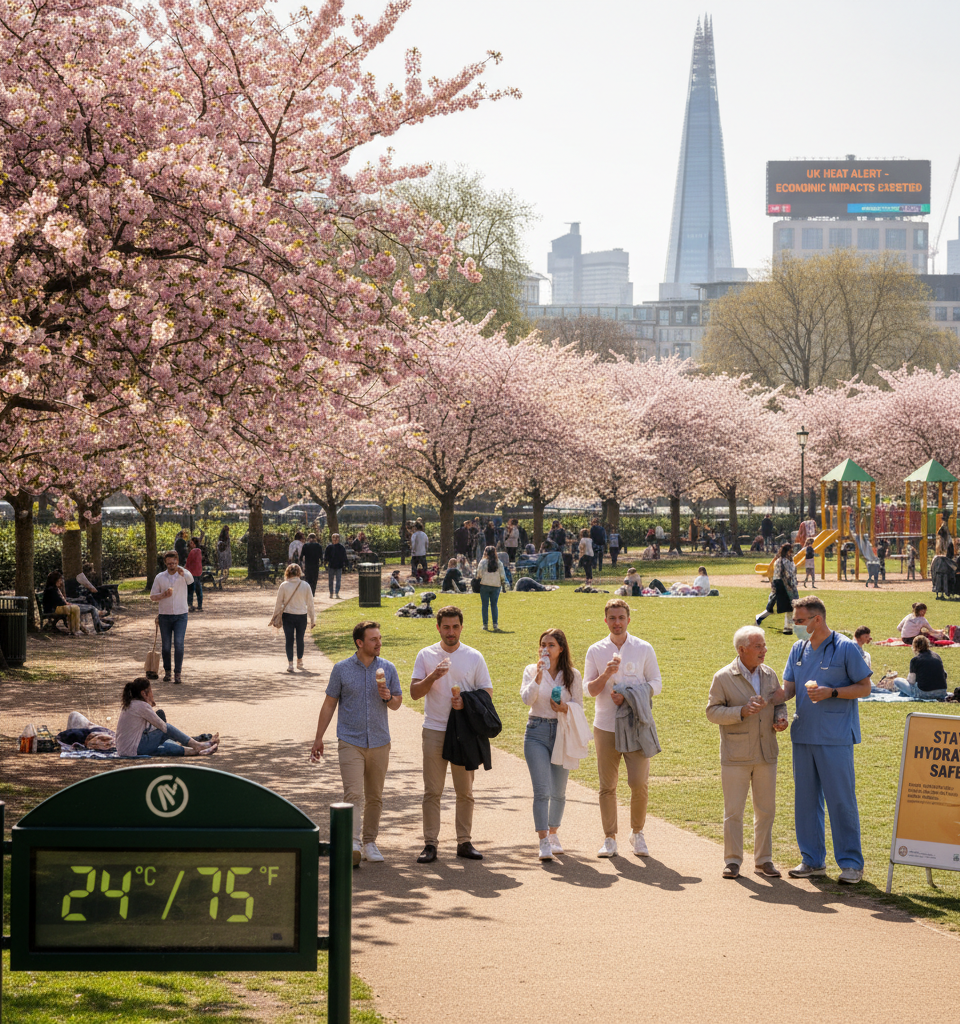
The United Kingdom is bracing for its warmest day of the year this week, with temperatures projected to reach an unseasonably high 24°C across widespread areas on Tuesday and Wednesday. This notable meteorological event, confirmed by experts including meteorologist Simon King, marks a substantial departure from typical mid-April conditions and has prompted a range of public advisories regarding heat safety and potential knock-on effects across diverse sectors.
Unseasonal Warmth: A Shifting Climate Narrative
This impending heatwave is particularly striking given the season. Historically, April temperatures in the UK average around 10-12°C, making the forecast 24°C an anomaly of roughly 12°C above the seasonal norm. Such marked deviations increasingly underscore the broader narrative of a changing climate, with warmer springs becoming more frequent. The last time the UK experienced similar warmth so early in the year was in 2018, when temperatures also climbed into the low 20s. This pattern inevitably raises questions about long-term climate trends and their potential acceleration.
Health Warnings and Infrastructure Strain
Detailed forecasts indicate that the South East of England, including London, is expected to bear the brunt of the exceptional heat, with temperatures potentially peaking at 24°C. Other regions, including the Midlands and parts of Northern England, are also predicted to see temperatures hover between 20-22°C. Public health officials are urging citizens to take precautions, such as staying hydrated, seeking shade during peak sun hours (11 AM to 3 PM), and checking on vulnerable individuals, particularly the elderly and those with pre-existing health conditions. The National Health Service (NHS) has previously reported a notable increase in emergency room visits during periods of unseasonal heat, often linked to heatstroke and dehydration. Infrastructure, particularly transport networks, may also face minor disruptions, with railway lines susceptible to buckling in extreme heat, although the current forecast is not expected to trigger widespread closures.
Agricultural and Retail Sector Impacts
The agricultural sector, often highly sensitive to weather fluctuations, will be closely monitoring this warm spell. While a short burst of warmth can aid early crop growth, a prolonged period without adequate rainfall could accelerate moisture evaporation and stress young plants. Horticultural businesses might see a surge in demand for seasonal bedding plants and outdoor living products. Meanwhile, the retail sector is anticipating a positive impact, particularly for summer clothing, ice cream, and beverage sales. Major supermarket chains often report a 5-10% increase in sales of seasonal items during unexpected warm weather events, with an estimated £50 million boost to the leisure and hospitality sector for outdoor dining and activities.
Expert Commentary on Climate Variability
Leading climate scientists and meteorologists emphasize that while individual weather events cannot be definitively attributed to climate change, their increased frequency and intensity align with predictive models. Dr. Eleanor Vance, a senior climatologist at the University of Cambridge, commented, "This unseasonable warmth serves as a powerful reminder of climate variability. While a few warm days can be enjoyable, the consistency of these early-season peaks over recent years is a trend that warrants serious scientific attention and robust policy responses to mitigate long-term risks." She further noted that such events could impact seasonal ecological cycles, including plant blooming times and insect emergence, with cascading effects on local ecosystems.
Looking Ahead: A Glimpse of Summer and Beyond
While the immediate forecast points to a return to more seasonal temperatures by the end of the week, this early taste of summer provides a glimpse into potential conditions for the coming months. Meteorologists are already analyzing these patterns to refine long-range summer forecasts, which are crucial for sectors ranging from tourism to energy. Businesses across the UK, particularly those reliant on weather patterns, are likely to review their preparedness strategies, emphasizing resilience in the face of increasingly unpredictable climatic events. The broader conversation around infrastructure adaptation and public health frameworks for extreme weather will undoubtedly gain fresh momentum following this unseasonable warmth.