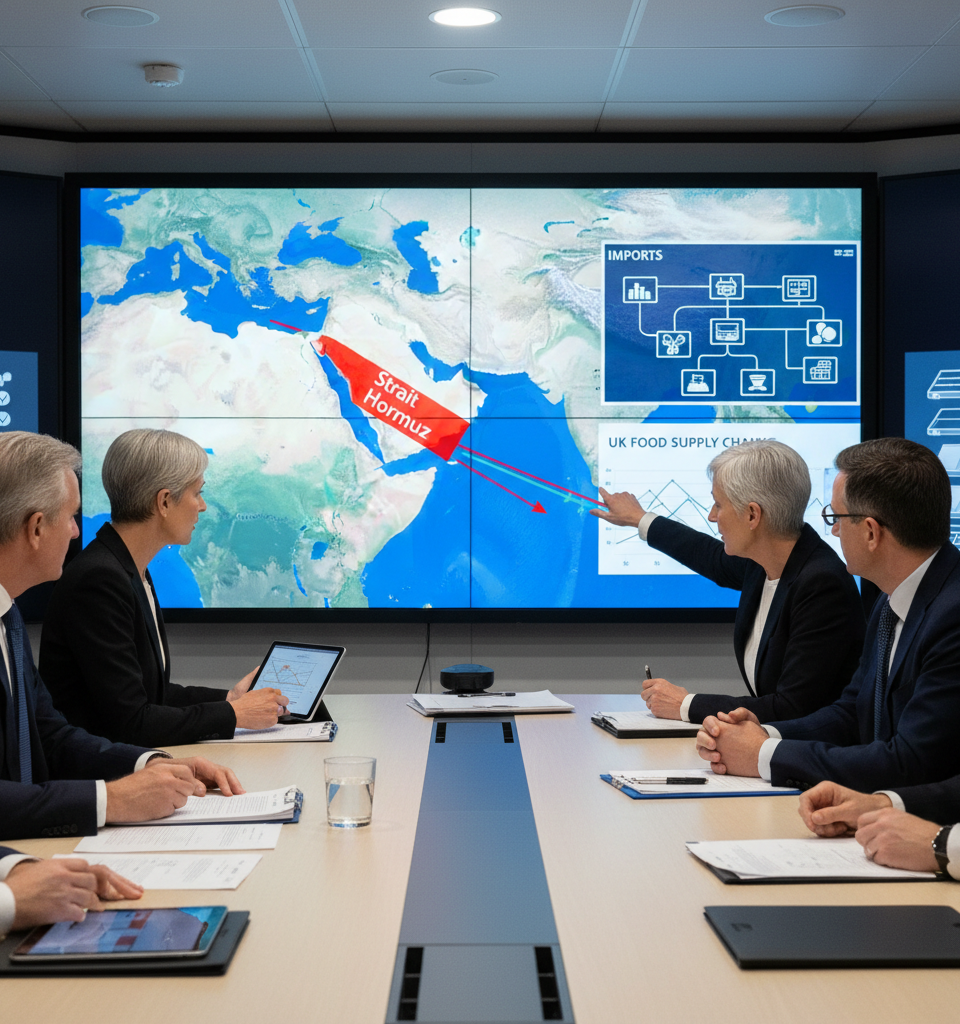
London, UK – The United Kingdom faces the grave prospect of experiencing significant food shortages as early as this summer, according to a confidential, worst-case scenario assessment circulated among government officials. The internal report, which has been brought to light by senior sources, attributes this looming crisis directly to potential disruptions stemming from an intensified conflict or prolonged instability involving Iran. This critical evaluation highlights the profound and immediate impact that geopolitical flashpoints in the Middle East could have on the UK's domestic supply resilience and consumer access to essential goods.
This alarming projection arrives against a backdrop of increasing volatility in the Persian Gulf, a region crucial for global shipping and energy routes. The Strait of Hormuz, a narrow waterway bordered by Iran and Oman, serves as a vital chokepoint through which approximately 20% of the world's total petroleum liquids and a substantial portion of global maritime trade pass daily. Any significant escalation or military engagement in this area could severely impede shipping lanes, driving up insurance costs, lengthening transit times, and ultimately disrupting the flow of goods, including critically important food imports, which account for a substantial percentage of the UK's consumption.
The specifics of the government's contingency planning remain largely undisclosed, but the internal memo reportedly outlines various scenarios, from targeted sanctions leading to reciprocal trade blockades to direct military confrontations impacting shipping. Sources indicate that staple items, particularly those reliant on complex international supply chains or specific climactic zones, would be most vulnerable. While the report does not suggest an immediate threat of widespread famine, it warns of significant price hikes, reduced availability of fresh produce, and potential rationing measures in the most severe outcomes. The precise 'worst case' triggers for such shortages are believed to involve sustained, widespread disruption to shipping in the Middle East for several weeks.
The potential for food shortages carries significant repercussions for the UK's broader economic landscape and various market sectors. Retailers, from supermarkets to independent grocers, would face immense pressure to secure alternative supply routes, likely at significantly higher costs, which would inevitably be passed on to consumers. The logistics and shipping industries would also be thrown into disarray, grappling with rerouting, increased insurance premiums, and potential asset risks. Furthermore, industries reliant on imported agricultural inputs, such as food processing and hospitality, could see steep rises in operational costs and potential production halts, leading to job losses and reduced economic output.
Food security experts and geopolitical analysts have long cautioned about the fragility of global supply chains in the face of regional conflicts. Dr. Eleanor Vance, a Senior Research Fellow at the Royal Institute for International Affairs, stated, "The UK, like many advanced economies, operates on a 'just-in-time' inventory system, meaning there's very little buffer stock. A prolonged disruption in a critical maritime chokepoint like the Strait of Hormuz would expose this vulnerability almost immediately. This is not just about oil; it’s about a wide array of goods transported globally." She adds, "The government's assessment, while a worst-case, serves as a crucial wake-up call regarding our over-reliance on stable international shipping."
Looking ahead, the government is understood to be exploring a range of mitigative strategies, including accelerating efforts to diversify import sources, bolstering domestic food production initiatives, and potentially reviewing emergency food stockpiling policies. Diplomatic efforts to de-escalate tensions in the Middle East will also be intensified, as sustained stability in the region remains the most effective safeguard against such a scenario. The coming months will likely see increased public discourse on food resilience and national security, as the UK grapples with the intricate links between international diplomacy and the contents of its citizens' grocery baskets.
The prospect of food shortages underscores the urgent need for a robust, multi-faceted national strategy. While contingency plans are being drawn up, the immediate focus remains on preventing the 'worst-case' from materializing. The severity of the UK's summer food outlook will ultimately hinge on the trajectory of Iran's geopolitical standing and the stability of critical shipping lanes over the coming weeks and months.