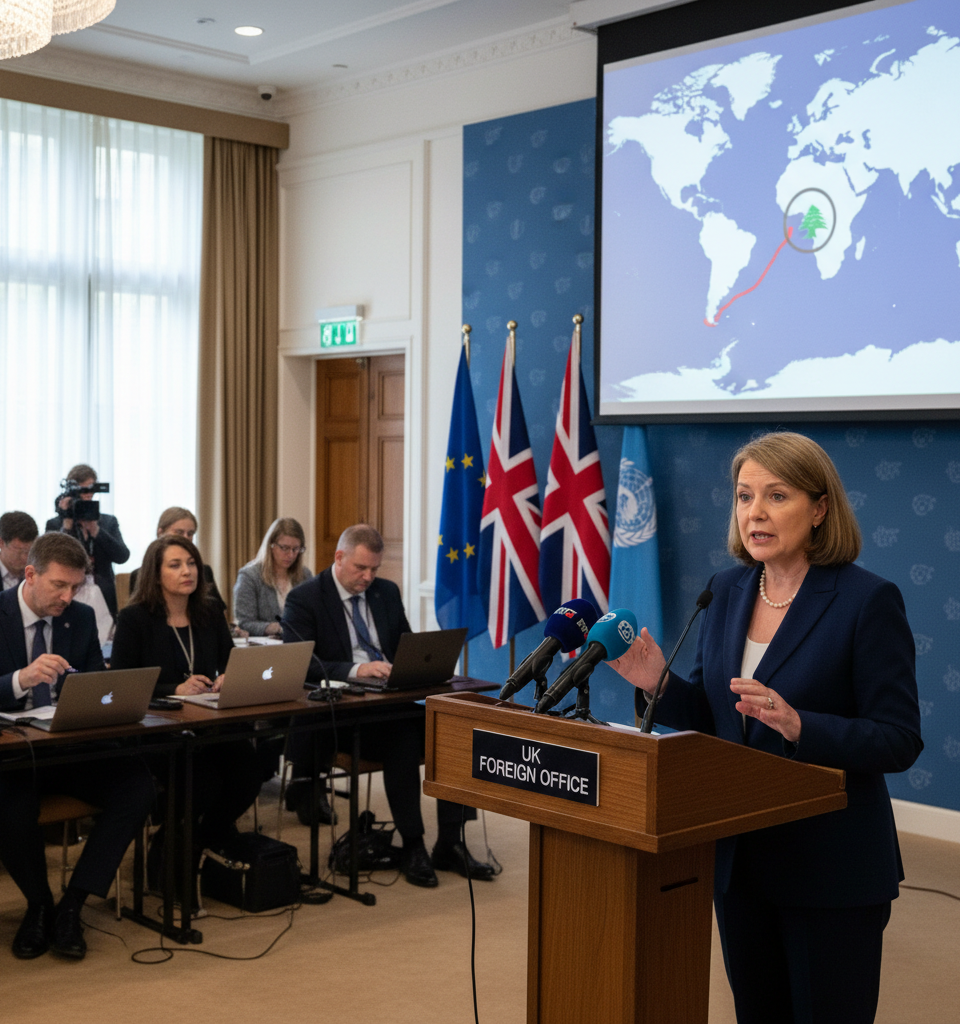
In a significant foreign policy address, Britain is poised to declare that maritime transit through the strategically pivotal Strait of Hormuz must be free of tolls, a stance designed to protect international shipping and uphold global energy stability. Concurrently, the UK will assert that any future ceasefire agreement involving Iran must categorically include Lebanon, underscoring a comprehensive British strategy to de-escalate tensions and foster regional security across the Middle East. This announcement, anticipated within an annual foreign policy overview, reflects a growing international concern over escalating maritime threats and geopolitical instability in the region.
Geopolitical Crossroads: Hormuz and Regional Instability
The Strait of Hormuz is a choke point of immense international significance, through which approximately one-fifth of the world's total petroleum consumption, and a substantial portion of global liquefied natural gas (LNG), passes daily. Its strategic importance has been consistently highlighted by various incidents involving vessel seizures, attacks, and threats to commercial shipping, primarily linked to geopolitical tensions involving Iran. The UK's call for 'toll-free' passage directly addresses concerns that Iran or its proxies could seek to impose levies or otherwise impede free navigation, thereby disrupting global supply chains and potentially triggering an economic crisis. The insistence on Lebanon's inclusion in an Iran ceasefire reflects the intricate web of proxies and influence that Iran wields in the region, particularly through Hezbollah, and the potential for spillover conflicts.
Cooper to Outline Policy Specifics
While specific details of the foreign policy speech by a senior UK official, likely Cooper, remain under wraps, the core message is clear: the UK will champion unhindered maritime freedom in Hormuz and advocate for a holistic approach to regional peace. This includes ensuring that any diplomatic efforts to curtail Iranian influence or de-escalate conflicts must encompass all its spheres of operation, with Lebanon being a primary focus due to its ongoing economic and political fragility, exacerbated by regional tensions. The UK's position aligns with broader international efforts to maintain the rules-based international order and prevent the weaponization of critical global waterways.
Impact on Global Shipping and Energy Markets
The proposed policy carries substantial implications for global shipping and energy markets. A toll-free and secure Strait of Hormuz would reduce insurance premiums for vessels transiting the area, potentially lowering shipping costs for oil and gas and ensuring a more predictable supply to international markets. Conversely, any perceived threat to free passage in the Strait, or increased geopolitical instability, almost immediately translates to higher crude oil prices and increased volatility in energy futures. The UK's proactive stance is therefore a signal to market participants that it prioritizes stability and predictability in a region that accounts for a significant portion of the world's energy exports.
Expert Perspectives: A
Bold but Necessary Stance
Security analysts and Middle East experts largely view the UK's position as a necessary, albeit challenging, diplomatic undertaking. Dr. Eleanor Vance, a senior fellow at the Royal United Services Institute (RUSI), commented, "The UK is taking a firm but calibrated approach. Demanding toll-free passage through Hormuz sends a clear message to all parties about the sanctity of international waters, while linking an Iran ceasefire to Lebanon acknowledges the complex reality of Iranian regional influence." Other experts suggest that achieving these goals will require significant diplomatic heavy lifting, likely in concert with international partners such as the United States and the European Union, given the deeply entrenched geopolitical rivalries.
Future Implications and Diplomatic Challenges
The implementation of such a policy will undoubtedly face significant diplomatic hurdles. Iran has historically viewed the Strait of Hormuz as a strategic asset and has, at times, alluded to its ability to disrupt traffic in response to international pressures. Persuading Tehran to unequivocally guarantee toll-free passage, and to agree to a ceasefire framework that explicitly includes Lebanon, will necessitate intricate negotiations. The UK's commitment signals a long-term diplomatic strategy aimed at fostering greater stability in the Middle East, potentially influencing future international dialogues concerning Iran's nuclear program and its regional activities. Upcoming multilateral meetings and bilateral discussions are expected to serve as platforms for advancing these British foreign policy objectives.
Ultimately, the British proposal represents a two-pronged approach: safeguarding global economic arteries through maritime security and addressing the broader geopolitical challenges in the Middle East by tackling Iran's regional influence. The success of this strategy will depend heavily on international cooperation and the willingness of all regional actors to engage in constructive dialogue.