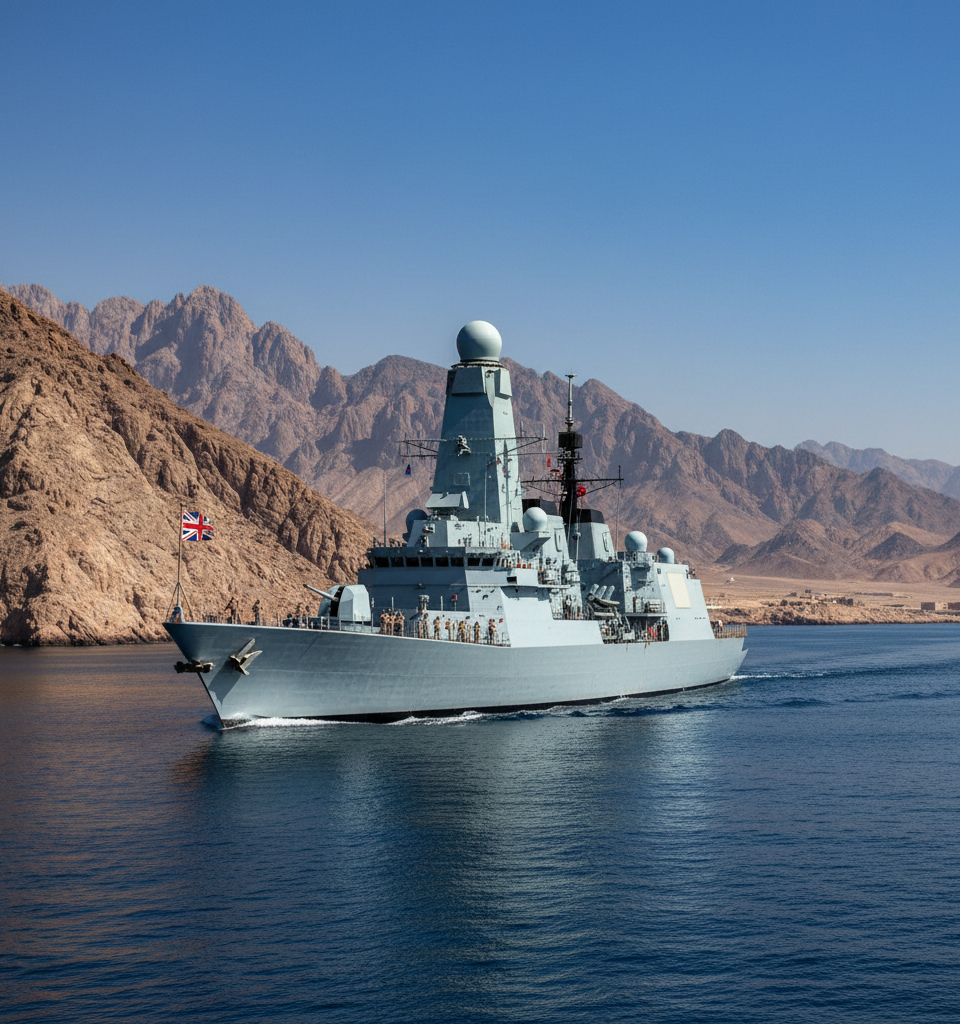
The United Kingdom's Ministry of Defence has confirmed the deployment of HMS Dragon, a sophisticated Type 45 destroyer, to the Middle East. The warship, renowned for its advanced anti-air capabilities, is expected to form a critical component of a proposed international naval mission aimed at safeguarding shipping lanes through the Strait of Hormuz. This deployment underscores a growing commitment from Western allies to protect global maritime commerce in a region fraught with geopolitical complexities and recent maritime incidents.
Context and Background
The Strait of Hormuz, a narrow waterway connecting the Persian Gulf with the Arabian Sea and the Indian Ocean, is one of the world's most critical choke points for oil and gas transit. Approximately 21 million barrels of crude oil pass through the strait daily, representing about 21% of global petroleum liquids consumption. The recent seizure of commercial vessels and attacks on tankers in the Gulf region have amplified concerns about the security of this vital artery, prompting calls for an international response. The UK's decision to deploy a high-value asset like HMS Dragon reflects both its strategic interests in maintaining freedom of navigation and its role as a key international maritime power.
Key Details of the Deployment
HMS Dragon, a Daring-class air-defence guided-missile destroyer, possesses state-of-the-art radar systems and the Sea Viper missile system, capable of simultaneously tracking and engaging multiple airborne threats. Its presence significantly bolsters the defensive capabilities of any naval task force it joins. While the exact operational parameters of the international mission are still being finalized, the inclusion of a Type 45 destroyer suggests a focus on robust air and missile defense for commercial shipping. The deployment follows discussions with key international partners, including the United States, about a collaborative response to the ongoing maritime security challenges in the Gulf.
Industry and Market Impact
The increased naval presence in the Strait of Hormuz is expected to have a mixed impact on global energy markets and shipping industries. While the enhanced security measures aim to reduce the likelihood of further incidents, which could disrupt oil supplies and drive up insurance premiums, the deployment itself highlights the underlying instability. Oil prices have seen fluctuations in response to geopolitical events in the region, and a more robust military posture could provide a degree of confidence to shippers, potentially stabilizing energy futures.
However, the costs associated with increased security and potential longer transit times due to escort requirements could be passed on to consumers. The shipping industry, already grappling with geopolitical risks, will welcome any measures that guarantee safe passage, though they remain wary of any actions that could escalate tensions further.
Expert Perspective
Defense analysts universally view this deployment as a significant move, signaling the UK's commitment to protecting international trade and upholding maritime law. Dr. Elizabeth Davies, a senior fellow at the Royal United Services Institute, noted, "The Type 45 is a formidable asset, and its deployment sends a clear message about the seriousness with which the UK views the security of the Strait of Hormuz. It's a pragmatic step to deter aggression and ensure the free flow of commerce, but it also underscores the delicate diplomatic tightrope being walked in the region." Other experts highlight the importance of multilateral cooperation, emphasizing that a fragmented response could be less effective than a unified international effort.
What's Next: Future Implications
The arrival of HMS Dragon heralds a potentially more robust international presence in the Gulf. Discussions are ongoing among various nations to solidify the structure and mandate of the proposed defensive mission. Future developments could include the arrival of additional naval assets from other allied nations, increased intelligence-sharing, and perhaps defined patrolled corridors for commercial vessels. The ultimate goal is to restore stability and deter further destabilizing actions without inadvertently escalating regional tensions. The long-term success of this initiative will depend heavily on sustained diplomatic engagement and a coordinated multinational approach to maritime security in this vital global waterway.