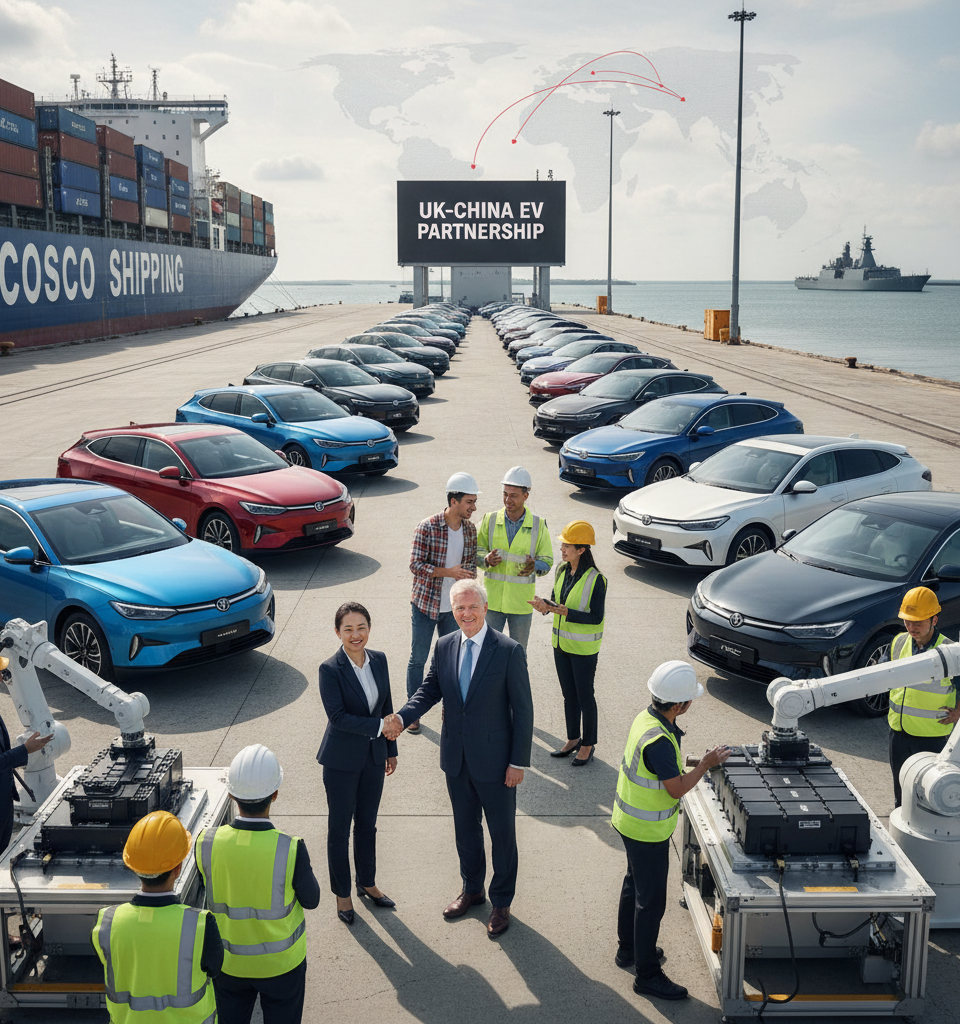
The United Kingdom government is adopting a notably pragmatic and, some might say, contrarian approach to the escalating global phenomenon of Chinese electric vehicle (EV) imports. While other Western nations, particularly the United States and the European Union, express growing apprehension about market dominance and unfair competition, key figures within the British administration, including economic editor Faisal Islam, indicate a largely unconcerned, even optimistic, outlook. This perspective posits that the influx of competitively priced, technologically advanced Chinese EVs could ultimately serve the interests of UK consumers through lower prices and accelerated EV adoption, while simultaneously spurring domestic industry to enhance its own offerings.
A Bold Stance Amidst Global Scrutiny
This distinct British position on Chinese EVs emerges against a backdrop of increasing trade tensions and protectionist measures elsewhere. The US, for instance, has implemented significant tariffs on Chinese goods, including automotive products, citing national security and economic fairness concerns. The EU is also actively investigating subsidies offered to Chinese EV manufacturers, potentially leading to its own tariffs. The UK's current stance, therefore, represents a strategic gamble – a decision to prioritize consumer benefit and market competition over immediate protectionist instincts, signaling a belief that the benefits from robust competition outweigh the potential risks of market disruption or over-reliance.
The Economic Rationale: Competition and Consumer Welfare
The core of the government's argument rests on the principles of free-market competition. The arrival of numerous Chinese EV brands, renowned for their rapid innovation, advanced battery technology, and often lower price points compared to established Western marques, is seen as a powerful deflationary force. For the average British consumer facing a cost-of-living crisis, more affordable EV options could be a decisive factor in making the switch from petrol to electric, thereby contributing to the UK's ambitious net-zero targets. Furthermore, the pressure exerted by this competition might compel legacy European and British manufacturers to accelerate their own EV development, optimize production, and reduce costs, leading to a stronger overall automotive sector.
Broader Industry Impact and Strategic Implications
Beyond direct consumer benefits, the government foresees a ripple effect across the UK's automotive ecosystem. While some domestic manufacturers might initially feel the squeeze, the influx of Chinese players could also open new avenues for collaboration, investment, and supply chain integration. There's potential for Chinese companies to establish R&D centers, manufacturing facilities, or even battery gigafactories within the UK, creating jobs and fostering technological exchange. This strategic outlook is partly influenced by the understanding that restricting access to the UK market might simply encourage these companies to invest elsewhere, denying Britain potential economic gains and technological advancements.
Expert Perspectives: A Calculated Risk?
Automotive industry analysts and economists offer a nuanced view. Many acknowledge the immediate consumer benefits of lower EV prices and increased choice. However, concerns persist regarding the long-term viability of some domestic brands if they cannot effectively compete with the scale and state-backed advantages of Chinese rivals. "While the consumer benefits are clear in the short term, the government must also ensure a level playing field and monitor for any anti-competitive practices to protect the foundational strengths of our own automotive sector," noted one London-based automotive economist, highlighting the delicate balance between open markets and strategic industrial policy.
What Lies Ahead: Monitoring and Potential Adjustments
The UK government's current relaxed posture is not necessarily immutable. Officials are expected to closely monitor market developments, including market share shifts, pricing strategies, and the investment patterns of Chinese manufacturers. Should the competitive landscape demonstrably shift to the detriment of core British industrial interests, or if concerns regarding intellectual property or national security escalate, a recalibration of this policy cannot be ruled out. However, for the foreseeable future, the UK appears committed to leveraging the competitive impetus of Chinese EV imports as a catalyst for its own transition to zero-emission transport.
The long-term success of this strategy hinges on the UK's ability to attract inward investment from these new players while simultaneously bolstering its own domestic automotive and battery manufacturing capabilities to remain a competitive force in the global EV race. This policy represents a bold alignment with consumer and climate goals, betting on market forces to drive innovation and efficiency across the automotive sector.