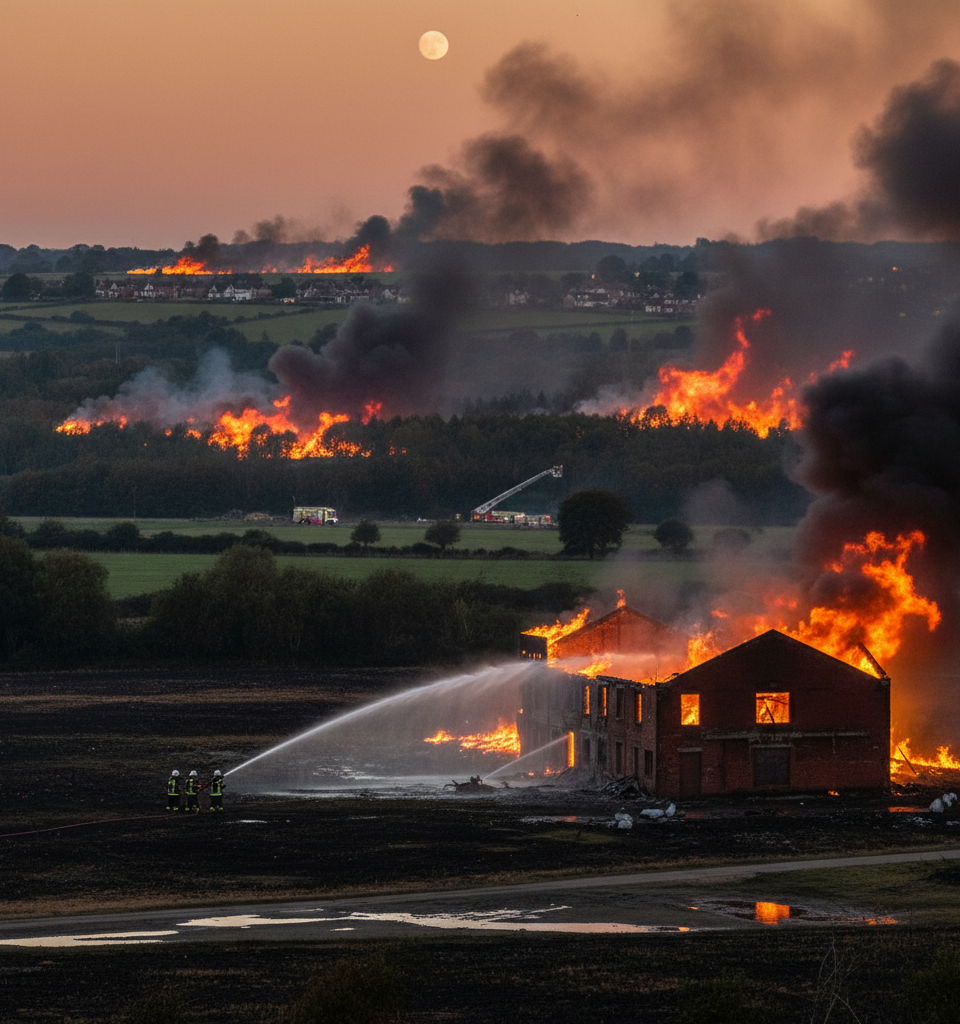
The mounting pressure on the United Kingdom's emergency services from simultaneous, widespread incidents signals a substantial operational and financial challenge for local authorities and the central government. Business continuity planning, property insurance premiums, and infrastructure resilience efforts will undoubtedly face renewed scrutiny as stakeholders assess the long-term economic implications of these events and the capacity of public services to respond effectively under duress. This situation underscores the critical need for robust disaster preparedness and adaptive resource management in a climate where such widespread emergencies could become more frequent.
Fire and rescue services across the United Kingdom are reportedly operating under significant strain, as multiple major incidents have been declared in various regions. Areas including Stourbridge, Sandwell, and Pershore are among those grappling with ongoing emergencies, prompting concerns over resource availability and the overall capacity of the nation's emergency response infrastructure.
Context and Background
The declaration of 'major incident' status by emergency services typically signifies an event or series of events that requires the mobilization of significant resources beyond routine operational capacity, often necessitating coordinated responses from multiple agencies. The current situation, characterized by its widespread nature, suggests that individual fire and rescue services are struggling to cope independently, leading to potential demands for mutual aid from neighboring brigades or even national assistance.
Key Operational Details
While specific details regarding the nature of each major incident remain limited, the collective impact on fire and rescue services is evident. The concurrent emergencies in diverse locations, such as Stourbridge, Sandwell, and Pershore, illustrate a geographical breadth that inherently complicates resource deployment. The phrasing "residents still not home" in the original assessment points to potential large-scale evacuations or sustained damage that has rendered properties uninhabitable, hinting at prolonged recovery efforts for affected communities.
Implications for Infrastructure and Commerce
For businesses and local economies in the affected regions, the ongoing incidents pose immediate disruptions and potential long-term costs. Infrastructure, including transportation networks and utilities, could be compromised, impacting supply chains and worker mobility. The sustained presence of emergency services also diverts resources that might otherwise be allocated to local public services, creating a cascading effect on community operations. The challenge extends beyond immediate crisis management to the protracted process of rebuilding and supporting displaced populations.
Resource Allocation Challenges
This widespread demand on emergency services brings into sharp focus the perennial challenges of resource allocation. Fire and rescue services, like many public sector entities, operate within budgetary constraints, often balancing equipment modernization, personnel training, and routine operational costs. A scenario involving multiple major incidents simultaneously tests these systems to their limits, raising questions about the adequacy of current funding models and staffing levels for unforeseen, large-scale emergencies.
Future Implications and Preparedness
Authorities will likely face intense scrutiny regarding their preparedness for such widespread events. This situation may prompt a re-evaluation of national emergency response protocols, inter-agency coordination mechanisms, and the resilience of critical infrastructure. Discussions are anticipated concerning investment in advanced warning systems, enhanced training for multi-incident scenarios, and robust communication strategies to keep the public informed and safe. The ongoing efforts will also shed light on the long-term societal and economic costs associated with extended recovery phases, particularly for those residents unable to return to their homes.