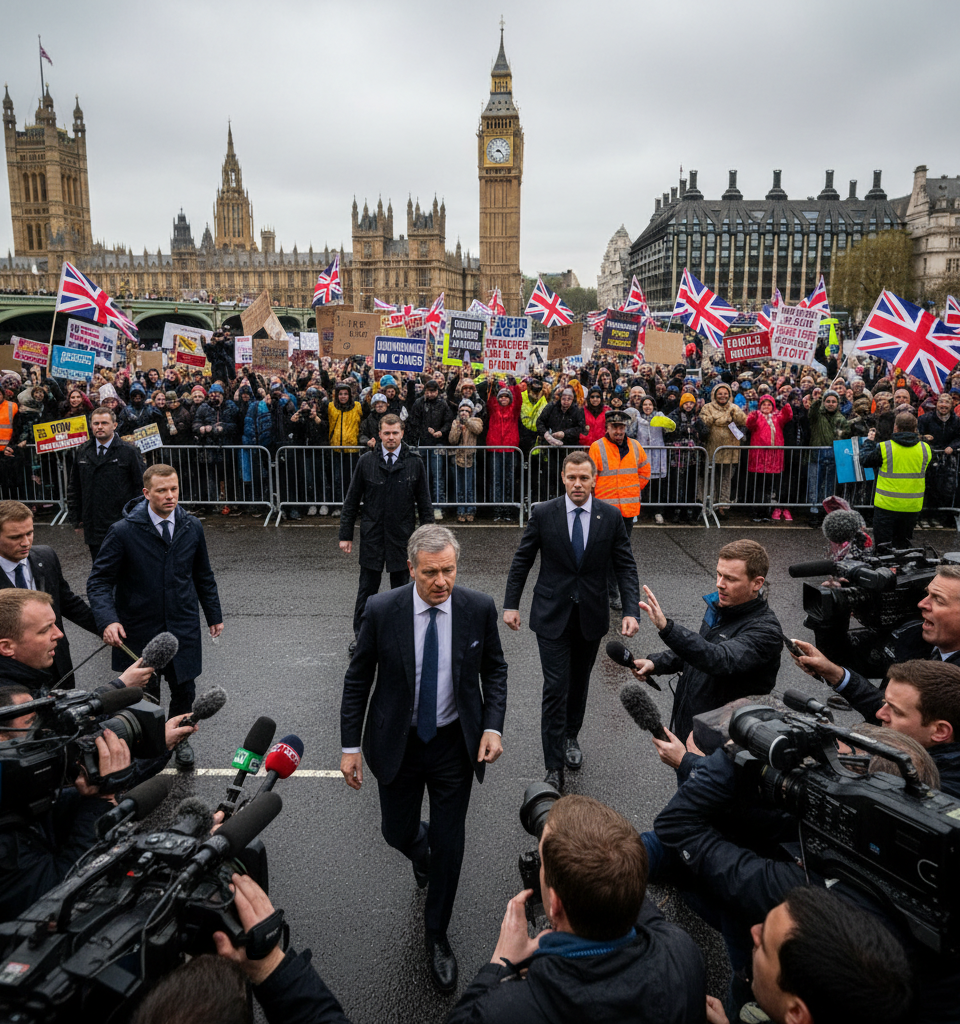
The United Kingdom has experienced an extraordinary churn of leadership in recent years, prompting widespread debate over the nation's capacity for effective governance. With three prime ministers in the past four years, and a political landscape marked by deep divisions and a struggling economy, the stability of British government is under intense scrutiny. This instability is not merely a cyclical political phenomenon but reflects deeper societal discontents and structural challenges that are testing the very foundations of democratic rule in one of the world's oldest parliamentary democracies.
A Decade of Disruption
This current period of political volatility follows a decade marked by significant national referendums and shifts in policy. The 2016 Brexit referendum, in particular, ignited a prolonged period of political and economic uncertainty, fundamentally reshaping the UK's relationship with the European Union and exacerbating internal divisions. Since then, the nation has grappled with the implementation of new trade agreements, immigration policies, and a search for a distinct post-Brexit identity on the global stage. This backdrop of change has coincided with a cost-of-living crisis, fueled by surging energy prices and inflation peaking at over 11% in late 2022, further intensifying public frustration and distrust in political institutions.
Recent data from the National Centre for Social Research indicates that public trust in politicians has fallen to historic lows, with only 15% of Britons believing politicians are generally trustworthy, down from 30% a decade ago. This erosion of trust is partly attributed to a series of scandals and perceived policy inconsistencies. For instance, the economic policies pursued by short-lived administrations have often created market volatility, exemplified by the dramatic fall of the pound against the dollar in late 2022 following a controversial fiscal statement, which saw interest rates surge and pension funds face significant challenges. The average tenure of a UK Prime Minister since 2010 now stands at less than three years, a stark contrast to previous eras of more sustained leadership.
Economic and Societal Repercussions
The constant change in leadership inevitably impacts the UK's economic and societal fabric. Businesses face an unpredictable regulatory environment, deterring long-term investment. Foreign direct investment into the UK fell by 13% in 2023 compared to the previous year, according to the Office for National Statistics, as investors seek more stable political climates. Public services, too, bear the brunt of this instability, with long-term strategic planning often disrupted by shifting ministerial priorities and budget reallocations. The National Health Service (NHS), already under immense pressure, struggles with record waiting lists and staff shortages, issues that successive governments have failed to adequately address amidst their own internal political battles.
Expert Perspectives on Governability
Political analysts and governance experts are increasingly asking if the UK has become more difficult to govern. Professor Sarah Hewson, a leading political scientist at the London School of Economics, notes, "The current political environment is characterized by hyper-partisanship and a lack of consensus on fundamental issues. This makes it incredibly challenging for any single leader or party to forge a stable mandate and implement long-term policies." Others point to the fragmented media landscape and the rise of social media as contributing factors, amplifying dissent and making it harder for governments to control narratives or build broad public support. The legacy of austerity measures, too, has arguably weakened local government and community resilience, placing more pressure on central government to address a wider range of issues.
Navigating Future Challenges
Looking ahead, the UK faces critical decisions regarding its economic recovery, its role in a complex geopolitical landscape, and the cohesion of its constituent nations. Upcoming general elections will be pivotal, with all major parties grappling with how to restore public confidence and present a credible vision for future stability. The next government, regardless of its composition, will need to address deep-seated issues of regional inequality, rejuvenate public services, and perhaps most importantly, bridge the widening chasm of political polarization. The challenge will be to demonstrate that sustained, effective governance is not an impossible ideal but an achievable reality for a nation facing extraordinary pressures from within and without.
Immediate priorities for any incoming administration would likely include addressing high inflation, improving the NHS's capacity, and charting a clear course for economic growth that benefits all regions of the UK. The international community watches closely, as the UK's ability to navigate these challenges will have implications for its global standing and attractiveness as a partner and investment destination.