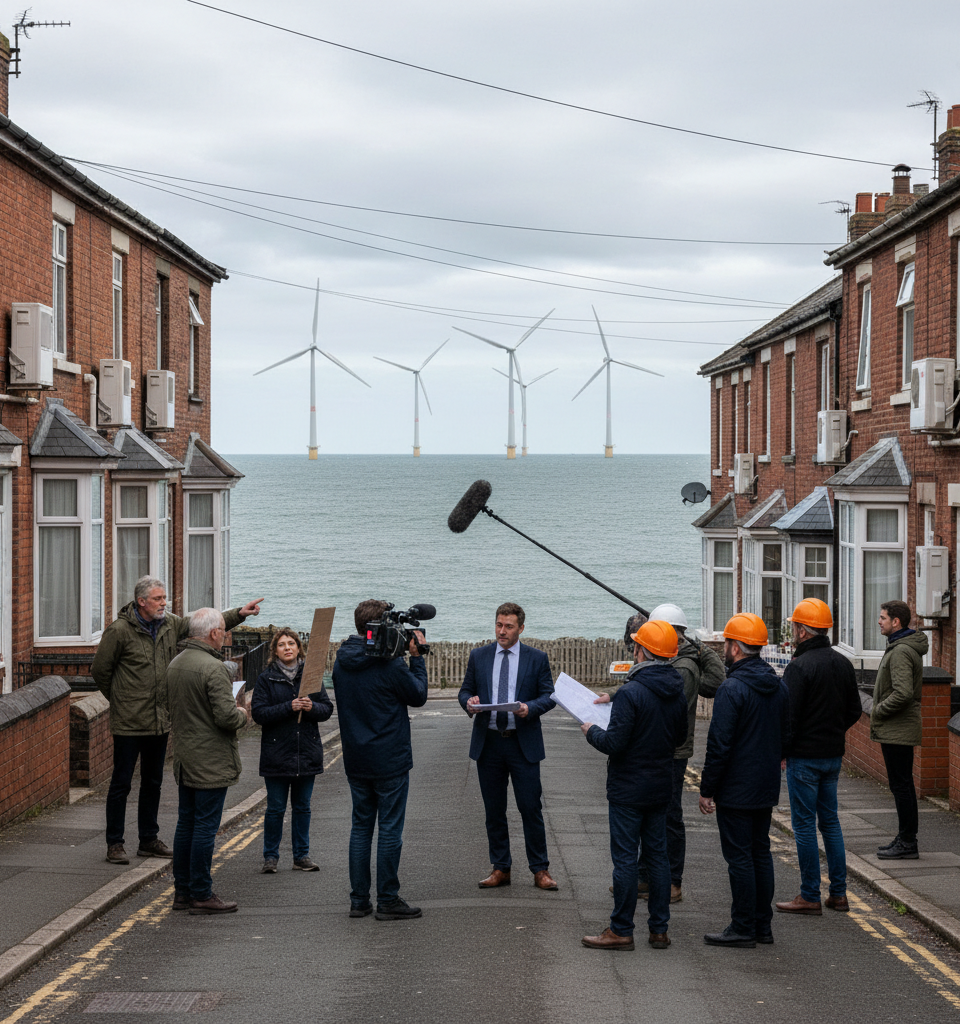
The United Kingdom's flagship net-zero ambitions are facing unprecedented scrutiny as soaring project costs force a re-evaluation of its decarbonization strategy. A burgeoning argument posits that prioritizing cost efficiency across the entire energy transition, from renewable energy deployment to consumer-facing technologies, could offer a more sustainable and politically palatable route to meeting climate targets. This shift in perspective challenges the prevailing narrative that rapid deployment of green technologies, such as offshore wind farms and widespread heat pump adoption, is the sole answer, instead highlighting the critical role of economic pragmatism in achieving climate goals.
The Rising Tide of Green Costs
The current debate unfolds against a backdrop of increasing financial pressures on the UK's net-zero agenda. Large-scale infrastructure projects, particularly in offshore wind, have seen significant cost escalations. For instance, recent reports indicate that the cost of developing a gigawatt of offshore wind capacity has surged by over 30% in the last two years, driven by supply chain bottlenecks, rising commodity prices, and inflation. This has led to high-profile setbacks, including the cancellation of Vattenfall's Norfolk Boreas project in 2023 due to a 40% increase in development costs. Simultaneously, the rollout of heat pumps, a cornerstone of residential decarbonization, faces public resistance over perceived high installation and operational expenses, despite government grants like the Boiler Upgrade Scheme offering £7,500 towards conversion.
A Paradigm Shift: Efficiency Over Expenditure?
The core of the emerging argument is that the most carbon-intensive activities are often also the most expensive. Therefore, interventions that reduce costs across the board inherently contribute to lower emissions. Proponents of this view suggest that optimizing energy efficiency in homes, industries, and transportation—often through less glamorous but equally impactful measures—can yield substantial carbon reductions without the astronomical capital outlays associated with some mega-projects. This includes stricter building codes, industrial process optimization, and smart grid solutions that reduce peak demand, thereby diminishing the need for expensive new generation capacity.
Impact on the Green Economy and Market Signals
This re-evaluation sends significant ripples through the UK's green economy. Renewable energy developers might face increased pressure to demonstrate not just carbon abatement but also economic viability and cost predictability. The emphasis on cost-cutting could also stimulate innovation in less capital-intensive decarbonization solutions, such as advanced insulation materials, smart energy management systems, and behavioral change initiatives. Furthermore, it could reshape procurement strategies for government and private entities, favoring solutions that offer the best value for money per tonne of carbon abated, potentially fostering greater competition and efficiency within the green technology sector.
Expert Insights: Balancing Ambition with Affordability
Energy economists and climate policy experts largely acknowledge the validity of the cost-cutting argument, though not at the expense of ambition. Dr. Eleanor Vance, a senior fellow at the Institute for Energy Economics, notes, "While rapid deployment of renewables is crucial, ignoring cost efficiencies is a path to public and political backlash. The smartest net-zero strategy integrates technological advancement with rigorous cost management and demand-side solutions." Other analyses suggest that a diversified approach, blending large-scale renewable projects with incremental, cost-effective efficiency gains, offers the most resilient pathway. The Committee on Climate Change, for example, has consistently highlighted the importance of energy efficiency as a foundational element of the UK's decarbonization pathway.
Future Implications and Policy Direction
Looking ahead, the UK government is likely to face sustained pressure to demonstrate greater fiscal prudence in its net-zero endeavors. This could manifest in revised subsidy schemes, a stronger focus on energy demand reduction policies, and potentially, a recalibration of targets for certain technologies based on economic feasibility. The outcome of the next Contracts for Difference (CfD) auction rounds for offshore wind will be a key indicator of the government's willingness to adjust strike prices to reflect the current economic climate. For consumers, this shift could mean a greater emphasis on solutions that offer immediate financial savings, such as home insulation retrofits or smart thermostats, thereby garnering broader public support for the net-zero transition. The long-term success of the UK’s net-zero push hinges on its ability to strike a delicate balance between aggressive decarbonization targets and economic affordability, ensuring public buy-in and sustained political will.
--
Reporting by [Your Name/Publication Name]