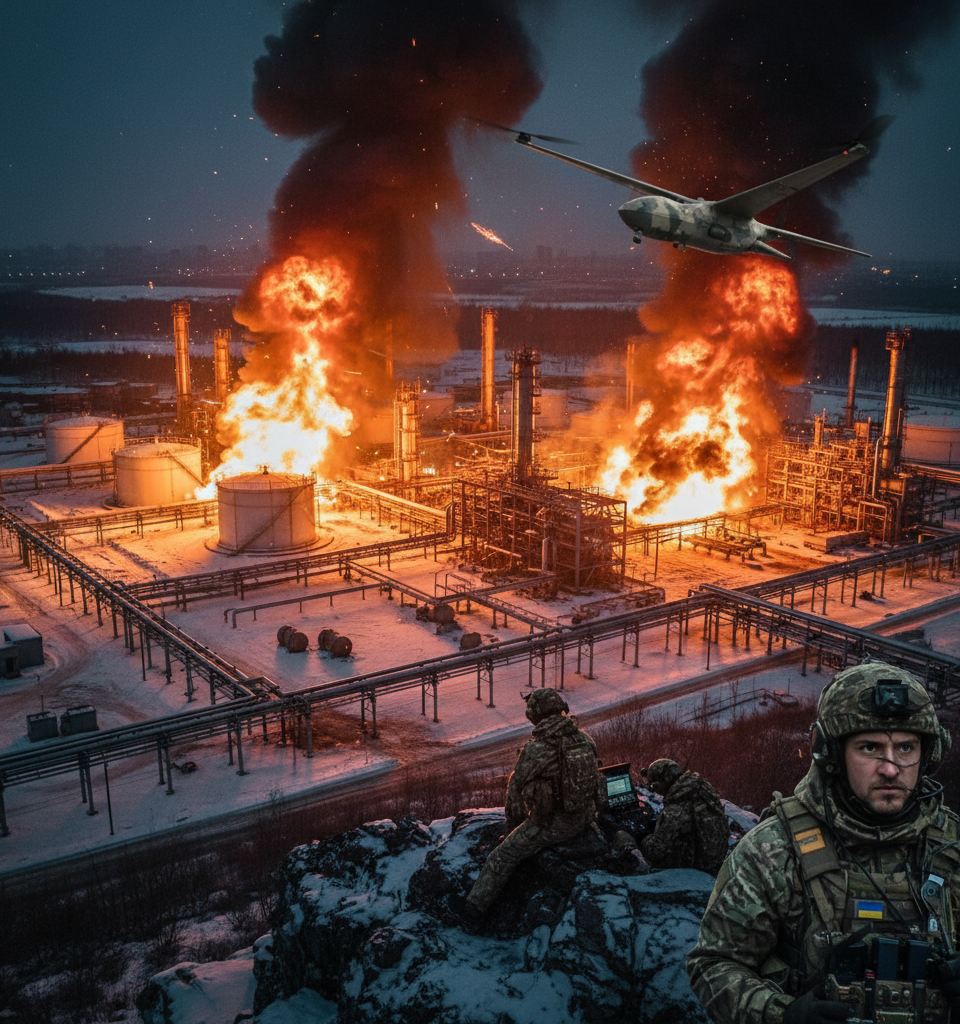
Kyiv has dramatically escalated its drone and missile attacks on Russia's vital oil refining and export infrastructure in recent weeks, a direct response to soaring global oil prices that are significantly bolstering Moscow's war economy. These aggressive actions, occurring across Western and Southern Russia, represent a critical strategic shift, directly targeting the revenue streams that finance the Kremlin's war machine against Ukraine. The intensified campaign seeks to disrupt Russia's capacity to process and ship its crude oil, thereby limiting its financial windfall from the current geopolitical landscape, particularly the rising energy costs exacerbated by tensions in the Persian Gulf.
The Economic Battlefield: How Oil Fuels Conflict
The strategic importance of oil revenue to Russia cannot be overstated. Energy exports constitute approximately one-third of the Russian federal budget, a critical component financing military operations, sustaining the domestic economy, and circumventing Western sanctions. The recent spike in Brent crude prices, nearing $90 per barrel, has provided the Kremlin with an unexpected windfall, offsetting some of the impact of international sanctions and enabling sustained military procurement. Ukraine's targeted strikes are a direct acknowledgment of this economic reality, transforming oil infrastructure into a primary battleground in an attempt to choke off Moscow's financial resources.
Precision Strikes and Tangible Disruptions
Recent attacks have targeted key facilities, including the Ryazan oil refinery, one of Russia's largest, and the Novokuibyshevsk refinery in the Samara region, causing significant damage and disruptions. Reports from Ukrainian intelligence sources claim these operations have reduced Russia's refining capacity by an estimated 10-15%, though Moscow disputes the extent of the damage. Satellite imagery and eyewitness accounts confirm fires and operational halts at several facilities. For instance, an attack on an oil processing facility near Volgograd on February 3rd reportedly caused a blaze, temporarily halting operations. While Russia possesses considerable reserves and alternative export routes, sustained pressure on its refining capabilities could force it to export more unprocessed crude at potentially lower margins, or even reduce overall oil output due to storage limitations.
Global Market Ripples and Energy Security Concerns
The intensifying conflict has immediate and potentially long-term implications for global energy markets. While the immediate impact on global oil supply has been contained, the persistent threat to Russian energy infrastructure introduces an added layer of uncertainty, contributing to already elevated oil prices. Energy analysts are closely watching how these attacks could affect global refined product markets, especially diesel and gasoline. Europe, despite diversifying away from Russian crude, remains vulnerable to global price fluctuations. Furthermore, the risk of retaliatory actions from Russia against Ukrainian energy infrastructure or even against shipping in the Black Sea adds another unpredictable element to the international energy security landscape.
Expert View: Limited but Strategic Impact
According to Dr. Alexandra Sazhina, an energy security expert at the London School of Economics, "Ukraine's strategy here isn't to cripple global oil supply, but to degrade Russia's ability to refine and export its oil products, which fetch higher prices. It's a precise economic warfare tactic. While Russia can reroute some crude, sustained damage to refineries impacts their profit margins and logistical chains, forcing them to sell crude at a discount or even reduce extraction if storage fills up." She adds that the psychological impact of these attacks on investor confidence in Russian energy assets should not be underestimated.
What Lies Ahead: A Protracted Economic War
Looking forward, analysts anticipate a continuation, and potentially an escalation, of these Ukrainian targeted strikes. Kyiv's strategy is likely to evolve, seeking vulnerabilities in Russia's energy supply chain beyond just refining — potentially targeting pipelines, storage depots, or even key export terminals. The Kremlin, in turn, will likely bolster air defenses around critical infrastructure and seek to minimize public reporting of damage. The long-term effectiveness of this campaign will depend on Ukraine's ability to sustain its offensive capabilities and Russia's capacity to repair and adapt. This economic front of the war is set to become increasingly significant, directly influencing both nations' ability to endure a protracted conflict, with ripple effects across global energy markets for months to come.