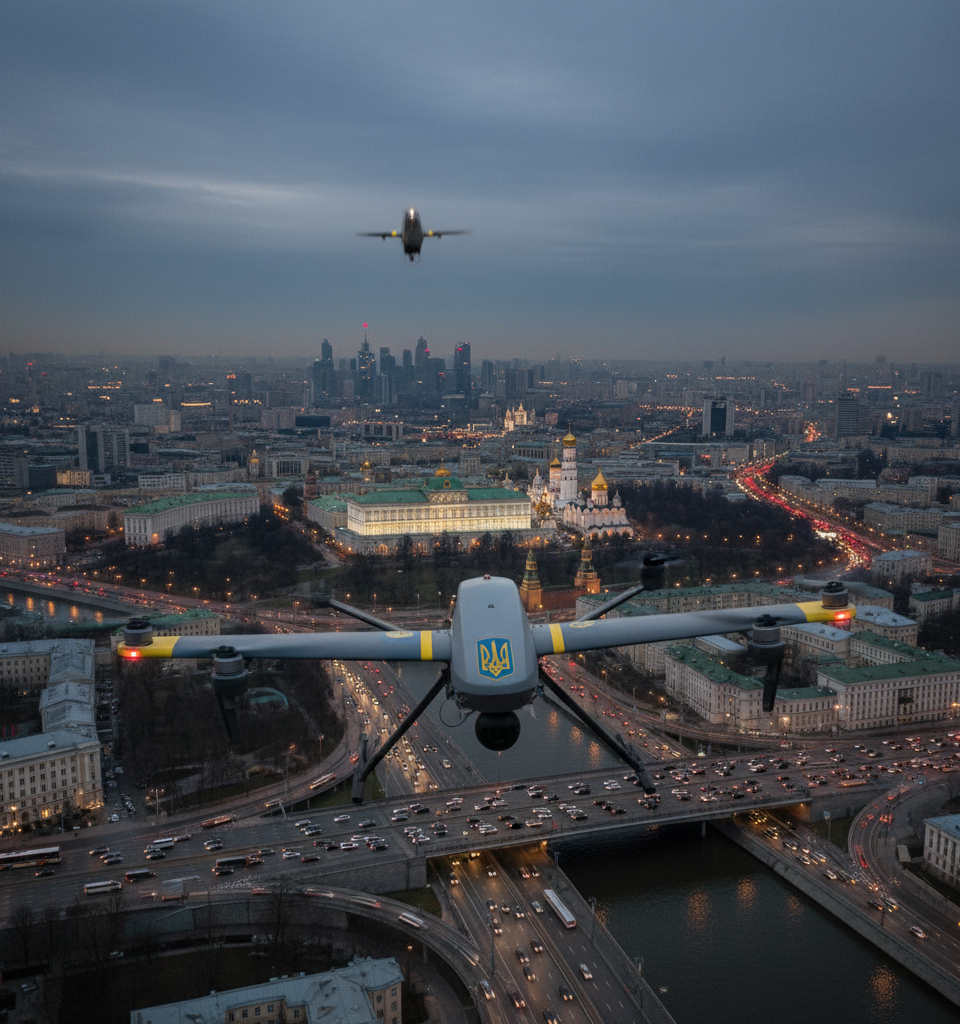
Multiple Ukrainian drones penetrated Russian air defenses and struck targets within Moscow and its surrounding regions recently, in what officials described as one of the largest such attacks on the capital. The coordinated assault underscores a strategic shift by Kyiv, demonstrating its growing capability to project force deep into Russian territory and challenging the Kremlin's narrative of an unassailable homeland. Ukrainian officials, while not directly claiming responsibility for specific attacks, emphasized that their actions are a "fully justified response" to Russia's prolonged invasion and relentless targeting of Ukrainian cities and civilian infrastructure.
Context and Background
For over a year, the conflict has largely been confined to Ukrainian soil, with Russian forces occupying significant portions of the east and south. While there have been sporadic cross-border shelling incidents and occasional drone incursions into Russian border towns, the recent widespread attack on Moscow represents a significant psychological and operational escalation. It follows increasing pressure on Ukraine to demonstrate its ability to retaliate effectively and disrupt Russia's war machine and domestic stability. This shift places Moscow under a "darkening cloud of anxiety," as one analyst observed, challenging the sense of normalcy many Russians have maintained despite the ongoing hostilities.
Key Details
The drone barrage involved an undisclosed number of unmanned aerial vehicles, with Russian defense ministries reporting the shootdown of several drones over various districts of Moscow and the Moscow region. Initial reports indicated minor damage to some residential buildings, with no immediate fatalities, though several people were reportedly injured. Moscow Mayor Sergey Sobyanin confirmed the attacks, stating that emergency services were on the scene. Ukrainian presidential advisor Mykhailo Podolyak, without directly confirming Ukraine's involvement, commented that "our responses to Russia's prolongation of the war and attacks on our cities and communities are entirely justified." The incident prompted temporary closures at some Moscow airports and a heightened state of alert across the capital.
Industry and Market Impact
The psychological impact of the Moscow drone attack extends beyond military considerations, potentially influencing investor confidence and market stability within Russia. While immediate significant economic disruption was not reported, the perceived increase in security risk could deter foreign investment and impact domestic consumer sentiment. The rouble, already under pressure from sanctions and fluctuating oil prices, could face further volatility. Internationally, the attacks could also spur new discussions among Western allies regarding the appropriate scope and nature of military aid to Ukraine, as it demonstrates Kyiv's capacity to inflict costs on the aggressor beyond the immediate front lines.
Expert Perspective
Defense analysts universally view this as a significant development. Dr. Evelina Kononenko, a geopolitical strategist at the European Institute for Security Studies, noted, "This drone attack signifies Ukraine's strategic pivot towards asymmetric warfare deeply within Russia. It's less about military conquest and more about disrupting the Kremlin's narrative, creating domestic pressure, and forcing Russia to divert resources to homeland defense." She added, "The psychological blow to Moscow's populace and the operational challenge for Russian air defenses are substantial reminders that this war is far from contained." Analysts also highlighted the sophisticated coordination required for such an extensive strike, suggesting advanced planning and potentially upgraded drone technology.
What's Next
This drone attack likely signals a new phase in the conflict, where Ukraine aims to expand the theater of war to include targets deep within Russia. This could lead to a cycle of escalation, with Moscow almost certainly vowing retaliation. The coming weeks may see increased Russian missile and drone attacks on Ukrainian cities, potentially with greater intensity. Furthermore, the incident will likely prompt Russia to bolster its air defense systems around key urban centers, potentially diverting military assets from the front lines. The international community will closely monitor for any further reciprocal actions, as the risk of miscalculation escalates. Kyiv's demonstrated capability could also influence ongoing debates about long-range weapons provisions from Western allies, as the strategic calculus of the conflict evolves.
Broader Geopolitical Implications
The audacious nature of the Moscow drone attack holds broader geopolitical implications. It challenges the efficacy of Russia's vast military apparatus and its ability to protect its own capital, potentially eroding the perception of strength that the Kremlin projects both domestically and internationally. For Ukraine, it serves as a powerful message of resilience and strategic ingenuity, potentially bolstering morale and demonstrating its resolve to fight on.
This incident will undoubtedly be a central topic in upcoming diplomatic discussions and could influence alliances and global perceptions of the conflict's trajectory. It underscores that after over a year of grinding warfare, the conflict is not only far from over but is also entering a new, more unpredictable phase. The "darkening cloud of anxiety" over Russia is expected to intensify as Ukraine continues to seek ways to push back against the invasion.