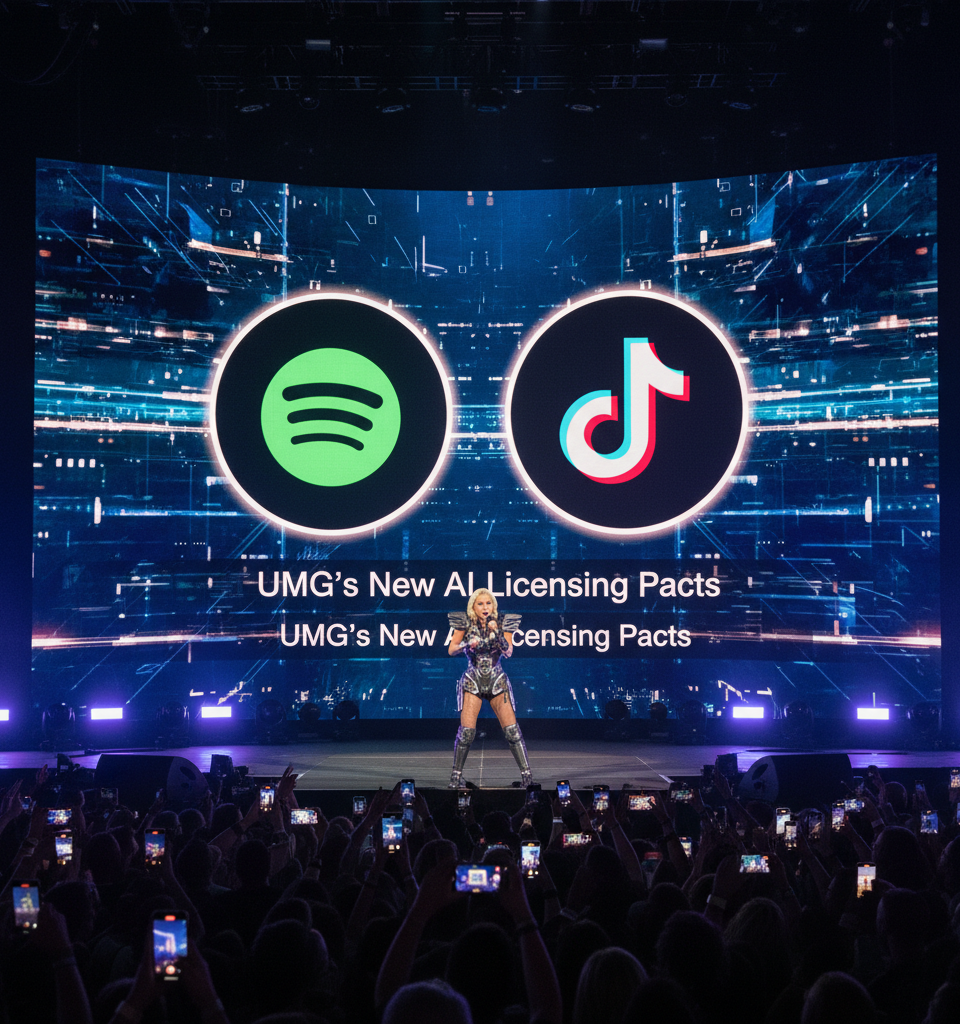
Universal Music Group (UMG), the world's largest music company, has reportedly finalized significant multi-year licensing agreements with both TikTok and Spotify, signaling a pivotal shift in how the music industry is navigating the burgeoning era of artificial intelligence. These new pacts, particularly the one with TikTok, are being framed by UMG as a commitment to "promoting human artistry"—a declaration that, upon closer inspection, appears to be a sophisticated strategy for integrating AI rather than resisting it.
The deals arrive at a critical juncture for the music industry, grappling with the rapid advancements and widespread adoption of AI technologies that can generate or manipulate audio. The partnership with TikTok, specifically, is a multi-year agreement that secures the continued presence of tracks from UMG's extensive roster of chart-topping artists, including global icons like Lady Gaga, on the popular short-form video platform. This ensures that a vast library of commercially successful music remains accessible for user-generated content, maintaining UMG's relevance in a key digital consumption channel.
Historically, licensing negotiations between major labels and digital platforms have been contentious, often revolving around royalty rates, content control, and intellectual property protection. The current landscape introduces the complex layer of AI-generated content and the use of copyrighted material for training AI models. UMG's public stance on "human artistry" could be interpreted as a strategic narrative designed to reassure artists and the public while simultaneously forging practical pathways for content distribution in an AI-powered ecosystem.
These agreements are expected to have a far-reaching impact across the broader music industry. For artists, especially those under the UMG umbrella, the deals solidify their presence on two of the most dominant music and social media platforms, ensuring continued exposure and revenue streams. For other record labels and independent artists, UMG's approach could set a precedent for future negotiations regarding AI usage and content licensing. The implication is that these deals are not merely about traditional catalog licensing but also about establishing frameworks for how AI models interact with and potentially derive from protected works.
While the specifics of the AI clauses within these agreements remain largely undisclosed, industry analysts suggest that UMG is likely seeking to establish clear guidelines and potentially new revenue models surrounding the use of its catalog in AI contexts. This could involve licensing its vast audio library for AI training, developing mechanisms for tracking AI-generated content that utilizes UMG-licensed material, and shaping the future of copyright in a digitally driven, AI-infused creative economy. It underscores a recognition that outright prohibition of AI's use of copyrighted music is perhaps impractical or unenforceable, leading instead to strategies of control and regulated commercialization.
The path forward for the music industry will undoubtedly involve continued adaptation to AI. UMG's latest agreements with TikTok and Spotify are not just business as usual; they represent a proactive response to an evolving technological landscape. The industry will be closely watching how these partnerships unfold, particularly regarding any new terms or precedents set for AI-generated music, creator remuneration, and the balance between technological innovation and artistic safeguarding. The expectation is that more such agreements, with increasingly sophisticated clauses pertaining to AI, will become standard across the digital entertainment sector as content creators, platforms, and rights holders continue to navigate this transformative era.
The success of these agreements will likely be measured not only in traditional financial terms but also in their ability to establish sustainable models for intellectual property in an age where algorithms play an increasingly creative role. As UMG positions itself at the forefront of this convergence, its strategies could well define the operational blueprints for the next decade of digital music distribution and creation.