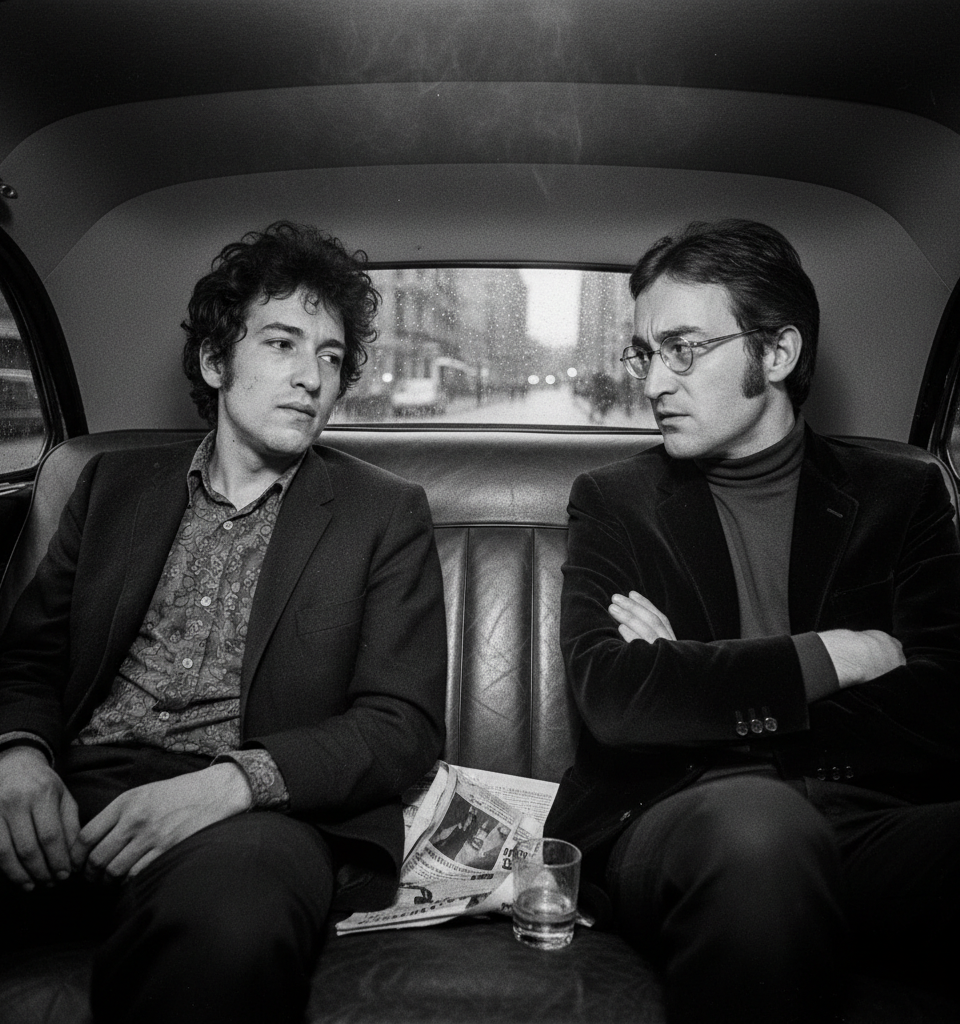
London, UK – Decades after its hushed filming, the enigmatic limousine encounter between musical titans Bob Dylan and John Lennon in 1966 continues to captivate historians and fans alike. This fraught exchange, preserved in D.A. Pennebaker's seminal documentary Eat the Document, offers a rare, unfiltered glimpse into the complex relationship and unspoken artistic pressures confronting two of the 20th century's most influential cultural icons during the height of their respective, yet vastly different, careers. Far from casual banter, the filmed interaction, punctuated by Dylan's apparent exhaustion and Lennon's probing, has emerged as a crucial historical artifact, shedding light on the internal dynamics of artistic celebrity and the profound shifts occurring within popular music.
This particular moment occurred amidst Dylan's notoriously grueling and often chaotic 1966 European tour, which saw him transition from acoustic folk hero to electric rock provocateur, alienating a segment of his traditional fan base. Lennon, already a global phenomenon with The Beatles, was himself grappling with the trappings of superstardom and the burgeoning counterculture. Their meeting in the confines of a limousine, following a Dylan performance in London, was not merely a social call but a clash of philosophies, vulnerabilities, and perhaps, subtle artistic one-upmanship. The footage, deliberately ambiguous in its original release, has subsequently been analyzed frame by frame, fueling endless speculation about the unspoken tensions beneath the surface.
The core of the limo scene revolves around Dylan's extreme exhaustion, fueled by relentless touring and rumored drug use, juxtaposed against Lennon's attempts to engage him in conversation. While exact dialogue is often difficult to discern and heavily edited in the documentary, the visual cues are potent. Dylan appears on the verge of collapse, at one point seemingly suffering from nausea, while Lennon observes with a mixture of concern, amusement, and perhaps, a hint of judgment. The underlying 'touchy issue' at stake, as later interpreted by scholars, was the unspoken hierarchy of fame, an artistic rivalry, and questions of authenticity. Both men, in their own ways, were challenging the conventions of popular music and struggling with the immense expectations placed upon them by millions worldwide.
From an industry perspective, this filmed exchange underscores the immense psychological toll of superstardom in the mid-1960s – a period when the music business was rapidly professionalizing but lacked the infrastructure for artist well-being seen today. The candid portrayal of Dylan's breakdown-adjacent state, witnessed by Lennon, offers a stark contrast to the carefully curated public images of rock stars. It implicitly raises questions about artist exploitation, mental health in the public eye, and the often-unseen struggles behind the glamour, issues that continue to resonate within the music industry's ongoing discourse about artist welfare and sustainability.
Music historians and cultural commentators have extensively dissected this interaction. Dr. Evelyn McDonnell, a professor of journalism and music critic, suggests that “Lennon, a master of public persona, was likely testing Dylan, attempting to pierce the mystique. Dylan, raw and unfiltered, barely had the energy to maintain a facade.” Others, like author and Dylan biographer Clinton Heylin, have posited that Lennon's presence further exacerbated Dylan's paranoia and exhaustion, making the encounter even more uncomfortable. The interplay of their differing public personas — Lennon as the witty, cutting intellectual, Dylan as the enigmatic, poetic prophet — is demonstrably palpable, even in Dylan's weakened state.
The enduring fascination with this brief limousine ride speaks volumes about the historical weight of both artists. It stands as a testament to a pivotal era where popular music was morphing into highly influential art, commanding unprecedented cultural power. While Eat the Document was initially suppressed and only saw significant distribution years later, this specific segment has transcended the film itself, becoming a cultural touchstone representing the pressures of fame and the often-unseen battles fought by artists. The unvarnished nature of the footage, however uncomfortable, provides invaluable insight into the private struggles of public figures, forever cementing its place in the annals of rock history.
Moving forward, the unceasing analysis of such historically rich moments continues to inform contemporary discussions about celebrity culture, artistic integrity, and the delicate balance between public persona and private turmoil. As new generations discover these iconic figures, the Dylan-Lennon limo scene serves as a powerful reminder that even at the zenith of fame, vulnerability and human frailty remain constant, universally relatable elements of the human experience. Its continued relevance highlights the timeless appeal of dissecting the lives of our cultural heroes, particularly in moments of perceived weakness or unguarded honesty, offering a deeper understanding of the forces that shaped a revolutionary musical era.