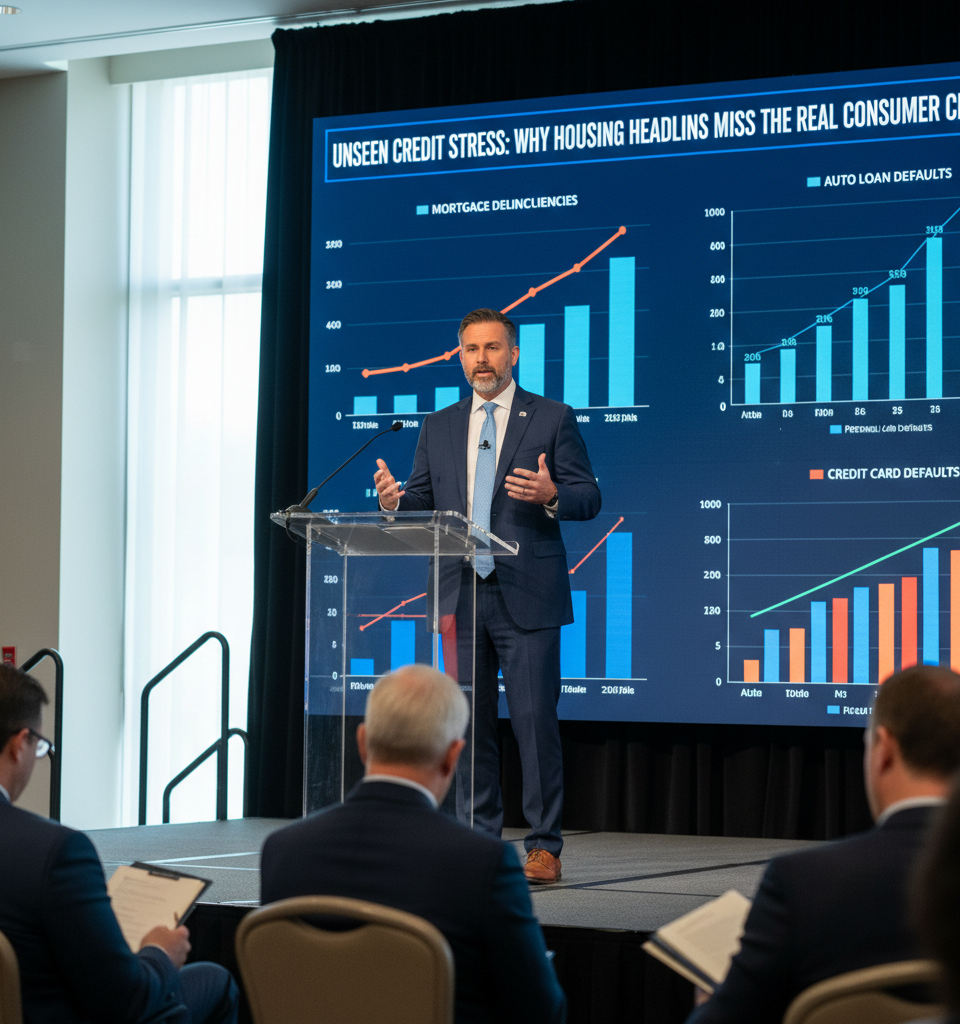
Beneath the surface of seemingly robust housing market headlines, a mounting wave of consumer credit stress is quietly building, a dynamic largely unaddressed by mainstream real estate reporting. Michael Krein, president of the REO Broker’s Association, is sounding the alarm, urging real estate agents and industry professionals to shift their focus from mere market metrics to the escalating financial pressures on potential and existing homeowners. This overlooked dimension, he argues, poses a substantial, unacknowledged risk to the housing sector's near-term stability and long-term health.
The Unseen Financial Squeeze
For months, media narratives have predominantly highlighted rising interest rates, fluctuating inventory, and home price appreciation. However, Krein’s perspective illuminates a crucial disconnect: these macro indicators often fail to capture the nuanced and increasingly precarious financial situations faced by individual consumers. The current economic climate, characterized by persistent inflation, elevated living costs, and the erosion of pandemic-era savings, has placed a significant strain on household budgets. This financial vulnerability is manifesting in subtle yet critical ways, from rising credit card delinquencies to increased reliance on high-interest debt, indicators that often precede broader economic downturns or housing market corrections.
Data Insights and Warning Signs
Recent data underscores Krein's concerns. According to the New York Federal Reserve, credit card debt surged to a record $1.13 trillion in the first quarter of this year, with delinquency rates simultaneously climbing across all age groups. Specifically, the percentage of credit card balances transitioning into serious delinquency (90 days or more delinquent) rose from 3.2% in Q4 2023 to 3.7% in Q1 of this year. While still below pre-pandemic highs, the rate of increase is notable. Similarly, auto loan delinquencies have also seen an uptick, suggesting a broader weakening of consumer payment capacity. These figures, though not directly housing-related, serve as a potent leading indicator, impacting individuals' ability to qualify for mortgages, manage existing home payments, or withstand unforeseen financial shocks.
Broader Industry Implications
The implications for the real estate industry are significant. A credit-stressed consumer base translates to a reduced pool of qualified buyers, increased risk of mortgage defaults, and potentially, a slowdown in market velocity. Realtors, lenders, and investors who solely focus on housing supply and demand risk being blindsided by shifts in buyer affordability and financial stability. As Krein emphasizes, understanding the client’s full financial picture, beyond just their FICO score, becomes paramount. This includes assessing debt-to-income ratios holistically, considering non-housing related expenses, and recognizing the psychological impact of ongoing financial pressure on purchase decisions and housing tenure.
Expert Perspectives on Consumer Resilience
Economists and financial analysts are increasingly noting this divergence. Dr. Sarah Chen, a senior economist at a major financial institution, recently commented, “While unemployment remains low, the real wage growth has struggled to keep pace with inflation for many households. This effectively reduces purchasing power, and we’re seeing consumers drawing down savings or relying on credit to bridge that gap. The housing market, while seemingly robust, isn't immune to these underlying stresses on household balance sheets.” This perspective aligns with Krein’s assertion that a deeper dive into consumer financial health is essential for an accurate market assessment.
The Path Forward: Proactive Engagement
What’s next requires a proactive and empathetic approach from real estate professionals. Agents need to be equipped to have candid conversations with clients about their financial preparedness, not just their desire to buy or sell. This might involve referring clients to financial counselors, educating them on debt management strategies, or guiding them toward more affordable housing options. Furthermore, the industry needs to advocate for policies that support consumer financial health, recognizing that it underpins the entire housing ecosystem. Failure to acknowledge and address these credit stress signals could lead to unforeseen market volatility and a more challenging environment for all stakeholders in the coming months.
Ultimately, the housing market’s trajectory isn't solely dictated by interest rate hikes or inventory levels. The financial well-being of the individuals who buy, sell, and live in homes is a critical, often-ignored variable. By paying closer attention to the nuanced indicators of consumer credit stress, real estate professionals can better prepare themselves and their clients for the evolving economic landscape, fostering a more resilient and sustainable housing market for the future.