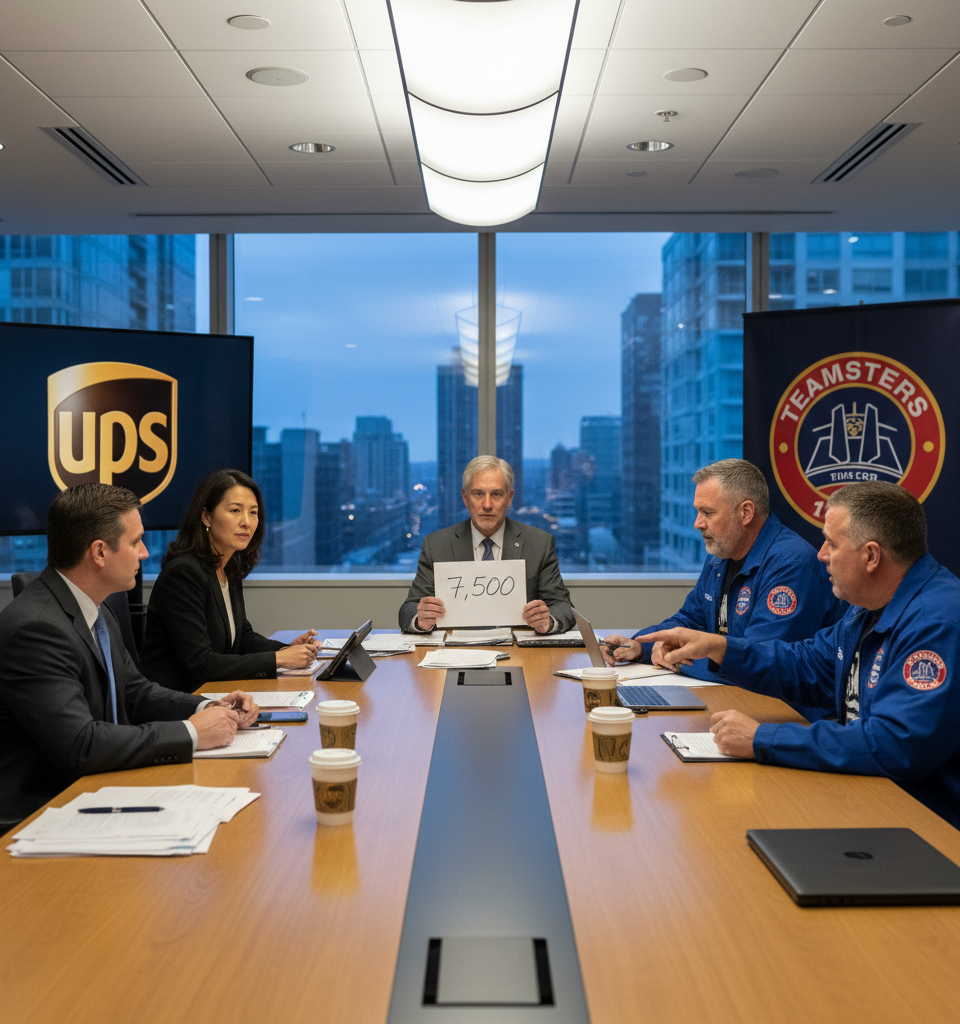
ATLANTA, GA – In a significant development for both labor relations and logistics operations, United Parcel Service (UPS) has announced a revised cap of 7,500 drivers for its voluntary separation program, a direct consequence of intense negotiations and pressure from the International Brotherhood of Teamsters union. This decision, reached after considerable pushback from the influential union, signals the ongoing impact of the recently ratified labor agreement and the Teamsters' commitment to safeguarding their members' interests amidst operational adjustments at the world's largest package delivery company.
Context of a High-Stakes Labor Landscape
This limitation on driver buyouts arises just months after UPS and the Teamsters successfully ratified a historic five-year collective bargaining agreement, narrowly averting a crippling strike that could have cost the U.S. economy billions. The previous agreement, finalized in August 2023, included significant wage increases, improved working conditions, and the elimination of a two-tiered wage system for package car drivers. The voluntary separation program, initially a mechanism for UPS to streamline operations and manage its workforce, quickly drew the Teamsters' scrutiny as they sought assurances that workforce reductions would not undermine the hard-won gains of the new contract or lead to an imbalance in staffing levels, particularly regarding full-time positions. The union has consistently emphasized the importance of maintaining a strong, full-time driver contingent.
Key Details and Union Scrutiny
The initial scope of UPS's voluntary separation program was not explicitly capped, raising concerns within the Teamsters about its potential to significantly reduce the ranks of tenured, higher-paid drivers. Under the new agreement, the company committed to limiting the number of drivers eligible for the Enhanced Attrition Program (EAP) to no more than 7,500 across its U.S. operations. This cap effectively places a ceiling on how many drivers can opt for early retirement, providing a measure of stability and predictability for the union. While specific financial terms of the buyout offers were not publicly disclosed, such programs typically include a severance package, health benefits continuation, and other incentives designed to encourage voluntary departure. The Teamsters' vigilance ensured that these buyouts would not inadvertently pave the way for an increase in lower-paid, part-time positions or contract outsourcing, a long-standing point of contention.
Impact on the Logistics and Labor Market
This outcome sends a clear message about the continued strength of organized labor, particularly within the logistics sector. For UPS, careful management of its workforce is critical as it navigates fluctuating parcel volumes and seeks to optimize operational efficiency. While a reduction of 7,500 drivers could represent a significant decrease in headcount, the voluntary nature of the program and the union-imposed cap help mitigate potential instability. For the broader logistics industry, this event reinforces the growing influence of labor unions in shaping corporate strategy and operational decisions. Competitors, particularly non-unionized carriers, will be observing closely how UPS manages its workforce adjustments under the watchful eye of the Teamsters, which could influence their own labor relations strategies. The stability in UPS's workforce, while costly in terms of wages and benefits, is also a competitive advantage in terms of reliable service.
Expert Perspectives on Strategic Implications
Industry analysts view this development as a testament to the Teamsters' robust negotiating power and their strategic post-contract engagement. "The Teamsters are not just signing agreements and walking away; they are actively monitoring and influencing the implementation of those agreements," noted Dr. Elaine Harding, a labor economics professor at a leading university. "This cap on buyouts is a direct result of that proactive stance, ensuring that the spirit of their recent contract, particularly regarding job security and full-time employment, is upheld." Analysts also suggest that by agreeing to the cap, UPS is demonstrating its commitment to a cooperative relationship with the union, recognizing the long-term benefits of labor peace, even if it means some limitations on immediate operational flexibility. The cost of labor disputes to a company of UPS's scale far outweighs the savings from potentially unrestricted buyouts.
Looking Ahead: Workforce Dynamics and Future Negotiations
With the cap now firmly in place, UPS will proceed with its voluntary separation program, targeting the specific number of eligible drivers. The Teamsters will likely maintain close oversight, ensuring transparency and adherence to the agreed-upon terms. The successful negotiation of this cap underscores the ongoing dialogue between the company and the union, which extends beyond contract ratification into the day-to-day management of the workforce. Future labor discussions will undoubtedly build on the precedents set by these ongoing interactions. As the e-commerce landscape continues to evolve and parcel volumes fluctuate, both UPS and the Teamsters will need to continually adapt, with driver employment levels and job security remaining a central theme in their dynamic relationship for years to come. This agreement serves as a blueprint for how a large corporation and a powerful union can find common ground even on sensitive issues like workforce reductions.