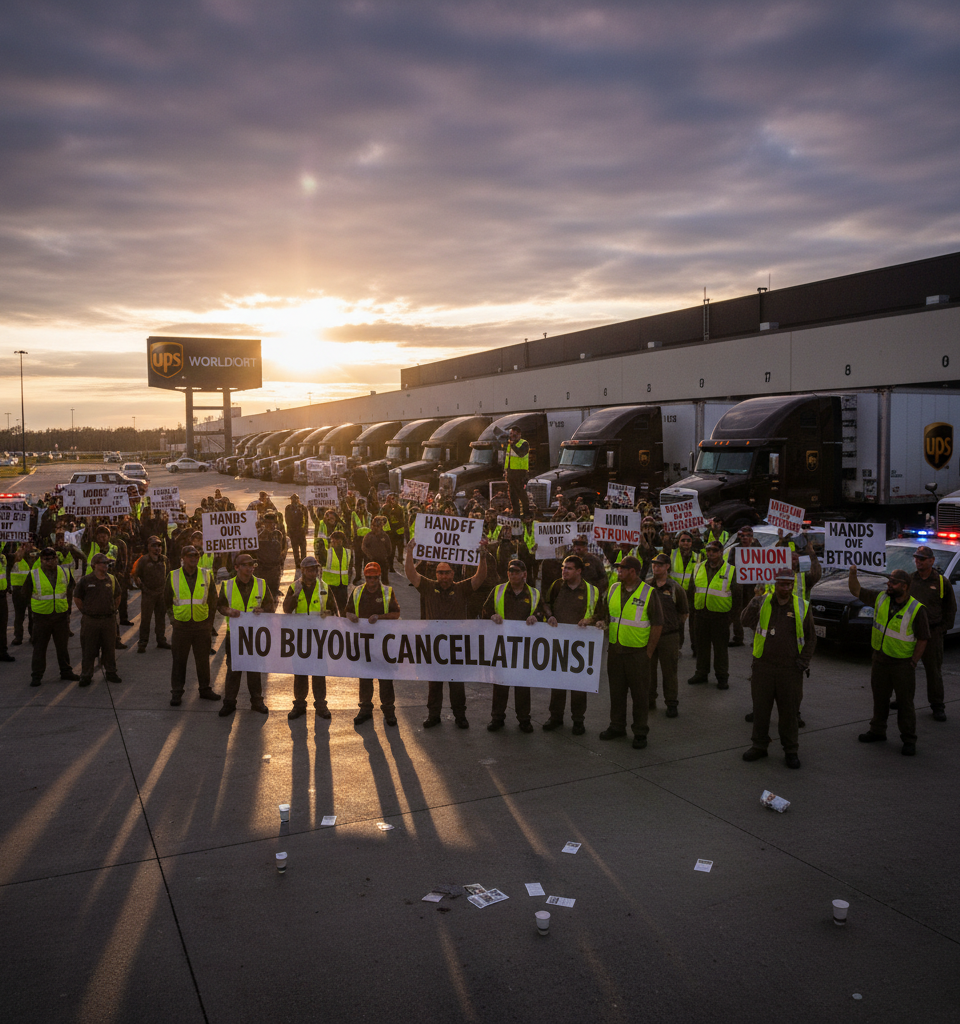
ATLANTA, GA – October 26, 2023 – United Parcel Service (UPS), the world's largest package delivery company, has unexpectedly withdrawn a voluntary separation package (VSP) offered to drivers in 13 U.S. states, a decision directly prompted by significant pushback from the International Brotherhood of Teamsters. The abrupt retraction, confirmed by multiple sources close to the negotiations, highlights the potent and often contentious power dynamic between the logistics titan and its unionized workforce, particularly in regions where local Teamsters chapters exert considerable sway over operational and personnel decisions.
This development comes less than three months after UPS and the Teamsters ratified a landmark five-year collective bargaining agreement, averting a potentially crippling strike. The VSP, designed to streamline operations and reduce labor costs by offering severance to eligible drivers, was perceived by the union as circumventing the spirit of the new contract and potentially eroding job security. The rapid reversal indicates the Teamsters' ongoing vigilance and capacity to influence management strategies, even on initiatives seemingly outside the direct scope of the collective bargaining agreement.
The initial rollout of the voluntary buyout program, which varied by region but typically included severance pay, extended benefits, and other incentives for drivers willing to retire or resign, was met with immediate resistance from several local Teamsters bodies. Sources within the union indicated that these local chapters, particularly in heavily unionized states across the Midwest and Northeast, viewed the VSP as an attempt to reduce the core driver workforce prematurely, potentially leading to increased reliance on part-time employees or subcontractors, a key point of contention during the recent contract negotiations. The Teamsters' swift and unified opposition forced UPS to re-evaluate the program's viability in the face of potential labor unrest or legal challenges.
The implications of this decision resonate across the highly competitive logistics sector. For UPS, it means a potentially slower path to desired operational efficiencies and continued higher labor costs in these states. The company, which employs approximately 340,000 Teamsters-represented workers, is under constant pressure to balance labor expenses with service demands. For competitors like FedEx and Amazon, who operate with different labor models, this underscores the unique challenges of managing a heavily unionized workforce on such a vast scale. The episode also reinforces the Teamsters' reputation as a formidable negotiator, capable of enforcing its interpretations of labor agreements and protecting its members' interests aggressively.
Industry analysts are weighing in on the broader consequences. "This isn't merely about a buyout program; it's a testament to the Teamsters' renewed strength post-contract," observed Dr. Eleanor Vance, a labor economist at the University of Chicago. "UPS made significant concessions in the new agreement, including substantial wage increases and the elimination of a two-tier wage system. Any move perceived by the union as undermining job stability will be fiercely opposed. This outcome demonstrates that even after a contract is signed, the political and operational dance between labor and management continues unabated." She estimates the potential savings from a successful VSP could have been in the tens of millions annually across all states, now foregone in the affected regions.
Looking ahead, this incident signals a more assertive stance from the Teamsters and a need for UPS to proceed with extreme caution on future labor-related initiatives. The union, emboldened by its recent contract victories and public support, is likely to scrutinize any management decision that could impact driver employment levels or working conditions. UPS, meanwhile, will need to recalibrate its strategy for achieving efficiency targets, potentially focusing more on technological automation, route optimization, and talent development within its existing unionized workforce rather than headcount reduction programs that invite union opposition. The long-term relationship, while formally governed by the collective bargaining agreement, remains a dynamic field of ongoing negotiation and power assertion.
The 13 affected states have not been officially disclosed by UPS, but union communication indicates a concentration in key industrial and population centers where Teamsters membership is robust. The move ensures that, at least for now, the driver workforce in these regions will not be reduced through voluntary buyouts, retaining the current operational structure and cost base. This strategic retreat by UPS underscores the enduring power of organized labor in shaping corporate policy in crucial sectors of the American economy.