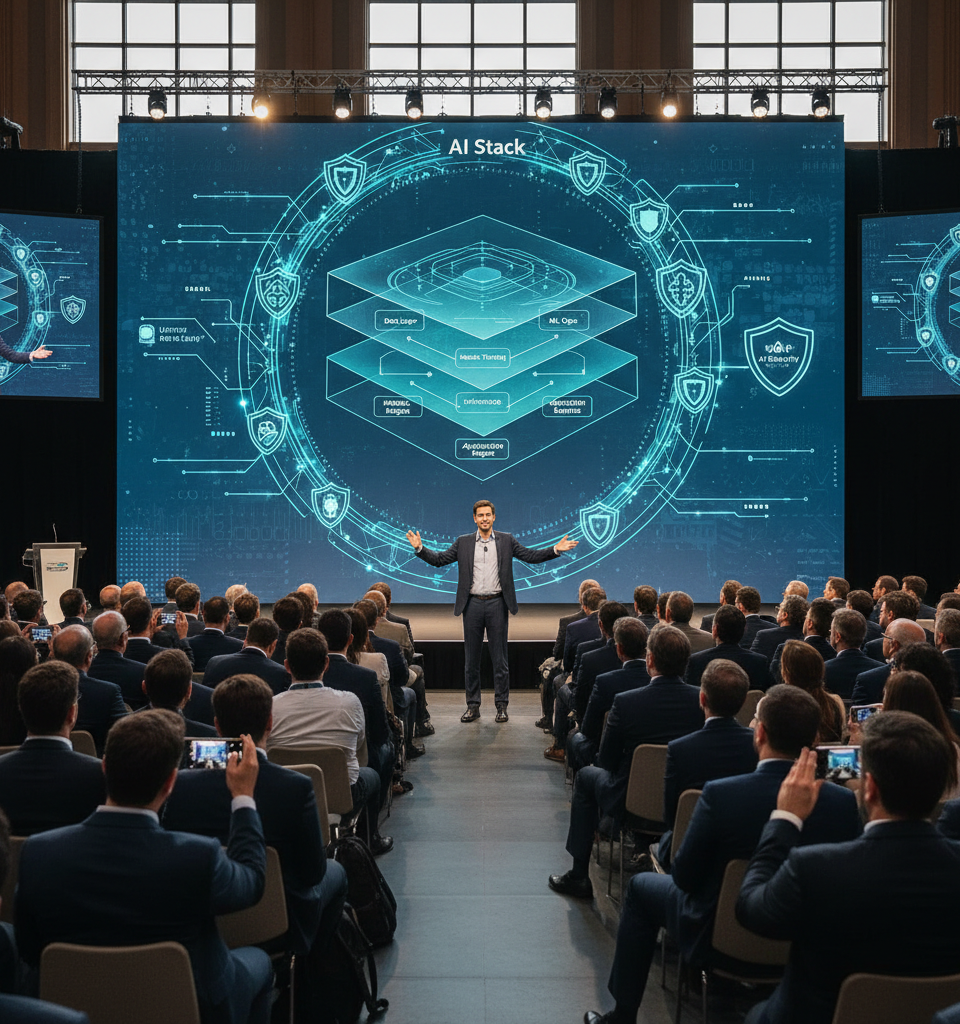
Upwind, a prominent player in the cybersecurity landscape, today announced a pivotal expansion of its AI security strategy, signaling a fundamental reorientation in its approach to managing AI-related risks. The company's latest product unveiling is directly tied to CEO Amiram Shachar's newly articulated “Security for AI” thesis, a comprehensive framework detailed in a lengthy post earlier this morning. This new direction is presented as a crucial complement to Upwind's previous initiatives focused on agentic AI capabilities.
A Fundamental Shift in AI Risk Management
The core of Upwind's new thesis is straightforward: AI security, according to Shachar, should not be treated as an isolated product or an add-on feature. Instead, it must be intrinsically woven into the entire artificial intelligence development and deployment lifecycle, covering every component from data input to model output and application integration. This integrated approach aims to provide holistic protection across the increasingly complex AI ecosystem, moving beyond siloed security solutions that often leave significant vulnerabilities.
This strategic pivot represents a significant evolution for Upwind, building upon its foundational work. The company has been actively involved in addressing the emerging challenges posed by advanced AI systems, particularly within the realm of agentic AI. Agentic AI refers to autonomous systems capable of making decisions and taking actions without direct human intervention, presenting a unique set of security challenges that Upwind has been exploring. The "Security for AI" thesis now positions these efforts within a broader, more encompassing security architecture.
The "Security for AI" Thesis Explained
Shachar's detailed exposition underscores that as AI models become more sophisticated and integrated into critical business operations, the attack surface expands dramatically. Traditional security paradigms, often focused on endpoint protection or network perimeters, are deemed insufficient to contend with the nuanced threats inherent in AI systems, such as data poisoning, model evasion, and intellectual property theft concerning proprietary algorithms. Upwind's expanded offerings are designed to address these specific vectores of attack, providing comprehensive security controls throughout the AI pipeline.
The company’s announcement suggests a suite of new tools and integrations engineered to monitor, detect, and respond to threats across the entire AI stack. While specific product names or detailed feature sets were not immediately disclosed in the initial reports beyond the overall strategic direction, the emphasis is clearly on seamless, end-to-end security rather than fragmented solutions. This integrated security model aims to foster trust and accelerate AI adoption by mitigating the inherent risks.
Industry Impact and Future Implications
Upwind's latest move is expected to resonate across the cybersecurity and AI industries. As more enterprises adopt and scale AI solutions, the demand for robust and integrated security frameworks grows exponentially. This announcement positions Upwind as a thought leader and a key provider in the burgeoning field of AI security, potentially setting a new standard for how organizations approach AI risk management.
Competitors in the cybersecurity space are likely to closely watch Upwind's execution of this strategy. The "Security for AI" thesis could prompt other vendors to re-evaluate their own product offerings and consider more integrated approaches to AI protection. For organizations leveraging AI, Upwind’s expanded capabilities could offer a more consolidated and effective means of securing their AI investments, potentially simplifying a currently complex security landscape.
This development signifies that the maturation of AI technology is now inextricably linked with the evolution of AI security. The coming months will likely see more detailed announcements from Upwind regarding the specific technologies and partnerships underpinning this ambitious security framework. This shift underscores a growing realization that robust security is not an afterthought for AI but a foundational prerequisite for its safe and effective deployment across industries. The long-term success of this integrated approach will depend on its ability to adapt to the rapidly evolving AI threat landscape and provide demonstrable value to customers.