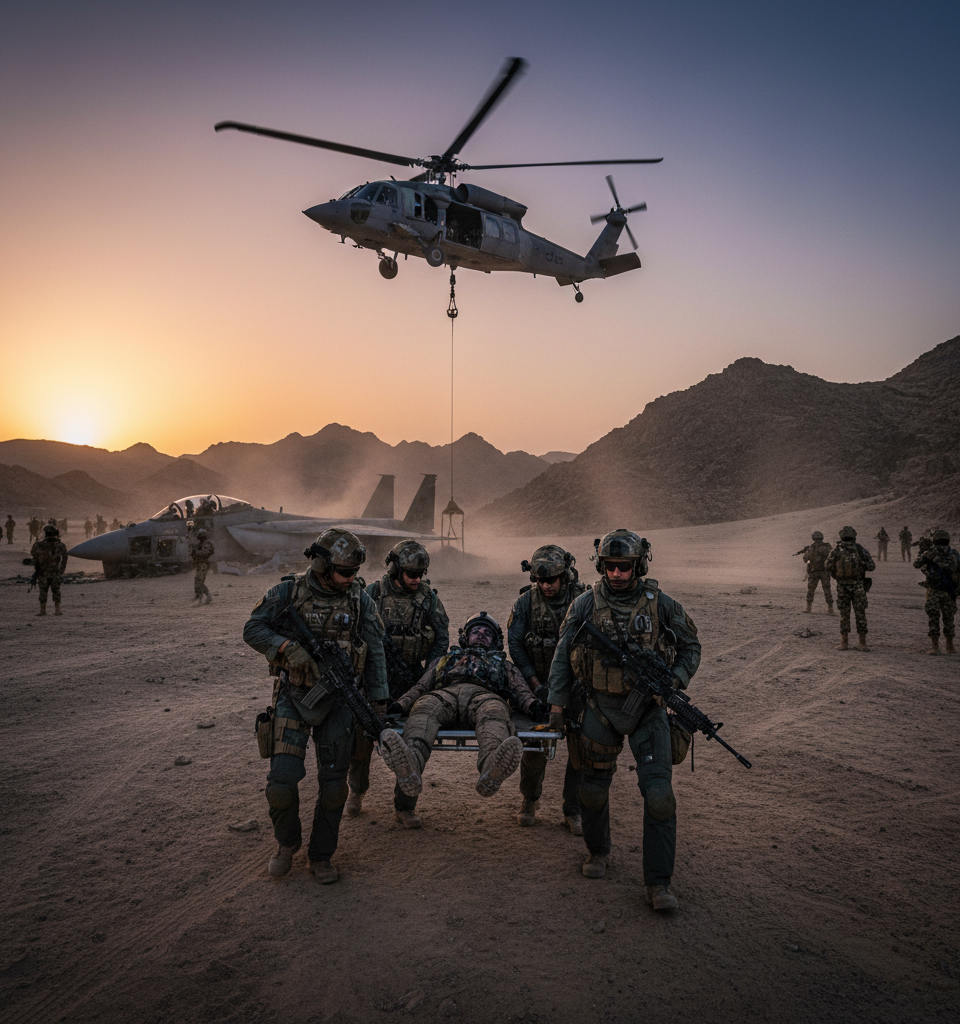
WASHINGTON D.C. – A United States Air Force F-15E Strike Eagle pilot was successfully rescued Saturday night following a perilous, multi-day covert operation deep inside Iranian territory, after the advanced combat jet was reportedly shot down. President Donald Trump, confirming the dramatic rescue, lauded the bravery of the special forces involved, as the incident immediately intensified already fraught relations between the U.S. and Iran. The downing of the F-15E, a cornerstone of American air superiority, and the subsequent retrieval mission, underscore the acute risks of military operations in the volatile Middle East.
Geopolitical Background: A History of Hostility
The downing of a U.S. military aircraft by Iran represents a critical flashpoint in a long-standing antagonistic relationship. Tensions have been steadily escalating since the U.S. withdrawal from the Joint Comprehensive Plan of Action (JCPOA) in 2018 and the subsequent re-imposition of crippling sanctions on Tehran, devastating Iran's oil exports and financial sector – which saw a nearly 80% drop in revenue post-2018. This recent event follows a series of regional provocations, including attacks on oil tankers in the Strait of Hormuz, drone attacks on Saudi Arabian oil facilities, and ongoing proxy conflicts in Yemen and Iraq, all of which have been attributed, directly or indirectly, to Iranian aggression. The F-15E incident elevates the confrontation from proxy warfare to a direct engagement involving U.S. military assets, raising the specter of a broader regional conflict that could destabilize global oil prices and trade routes.
The Daring Rescue: A Two-Day Covert Operation
Details surrounding the downing of the F-15E Strike Eagle remain scarce, with neither Washington nor Tehran providing specifics on the engagement that led to the aircraft's loss. However, President Trump revealed that the subsequent rescue mission was a highly complex and risky undertaking, lasting two full days and involving specialized U.S. military units operating deep behind enemy lines. The operation reportedly leveraged intelligence assets, advanced surveillance technology, and close coordination to locate and extract the airman safely. The F-15E, a twin-engine, all-weather tactical fighter, is valued at approximately $30 million per unit, and its loss, regardless of the crew's outcome, represents a significant blow to U.S. military presence in the region. The successful retrieval of the pilot, however, prevents a potentially catastrophic propaganda victory for Iran and averts an even more profound humanitarian crisis.
Regional Instability and Economic Repercussions
The immediate impact of this incident will reverberate across global markets, particularly in the energy sector. Oil prices, already sensitive to Middle East instability, surged by nearly 3% on early trading following the news, with Brent Crude futures briefly touching $85 per barrel before settling. Shipping insurance premiums for vessels traversing the Strait of Hormuz are also expected to climb, potentially increasing global supply chain costs. Furthermore, the event sends a chilling message to international aviation, highlighting the enhanced and unpredictable nature of air defense capabilities in the region. Major airlines may reconsider flight paths over the Persian Gulf, leading to extended travel times and increased fuel consumption.
Expert Analysis: A Critical Inflection Point
Defense analysts and foreign policy experts universally view this event as a critical inflection point. Dr. Evelyn Roth, a senior fellow at the Council on Foreign Relations, stated, "This isn't just another skirmish; it's a direct challenge to American military dominance and restraint. Washington will be under immense pressure to respond, but any misstep could lead to an uncontrollable escalation." Retired General Mark Hertling, speaking on a national news outlet, emphasized the capability demonstrated by Iran's air defense, suggesting it was more robust than previously assessed. The incident also highlights the effectiveness of U.S. search and rescue capabilities, which, while successful, operate under extreme risk in hostile environments.
What Lies Ahead: Diplomacy or Deterrence?
The coming days will be crucial in determining the trajectory of U.S.-Iran relations. The U.S. administration faces intense pressure to calibrate a response that demonstrates resolve without triggering a full-scale conflict. Options range from increased economic sanctions and cyber-attacks to targeted military strikes. Conversely, opportunities for de-escalation through international diplomacy, potentially involving European intermediaries, may also emerge. The Pentagon has confirmed it is conducting a full investigation into the F-15E's downing, the findings of which will heavily influence Washington's strategy. Regional allies, particularly Saudi Arabia and Israel, are closely monitoring the situation, fearful that an unchecked escalation could draw them into a wider conflict. The global community now watches with bated breath, hoping for a diplomatic off-ramp rather than a military confrontation that could devastate the region and global economy.