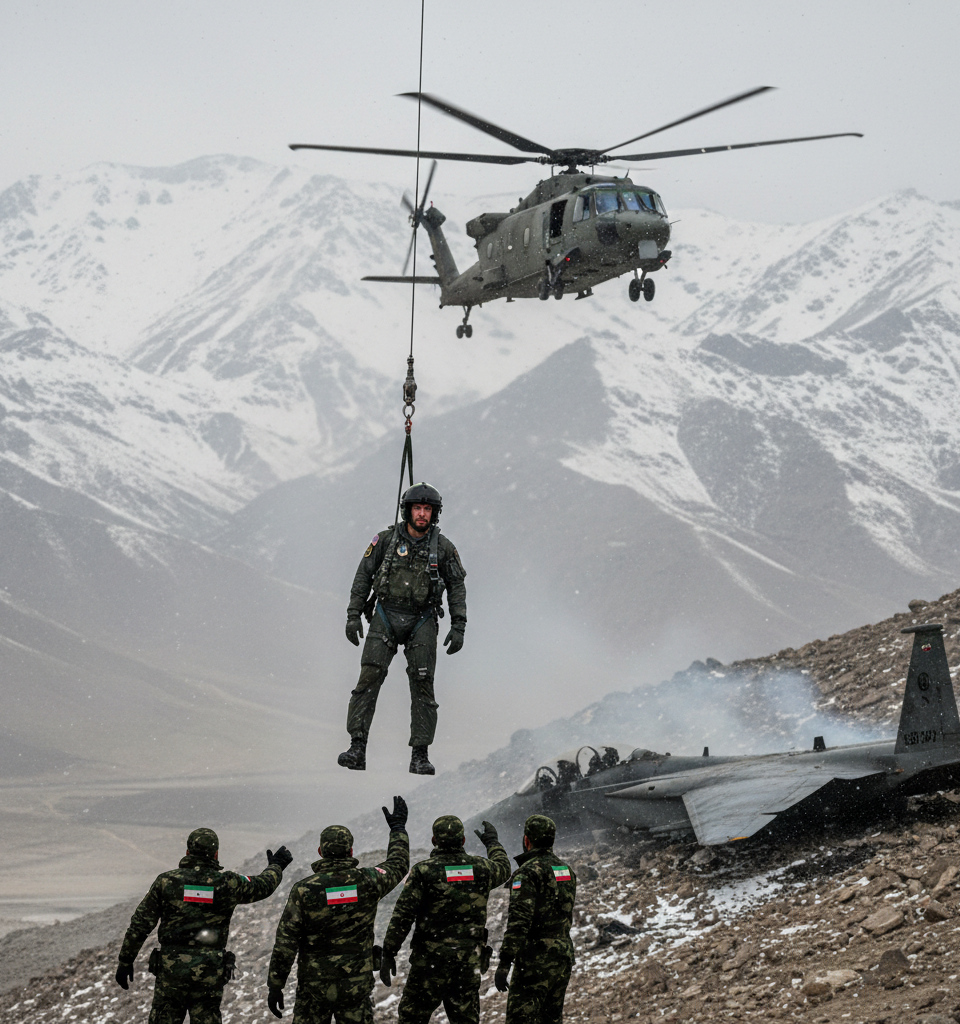
A United States Air Force pilot has been successfully extracted from a mountainous region within Iranian territory, sources confirmed early Wednesday, following the highly publicized downing of their F-15 fighter jet. The daring rescue mission, executed after a frantic, hours-long search, marks a critical development in the burgeoning conflict that has gripped the Middle East since late February. This incident represents the first confirmed loss of a U.S. military aircraft on Iranian soil during the current hostilities, underscoring the escalating operational risks faced by coalition forces.
Context and Geopolitical Significance
The F-15 crash and subsequent rescue occur amidst a period of intense geopolitical instability. The region has been on high alert since the unprovoked aggression commenced, leading to a significant increase in U.S. and allied military presence. This particular incident, involving an advanced combat aircraft like the F-15, carries substantial symbolic weight. Historically, such penetrations of sovereign airspace, whether accidental or intentional, have often precipitated diplomatic crises or military retaliation. The successful rescue, while a relief, does not diminish the gravity of an American jet being shot down over hostile territory, pointing to a potential enhancement in Iranian air defense capabilities or a miscalculation in U.S. operational planning.
Key Details of the Incident and Rescue Operation
According to preliminary reports from the U.S. Central Command (CENTCOM), an F-15E Strike Eagle, part of a routine reconnaissance and deterrence patrol, encountered unexpected difficulties over western Iran shortly after 02:00 local time. While the Pentagon has yet to officially confirm a 'shootdown,' internal communications suggest the aircraft was incapacitated by an unknown projectile. The pilot, whose identity remains undisclosed for security reasons, ejected safely before impact. The rescue operation, a multi-national effort, involved specialized search and rescue units navigating treacherous mountainous terrain. A clandestine infiltration by special forces was reportedly initiated within two hours of the downing, culminating in the airman's exfiltration approximately eight hours later. Details regarding any interaction with Iranian forces during the rescue remain classified, though initial intelligence indicates minimal direct confrontation.
Broader Market and Economic Impact
The downing of a U.S. F-15 and the subsequent high-stakes rescue operation are likely to reverberate across global markets, particularly in the energy sector. Oil prices, already volatile due to regional tensions, saw an immediate 2.5% increase on news of the incident, with Brent crude briefly touching $92.50 per barrel. Defense stocks are also predicted to see a modest upturn as investors anticipate increased military spending and potential requests for advanced defense systems. The uncertainty surrounding the precise nature of the aircraft's demise could exacerbate market jitters, potentially impacting shipping routes through the Strait of Hormuz, a critical chokepoint for global oil supplies, through which approximately 21% of the world’s petroleum liquids pass daily.
Expert Analysis and Strategic Implications
Military analysts are closely examining the incident, focusing on the potential implications for air superiority in the region. Dr. Evelyn Reed, a leading defense strategist at the Brookings Institute, remarked, "This is not merely an isolated operational loss; it's a significant indicator of the evolving threat landscape. If Iran has indeed developed or acquired capabilities to down an F-15, a cornerstone of U.S. air dominance, it demands a fundamental re-evaluation of our tactics and intelligence gathering in the region." Other experts suggest the incident could be a calibrated message from Tehran, signaling a willingness to escalate in response to perceived provocations, thus raising the stakes significantly for future engagements.
What's Next: Investigating the Incident and Future Engagements
The Pentagon has initiated a comprehensive investigation into the F-15 crash, focusing on determining the precise cause and identifying the weapon system responsible. This inquiry is expected to influence future air operational protocols and potentially lead to adjustments in force posture. Diplomatically, the U.S. Department of State is anticipated to issue a strong condemnation, though the emphasis on the successful rescue may mitigate immediate calls for retaliation. Regionally, the incident will likely embolden some Iranian factions while increasing pressure on international actors to de-escalate. The coming weeks will be crucial in observing whether this event triggers further military engagements or prompts a renewed push for diplomatic channels, particularly concerning maritime security and the protection of international airspace.