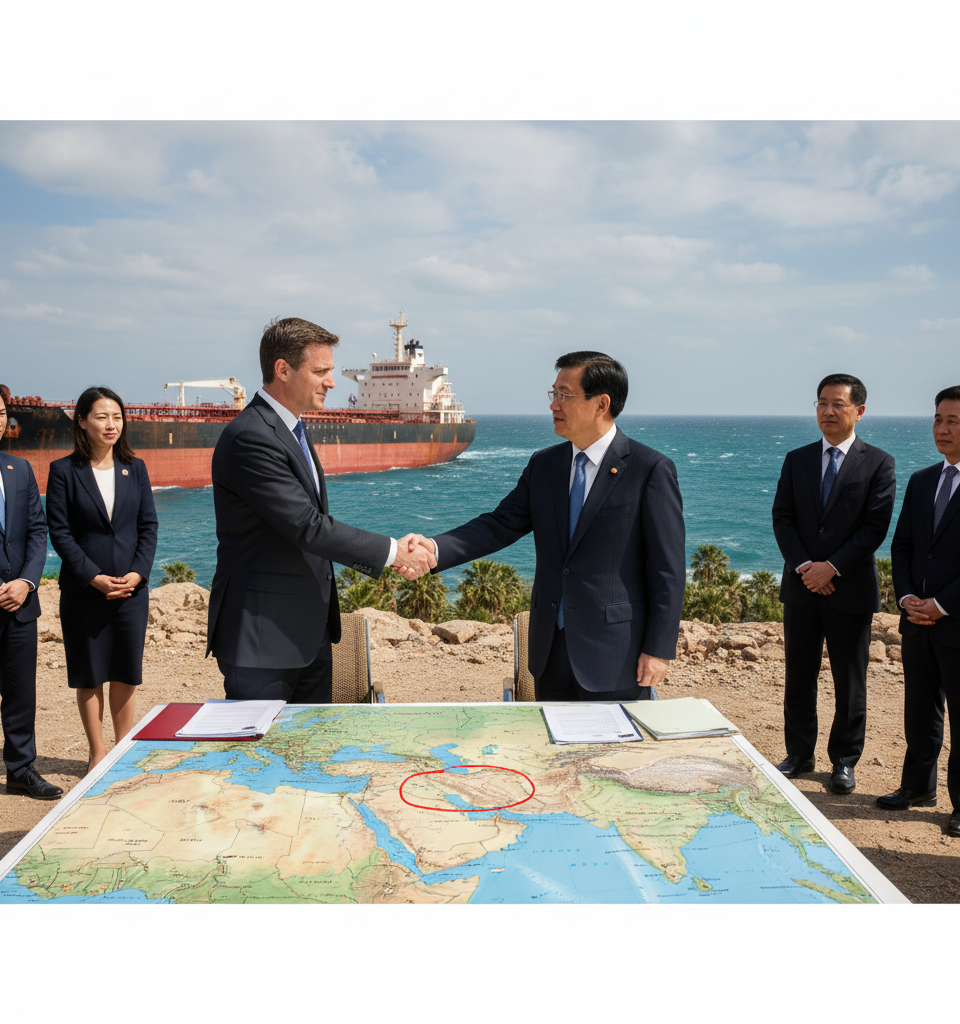
Both the United States and China have converged on the immediate necessity of reopening the Strait of Hormuz, a crucial global chokepoint for oil shipments. This shared strategic goal emerged from recent diplomatic exchanges, though specifics on a unified approach to achieve this objective remain elusive. The rare consensus underscores the paramount importance of the strait to global energy markets and international trade, despite the broader geopolitical tensions characterising US-China relations.
Geopolitical Significance and Economic Lifeline
The Strait of Hormuz, a narrow waterway connecting the Persian Gulf with the Arabian Sea and the Indian Ocean, is arguably the world's most important oil transit chokepoint. Approximately one-fifth of the world's total petroleum liquids consumption, or about 21 million barrels per day, passed through the strait in 2023, according to the U.S. Energy Information Administration (EIA). This includes nearly all of the crude oil exports from Saudi Arabia, Iran, the UAE, Kuwait, and Iraq. Any prolonged disruption to shipping in this strait would send shockwaves through the global economy, causing oil prices to skyrocket and significantly impacting supply chains worldwide. The shared interest in its stability transcends typical geopolitical rivalries, highlighting the intrinsic link between regional security and global economic health.
Diplomatic Convergence Amidst Division
Statements from both Washington and Beijing confirmed the mutual objective. A spokesperson for the Chinese Ministry of Foreign Affairs, when pressed on the issue, reiterated China's consistent stance on ensuring navigation freedom and supply chain stability in international waterways, indirectly affirming the need for the strait's swift reopening. Similarly, U.S. officials have consistently called for unimpeded passage through the strait, emphasising its critical role in global energy security. However, while the end goal is harmonised, the methods diverge sharply. The U.S. has advocated for a more assertive posture, potentially involving increased naval presence or targeted sanctions, while China has typically preferred diplomatic engagement, multilateral discussions, and de-escalation, avoiding direct confrontation with regional players.
Market Impact and Energy Security Concerns
The agreement, however superficial in action, comes at a time of heightened volatility in global energy markets. Oil prices have been particularly sensitive to geopolitical developments, with Brent crude recently trading at around $85-90 per barrel, influenced by ongoing conflicts and production decisions by OPEC+. A sustained closure of the Strait of Hormuz could easily push prices well over $150 per barrel, triggering a global recession. For major energy importers like China, which relies on the Middle East for a significant portion of its crude oil, the stability of the strait is an existential economic concern. Similarly, Western economies, despite diversifying energy sources, remain vulnerable to such a disruption due to interconnected global supply chains and commodities markets.
Expert Analysis on a Fragile Consensus
Analysts view this rare point of convergence with cautious optimism. Dr. Evelyn Goh, an expert in international relations at the Australian National University, noted, "While it's positive to see a shared declared interest, the underlying methodologies for achieving that interest remain fundamentally different. China prioritizes stability through non-intervention and economic cooperation, whereas the U.S. often views stability through the lens of deterrence and security guarantees." Other experts highlight that for China, ensuring its energy supply is a core national interest that occasionally aligns with Western objectives, even when broader political relations are strained. This tactical alignment does not necessarily signal a broader softening of US-China rivalry.
The Path Forward: Unilateral Actions or Coordinated Diplomacy?
Looking ahead, the critical question remains whether this shared understanding can evolve into coordinated action. Without a breakthrough in how to manage regional tensions, both nations may resort to unilateral measures to safeguard their interests in the Strait. The U.S. might continue its naval patrols and advocate for international coalitions to deter threats, while China could bolster its bilateral energy security agreements with Gulf states and promote regional dialogue aimed at de-escalation. The international community will be closely watching for any signs of a diplomatic opening that could bridge the gap between their differing approaches, recognizing that a stable Strait of Hormuz is vital for global economic stability and peace.
Regional Dynamics and Broader Implications
The consensus also subtly acknowledges the complex regional dynamics, particularly concerning Iran. While neither country explicitly named Iran as solely responsible for potential disruptions, regional tensions often emanate from or involve the Islamic Republic. Any strategy to secure the Strait invariably implicates how the international community engages with Tehran. For China, maintaining a cautious relationship with Iran is part of its 'Belt and Road' initiative and energy strategy, whereas the U.S. maintains a policy of pressure. The ultimate path to ensuring the strait's security will likely depend on navigating these intricate relationships and finding common ground on de-escalation strategies involving all regional actors.