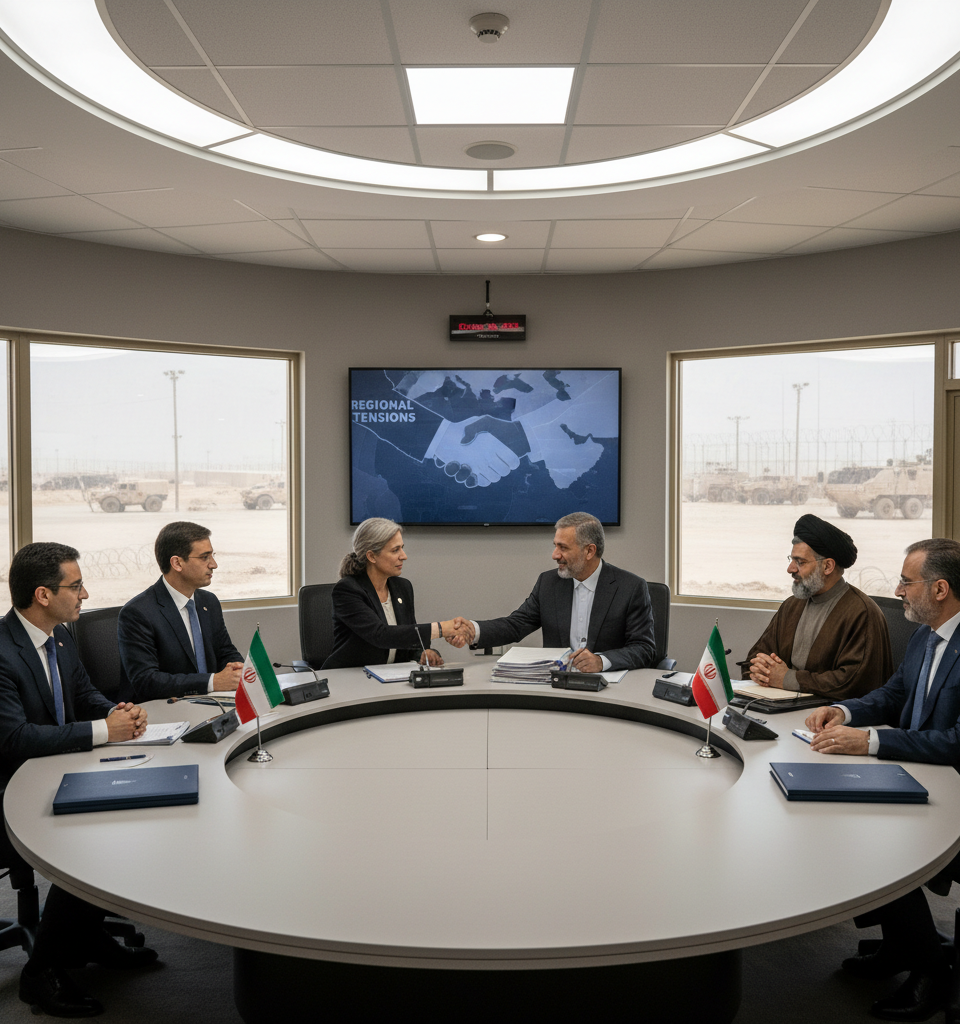
Diplomatic delegations from the United States and Iran have initiated direct negotiations in Switzerland, focusing on the framework of an initial peace agreement. This significant development occurs amidst heightened regional instability, characterized by ongoing internal conflicts in Lebanon and Iran's recent declaration regarding the closure of the Strait of Hormuz, a critical international maritime choke point for oil shipments. The talks mark a crucial attempt to de-escalate tensions and explore pathways to a more comprehensive resolution between the two long-standing adversaries.
Context of Escalating Regional Tensions
The decision to engage in direct talks underscores the urgent need to address the increasingly precarious security situation in the Middle East. The ongoing skirmishes and violence reported in Lebanon have significantly complicated regional dynamics, raising concerns about potential wider spill-over effects. Concurrently, Iran's assertion that it has shut down the Strait of Hormuz – a claim that has sent ripples of concern through global energy markets and international shipping – adds another layer of complexity and urgency to the diplomatic efforts.
This strategic waterway is vital for global oil supplies, with approximately one-fifth of the world’s petroleum passing through it daily. Any disruption there has immediate and far-reaching economic implications, potentially impacting fuel prices and global trade stability. The confluence of these events highlights the high stakes involved in the current negotiations.
Diplomacy Against a Volatile Backdrop
The direct engagement in Switzerland represents a notable shift in diplomatic strategy, moving from indirect communications to direct, face-to-face discussions. While specific details of the initial peace deal under consideration remain undisclosed, observers anticipate that the discussions will likely cover a range of pressing issues, including regional security guarantees, de-escalation mechanisms, and maritime freedom of navigation. The choice of Switzerland as a neutral ground for these sensitive negotiations reflects its long-standing role as a facilitator in international diplomacy. The immediate goal is to establish a foundational understanding that could pave the way for more substantive discussions on long-term stability and conflict resolution.
Broader Geopolitical and Economic Implications
The commencement of these talks carries significant geopolitical weight. A successful initial peace deal, even a partial one, could signal a potential thawing of relations and provide a much-needed impetus for broader regional stability. Conversely, a failure to reach an understanding could exacerbate existing tensions, potentially leading to further military engagements or more sustained economic disruptions, particularly concerning energy routes. Global financial markets, especially those sensitive to oil prices, are closely monitoring the progress of these talks, as any perceived positive movement could lead to reduced volatility and increased confidence, while setbacks could trigger adverse reactions.
Expert Perspectives on the Path Forward
Analysts are cautiously optimistic about the prospects, emphasizing the inherent difficulty in bridging the deep-seated mistrust between Washington and Tehran. "These talks are a necessary first step, but the road to a comprehensive peace deal is fraught with challenges," stated one veteran diplomat specializing in Middle Eastern affairs. "The immediate focus must be on practical de-escalation measures and establishing clear channels of communication to prevent miscalculation, especially given the recent events in Lebanon and the Strait of Hormuz." Experts suggest that even a limited agreement on reducing military posturing or guaranteeing safe passage through key waterways would be considered a diplomatic achievement at this juncture.
Challenges and Potential Outcomes
Key challenges for the negotiations include managing disparate security concerns, addressing Iran's nuclear program (though not explicitly mentioned as a current topic, it remains a background issue), and finding common ground on regional proxy conflicts. The nature of an "initial peace deal" suggests that comprehensive resolutions to all contentious issues are unlikely in the short term. Instead, the focus is likely on immediate conflict mitigation and confidence-building measures. Potential outcomes range from a basic agreement on de-escalation principles to a more structured framework for continuous dialogue aimed at preventing future flashpoints.
The Road Ahead
The discussions in Switzerland are expected to be protracted and complex. The international community will be closely watching for any signs of progress, aware that the stability of the Middle East and the global energy market depend significantly on the diplomatic efforts underway. The immediate future will reveal whether these initial face-to-face meetings can lay the groundwork for a genuine, albeit incremental, shift towards de-escalation and potential peace between the United States and Iran, or if the region is destined for prolonged instability.