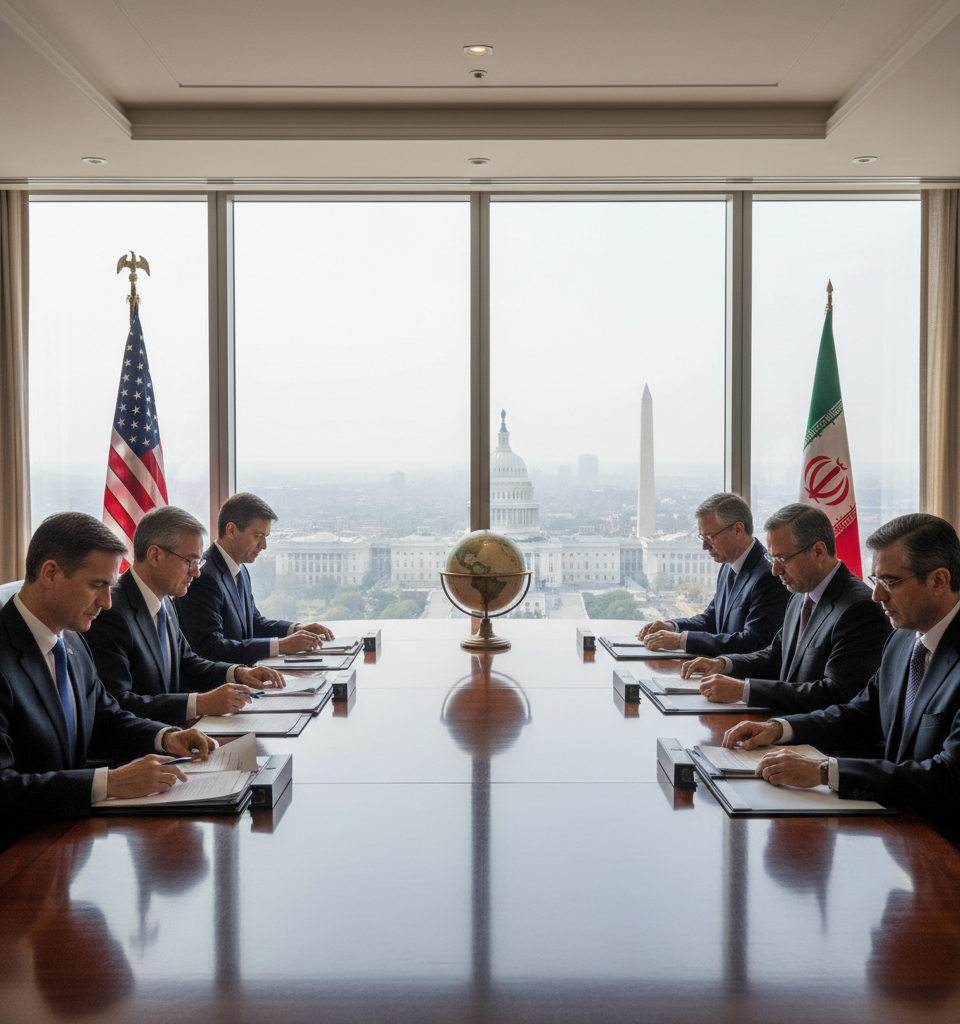
Washington, D.C. – International diplomatic efforts to forge a lasting peace accord between the United States and Iran have revealed a profound and potentially insurmountable chasm, as negotiators confront two vastly different proposals described by a prominent BBC diplomatic correspondent as "oceans apart." The U.S. has tabled a comprehensive 15-point plan, while Iran has countered with its own 10-point framework, underscoring fundamental disagreements that threaten to prolong regional instability and further complicate global geopolitical dynamics.
Decades of Distrust Hamper Dialogue
The current negotiation impasse is not an isolated event but rather the latest chapter in a decades-long saga of distrust and animosity between the two nations. This deep-seated geopolitical rivalry, rooted in the 1979 Iranian Revolution, sanctions, nuclear ambitions, and proxy conflicts across the Middle East, fundamentally shapes the present dialogue. The stakes are exceptionally high, with the potential for miscalculation to trigger broader regional conflict involving key global oil suppliers and strategic waterways like the Strait of Hormuz, through which approximately 20% of the world's daily petroleum consumption passes. Previous attempts at reconciliation, including the 2015 Joint Comprehensive Plan of Action (JCPOA), have often been short-lived or plagued by withdrawals and renewed sanctions, leaving a legacy of skepticism on both sides.
Fundamental Disagreements Undermine Progress
The specifics of the two proposals reveal the breadth of the disagreement. The U.S. 15-point plan reportedly emphasizes Iran's complete cessation of uranium enrichment beyond a specific purity level (e.g., 5%), dismantling of certain advanced centrifuges, strict limitations on ballistic missile development, and a significant pullback of its support for regional proxy groups, among other demands. Conversely, Iran's 10-point variant reportedly focuses on the immediate lifting of all U.S. sanctions, a guarantee against future sanctions re-imposition, compensation for past economic damages, and recognition of its right to peaceful nuclear technology. Sources close to the negotiations suggest that core issues like the fate of Iran’s enriched uranium stockpile, currently estimated at over 4,000 kg (far exceeding the allowed 300 kg under the original JCPOA), and verification mechanisms remain highly contentious. Diplomats privately acknowledge that mutual concessions on these fundamental points appear a distant prospect.
Global Economic and Geopolitical Repercussions
Failure to bridge these gaps carries significant implications for global energy markets, international trade, and regional security. Prolonged instability could lead to sustained higher oil prices, impacting inflation and economic growth worldwide; recent oil price fluctuations have added approximately $0.50-$1.00 per gallon to pump prices in some Western markets. Furthermore, the lack of a diplomatic breakthrough risks escalating proxy conflicts in Yemen, Syria, Iraq, and Lebanon, potentially drawing in other regional and international actors. Multilateral efforts, including those by the European Union and the United Nations, to mediate a resolution are being closely watched, as a stable Middle East is crucial for avoiding a major humanitarian and economic crisis globally.
Experts Skeptical of Imminent Breakthrough
Security analysts and Middle East experts express deep skepticism regarding the likelihood of an immediate breakthrough. "The fundamental mismatch in priorities – with Washington focused on de-proliferation and regional behavior, and Tehran primarily on sanctions relief and sovereign recognition – forms a near-unbreakable stalemate," stated Dr. Eleanor Vance, a senior fellow at the Council on Foreign Relations. "Both sides are negotiating from entrenched positions, viewing any significant concession as a sign of weakness." Another expert, Dr. Benjamin Carter, an energy geopolitics specialist, added, "The U.S. is facing domestic political pressure, as is Iran leading up to their upcoming elections. Neither leadership has substantial political capital to spend on major compromises, making significant shifts in their proposals unlikely in the short term."
A Protracted Path Forward
The immediate future of these negotiations appears bleak. While back-channel communications and indirect talks are likely to continue, a swift resolution is not anticipated. Observers suggest that any significant progress might only emerge from a change in regional power dynamics, increased international pressure, or a major geopolitical realignement. For the time being, the international community braces for a period of continued diplomatic friction and heightened vigilance against potential misunderstandings or escalations, underscoring the urgency for both Washington and Tehran to identify areas of genuine common interest beyond their current maximalist positions to avert further regional instability.