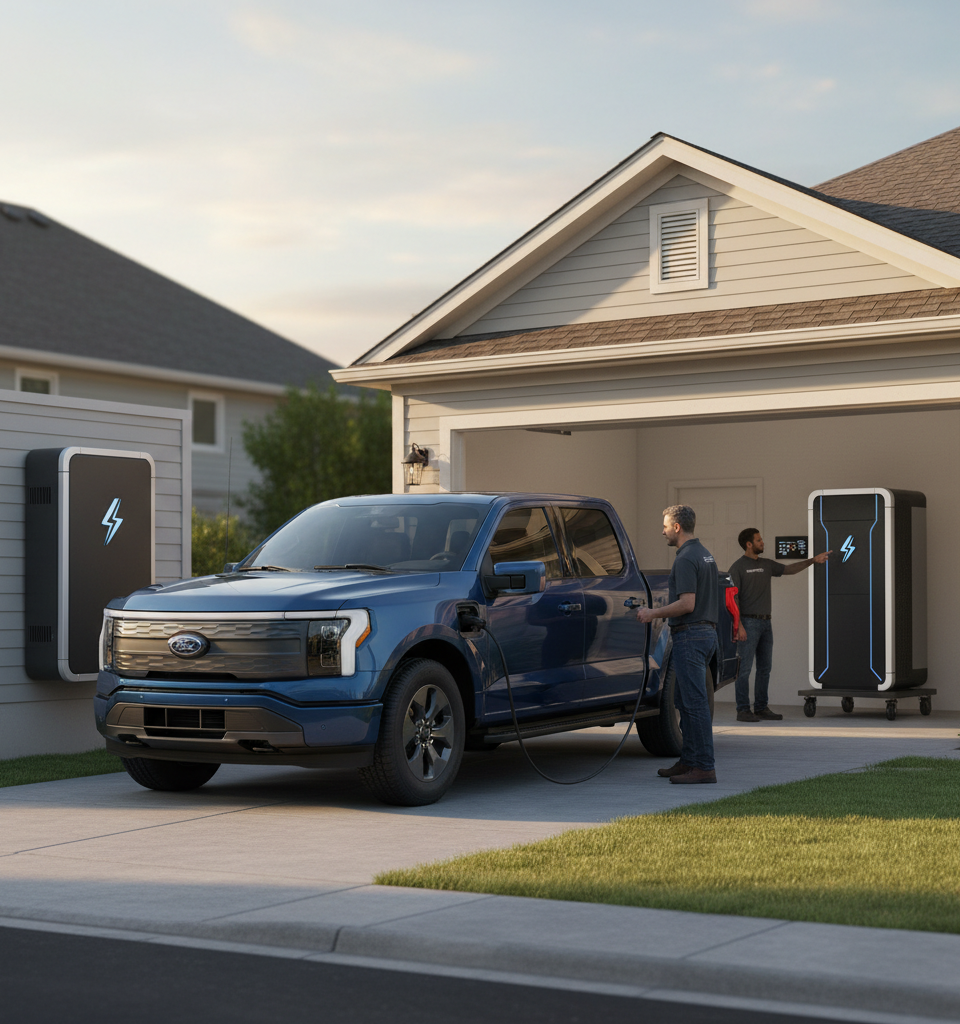
Amidst a cooling electric vehicle (EV) market and significant financial pressures from their ambitious EV rollout plans, American automotive stalwarts Ford Motor Company and General Motors (GM) are executing a strategic pivot towards energy management and battery storage solutions. This significant shift, observed in recent weeks, marks a recalibration of their future growth strategies, moving beyond just manufacturing EVs to becoming key players in the broader energy ecosystem, heavily influenced by advanced artificial intelligence applications.
The Shifting Automotive Landscape
For years, both Ford and GM championed an "all-in" approach to EVs, committing billions to develop new platforms, battery plants, and charging infrastructure. This aggressive stance was fueled by regulatory pressures, bold climate targets, and a perception of overwhelming consumer demand. However, recent data has revealed a more complex reality. EV sales growth, while still positive, has slowed from its initial torrid pace, leading to inventory build-ups, price wars, and substantial losses for their EV divisions. Ford's Model e unit, for example, reported a GAAP pre-tax loss of $4.7 billion in 2023, while GM's EV ventures have similarly struggled with profitability and production ramp-ups, particularly with their Ultium battery technology. This challenging financial landscape has prompted a critical re-evaluation of where future value lies in the automotive and energy sectors.
Deep Dive into the Pivot
Ford, through its Ford Pro commercial division, has been piloting battery energy storage systems (BESS) designed to integrate with its electric E-Transit vans and F-150 Lightning trucks. The key innovation lies in utilizing depleted EV batteries, or purpose-built stationary units, to store renewable energy or manage peak grid demand. Similarly, GM's energy division, GM Energy, launched in 2022, is expanding its portfolio to include home energy storage systems (branded Ultium Home) and vehicle-to-grid (V2G) capabilities. These systems aim to leverage the large battery packs in their EVs not just for propulsion, but as distributed energy resources. A critical element underpinning these ventures is AI, which optimizes battery charging and discharging cycles, predicts energy demand, and manages grid interaction for maximum efficiency and cost savings for consumers and businesses.
Broader Industry Implications
This strategic redirection by two of the world's largest automakers sends ripple effects across multiple industries. For the electric utility sector, it signals a potential influx of new, sophisticated grid-edge devices that can enhance grid stability and reliability, especially as renewable energy penetration increases. For battery manufacturers, it opens up new revenue streams beyond just EV powertrain components, focusing on stationary storage. Furthermore, it intensifies competition with established energy tech companies like Tesla Energy and Sonnen. The implications for consumers are significant too, promising more resilient home energy solutions, lower electricity bills through smart energy management, and the potential to earn revenue by selling stored energy back to the grid.
Expert Perspectives
Industry analysts view this pivot as a pragmatic and necessary step. "The automotive industry is realizing that the pathway to profitability in EVs isn't solely about selling cars; it's about owning a larger piece of the energy value chain," stated a leading automotive analyst from S&P Global Mobility this week. "By leveraging their battery technology and manufacturing scale for stationary storage, Ford and GM are diversifying their risk and tapping into a market projected to grow exponentially, potentially reaching hundreds of billions of dollars globally by the next decade." Experts emphasize that the data analytics and AI capabilities developed for autonomous driving and EV efficiency are directly transferable to optimizing energy storage solutions, providing a competitive edge.
The Road Ahead: Integration and Expansion
Looking forward, both Ford and GM are expected to aggressively expand their energy product portfolios. Ford Pro's BESS solutions are targeting commercial fleets and businesses initially, aiming to provide solutions for charging infrastructure and grid resilience. GM Energy is focused on broader residential and commercial applications, including partnerships with utilities and home builders. Future developments will likely include more sophisticated AI-driven energy management platforms, greater V2G integration, and potentially even microgrid solutions. The ultimate goal is to create an integrated ecosystem where vehicles, homes, and businesses seamlessly interact with the energy grid, with the automakers at the heart of this new energy paradigm. This shift underlines a fundamental redefinition of what it means to be an "automaker" in the 21st century.
Global Impact and Sustainability Focus
Beyond the immediate financial and market considerations, this pivot also has significant implications for global sustainability efforts. By repurposing EV batteries for stationary storage, automakers can extend the lifecycle of these critical components, reducing waste and the demand for new raw materials. This secondary life application can greatly enhance the overall environmental footprint of battery production.
Furthermore, the deployment of intelligent battery storage systems facilitates greater integration of intermittent renewable energy sources like solar and wind into national grids, thereby accelerating the transition away from fossil fuels. This strategy positions Ford and GM not just as vehicle manufacturers, but as crucial enablers of a more sustainable and resilient energy future, aligning their business goals with broader societal and environmental aspirations on a global scale.