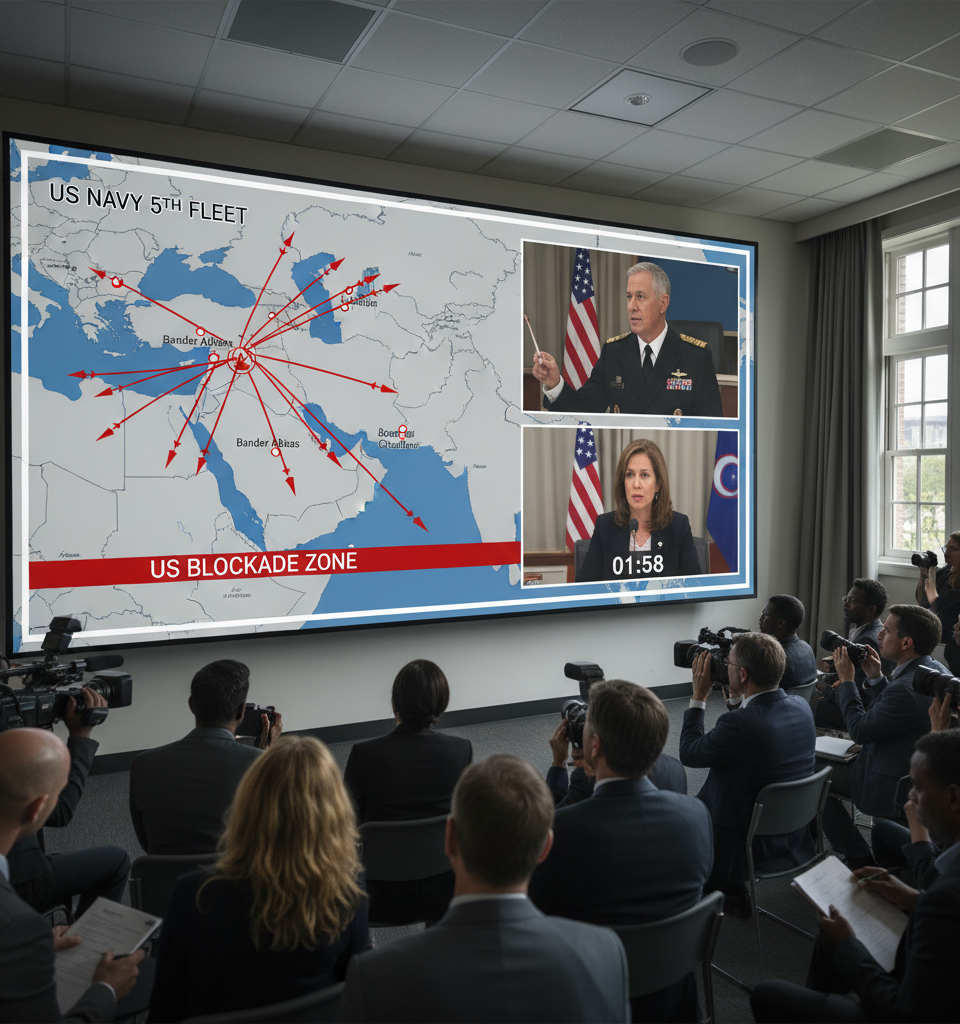
As geopolitical tensions continue to simmer, security correspondent Frank Gardner has provided an in-depth explanation of how a potential United States blockade of Iranian ports would operate. This analysis, presented by the BBC, offers a critical look at the tactical and logistical challenges involved in such a major maritime enforcement action, projecting its operational framework and potential immediate consequences. The discussion centers on the practicalities of interdicting shipping lanes and controlling access to Iranian territorial waters, an undertaking fraught with complex international law and substantial strategic considerations.
The prospect of a US naval blockade on Iranian ports represents a significant escalation in the ongoing standoff between Washington and Tehran. Such a move would aim to severely curtail Iran's international trade, particularly its crucial oil exports, by preventing vessels from entering or leaving designated Iranian harbors. This form of economic warfare, if implemented, would seek to exert immense pressure on the Iranian regime, forcing a reassessment of its regional policies and nuclear ambitions. The history of blockades suggests they are often precursors to, or deeply intertwined with, broader military and diplomatic maneuvers, underscoring the gravity of any such decision.
Operational Mechanics of a Maritime Blockade
Frank Gardner's explanation delves into the precise methods and assets that would likely be deployed in the event of a blockade. He outlines a scenario where US naval forces, potentially augmented by allied fleets, would establish a perimeter around key Iranian port cities and maritime choke points. This would involve a continuous presence of warships, patrol boats, and aerial surveillance assets, including drones and maritime patrol aircraft. The primary objective would be to intercept and inspect all commercial shipping attempting to access or depart from Iranian ports. Vessels found to be in violation of the blockade – for instance, carrying sanctioned goods or attempting to trade with Iran – would face various measures, ranging from warning and redirection to, in more severe cases, seizure. The operational zone would likely encompass the Persian Gulf, the Strait of Hormuz, and potentially broader areas of the Arabian Sea.
The enforcement of such a blockade would rely heavily on intelligence gathering to identify vessels bound for or originating from Iran, as well as their cargo manifests. Sophisticated tracking systems, combined with human intelligence, would be crucial in differentiating legitimate humanitarian aid from prohibited goods. The legal framework supporting such an action would undoubtedly be complex, drawing on international sanctions regimes and potentially invoking self-defense clauses, depending on the specific triggers for the blockade. The international community's response would be varied, with some nations potentially supporting the US action while others, particularly those with significant trade ties to Iran, would likely condemn it as a violation of international law and a disruption to global commerce.
Economic and Geopolitical Impact
Should a blockade be enacted, the economic ramifications for Iran would be immediate and severe. Iran's economy is heavily reliant on oil exports, and a successful maritime interdiction would drastically cut this revenue stream, exacerbating existing economic hardships. Beyond oil, the blockade would choke off various other sectors, including imports of essential goods, manufacturing components, and food, potentially leading to significant domestic shortages and inflation. This economic pressure is designed to compel a change in behavior, but history shows such measures can also harden resolve and lead to unintended consequences, including increased regional instability.
The global energy markets would also experience significant disruption. Even the threat of a blockade typically sends crude oil prices soaring, and its actual implementation would likely lead to sustained price volatility and potential supply shocks. Nations reliant on Iranian oil, or transit through the Strait of Hormuz, would be forced to seek alternative sources and shipping routes, adding considerable costs and logistical challenges. The ripple effects would extend to global shipping insurance markets, which would see premiums skyrocket for any vessel operating near the blockade zone, further increasing the cost of international trade.
Legal and International Ramifications
The legality of a unilateral US blockade without a United Nations Security Council resolution is highly contested under international law. While the US might invoke national security interests or collective self-defense, many nations would argue that such an action constitutes an act of war or a violation of freedom of navigation. This legal ambiguity could lead to diplomatic clashes, with nations like China and Russia almost certainly opposing such a move, potentially creating new fault lines in international relations. The potential for miscalculation and accidental confrontation at sea would also be ever-present, raising the specter of broader military conflict in an already volatile region.
Looking ahead, the prospect of a US blockade of Iranian ports underscores the precarious state of international diplomacy and the escalating nature of strategic rivalries. While presented as a mechanism to exert pressure, its implementation would unleash a cascade of economic, geopolitical, and potentially military repercussions that would resonate far beyond the immediate region. The international community would intensely scrutinize every facet of its execution, from the justification to the operational specifics, as nations weigh their own responses to what would fundamentally reshape global maritime security and trade dynamics.