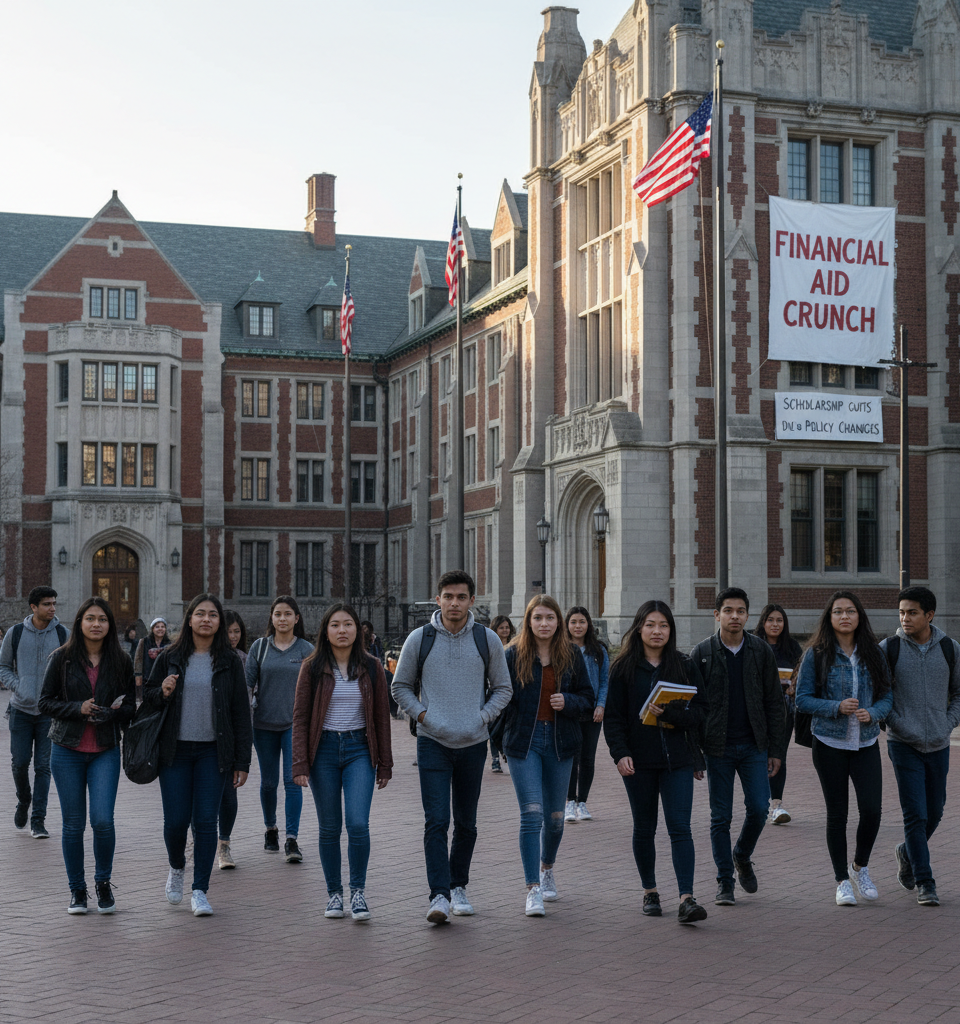
Washington D.C. – American colleges and universities, from prestigious research institutions to smaller regional campuses, are experiencing severe financial strain as international student enrollment continues its precipitous decline, a trend significantly amplified by the previous Trump administration's more restrictive immigration and visa policies. This downturn, which began in earnest in 2016, has not only impacted the traditionally targeted elite universities but has sent ripple effects across the entire higher education landscape, forcing institutions to reconsider budget allocations, program offerings, and long-term sustainability plans. The exodus of these students represents a multi-billion dollar hit to the U.S. economy and a profound loss of cultural and academic diversity.
Historically, the United States has been the primary destination for international students, drawn by the quality of its education, research opportunities, and vibrant campus life. This influx contributed significantly to the nation's economic prosperity, with international students contributing an estimated $41 billion to the U.S. economy and supporting over 450,000 jobs in the 2018-2019 academic year alone, according to NAFSA: Association of International Educators. The current decline breaks a decades-long trend of steady growth, underscoring a dramatic shift in the global perception of the U.S. as a welcoming environment for international scholars.
Key data illustrates the severity of this trend. The 2020 Open Doors Report by the Institute of International Education (IIE) revealed a 1.8% decrease in new international student enrollment for the 2019-2020 academic year, following a similar decline in previous years. While these percentages may seem modest, they represent tens of thousands of fewer students, each paying significant tuition fees, often at out-of-state or full international rates. Universities heavily reliant on these tuition dollars, particularly those without large endowments or substantial state funding, are facing severe budgetary shortfalls. For instance, some public universities saw international applications drop by as much as 10-15% in successive years, translating into millions of lost revenue.
The impact extends beyond mere tuition and fees. International students significantly bolster local economies through their spending on housing, food, transportation, and discretionary purchases. Research programs also suffer as these students often fill critical roles as teaching and research assistants, contributing to breakthroughs and fostering innovation. The broader industry landscape, including student housing providers, local businesses, and even airlines, feels the pinch of this reduced international presence, creating a ripple effect across various economic sectors.
Experts widely attribute this decline to a confluence of factors, with Trump-era policies playing a starring role. Dr. Sarah Gandy, an education policy analyst, notes, "The rhetoric and executive actions of the previous administration created an atmosphere of uncertainty and unwelcomeness. Stricter visa application processes, increased scrutiny of STEM students, and the perceived unwelcoming political climate, including travel bans, made prospective international students look to alternative destinations like Canada, the UK, and Australia, which actively court them." Universities also reported challenges in visa processing and an increase in visa denials for students from certain countries, irrespective of their academic qualifications.
Looking ahead, the Biden administration faces the daunting task of re-establishing the U.S. as a premier destination for global talent. While there is an expectation of a more welcoming stance, the competitive landscape has shifted, and rebuilding trust will take time. Institutions are exploring new strategies, including increased recruitment efforts in diverse global markets, enhanced support services for international students, and advocating for more predictable and transparent visa policies. The long-term financial health and global standing of American higher education depend on its ability to reverse this trend and reaffirm its commitment to international engagement.
Many colleges are now undertaking comprehensive strategic reviews to adapt to this new reality. This includes diversifying revenue streams, exploring online education models to reach international students remotely, and forming partnerships with overseas institutions. The challenge, however, remains substantial. Without a significant resurgence in international enrollment, some smaller and less financially robust colleges may face program cuts, faculty reductions, or even merger or closure in the coming years, fundamentally altering the fabric of American higher education.
Colleges Seek Solutions Amid Shifting Global Education Landscape
The immediate future of international student enrollment remains a key concern for university administrators nationwide. While some optimistic projections suggest a rebound could begin by the 2023-2024 academic year, contingent on stable visa policies and renewed global marketing efforts, others warn that the competitive advantage once held by the U.S. has eroded. The need for clear, consistent immigration policies that signal an open-door policy to legitimate students is paramount. Furthermore, institutions are recognizing the importance of demonstrating tangible support and a welcoming environment, beyond just policy, to regain the trust and attraction of the world's brightest young minds.