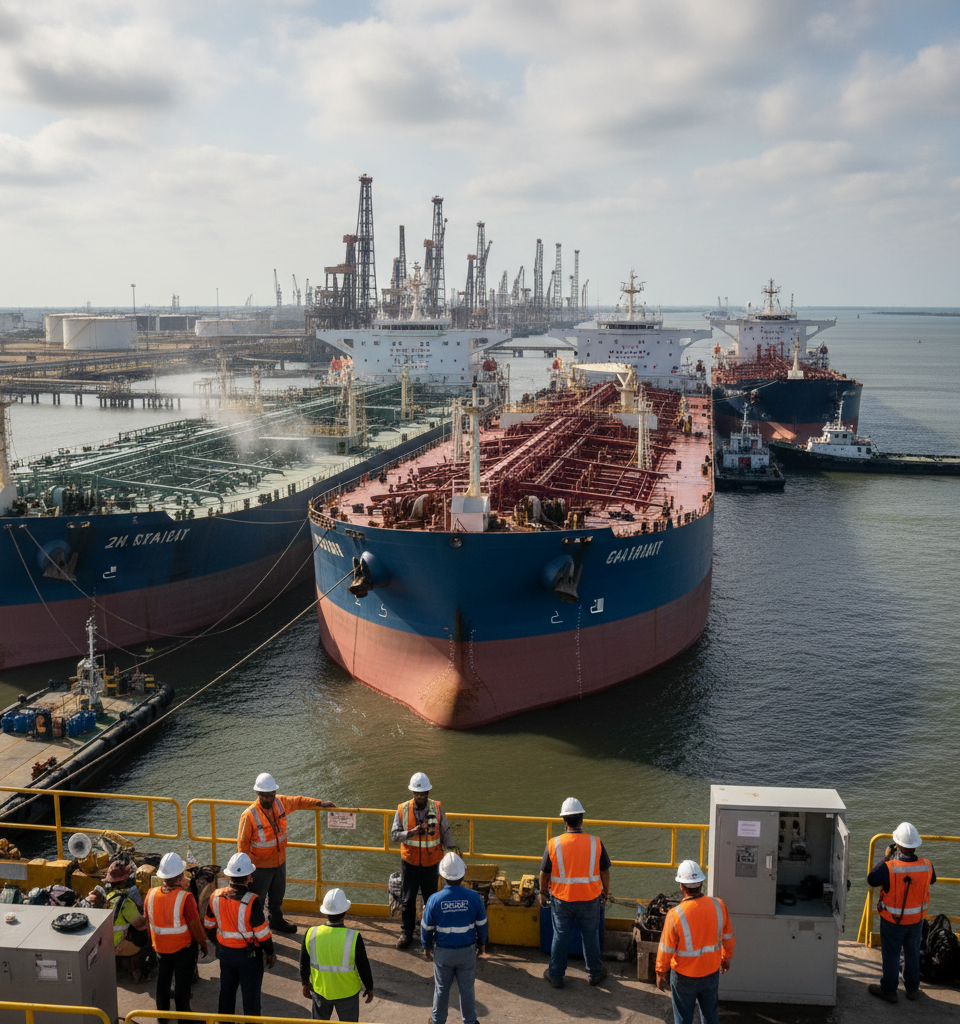
U.S. crude oil exports recently reached record highs, with a significant increase in shipments from the Gulf Coast as global buyers seek stable supply amidst heightened disruptions in the Middle East. This surge is directly linked to an ongoing conflict involving Iran, which has severely impacted traditional oil transit routes and production capabilities in the region, compelling international markets to pivot towards alternative sources.
This development marks a pivotal moment in the global energy landscape, highlighting the increasing interconnectedness of geopolitics and commodity markets. For decades, the Middle East has been the undisputed heart of global oil production and exports. However, recurrent instability and recent armed conflicts have forced a strategic reassessment by major energy importers. The current situation underscores the U.S. shale revolution's long-term impact, allowing the nation to transition from a net importer to a significant exporter, a shift that is now proving crucial in times of international crisis.
Export Volumes Reach New Peaks
Recent data indicates that U.S. crude exports surpassed 5.5 million barrels per day (bpd) in the last quarter, a substantial jump from the previous year's average of approximately 4 million bpd. Key destinations for these increased shipments include Europe and Asia, particularly nations heavily reliant on Middle Eastern oil that are now diversifying their supply portfolios. Major ports along the U.S. Gulf Coast, such as Houston, Corpus Christi, and Beaumont, are operating at near-maximum capacity, with tanker traffic witnessing an unprecedented boom. Analysts point to competitive pricing for WTI (West Texas Intermediate) crude relative to Brent as an additional incentive for international buyers, further fueling the export bonanza.
Global Market Repercussions
The ripple effects of this shift are profound, reshaping global shipping lanes, refinery operations, and pricing benchmarks. The increased demand for U.S. crude is providing a degree of stability to global oil prices that might otherwise skyrocket due to geopolitical tensions. However, it also places immense pressure on existing infrastructure, including pipelines, storage facilities, and export terminals, necessitating further investment and expansion. Furthermore, the reliance on longer shipping routes from the U.S. to Asia and Europe is impacting freight rates and increasing transit times, introducing new logistical challenges for refiners.
Expert Commentary and Analysis
"The current geopolitical environment has fundamentally accelerated the strategic importance of U.S. energy exports," stated Dr. Evelyn Chang, a senior energy analyst at Global Market Insights. "What we're witnessing isn't just a temporary fill-in; it's a structural shift where American light sweet crude is becoming an indispensable component of global energy security. However, this also exposes the U.S. to new forms of geopolitical risk and places a higher premium on domestic energy policy stability." Other experts highlight that while beneficial for U.S. producers, the increased export volume also makes U.S. consumers more susceptible to global price fluctuations.
Future Outlook and Investment
Looking ahead, the trend of elevated U.S. crude oil exports is expected to continue as long as instabilities persist in traditional supply regions. Energy companies are already accelerating plans for new pipeline capacity and the expansion of export terminals, with several multi-billion dollar projects reportedly in the pipeline. The U.S. Department of Energy has indicated it is monitoring global supply chains closely and engaging with allies to ensure energy security. While the immediate focus is on managing current disruptions, this period is likely to solidify the U.S.'s role as a long-term anchor in international energy markets, influencing trade dynamics and energy diplomacy for years to come.
The strategic importance of the U.S. Gulf Coast as a global energy hub will only intensify, potentially attracting further investment in related industries, from maritime services to petrochemicals. The evolving geopolitical landscape continues to underscore the critical role that flexible and diverse energy supply chains play in global economic stability and national security. The current crisis, while disruptive, has undeniably underscored the U.S.'s emergent status as a pivotal force in the international oil trade.