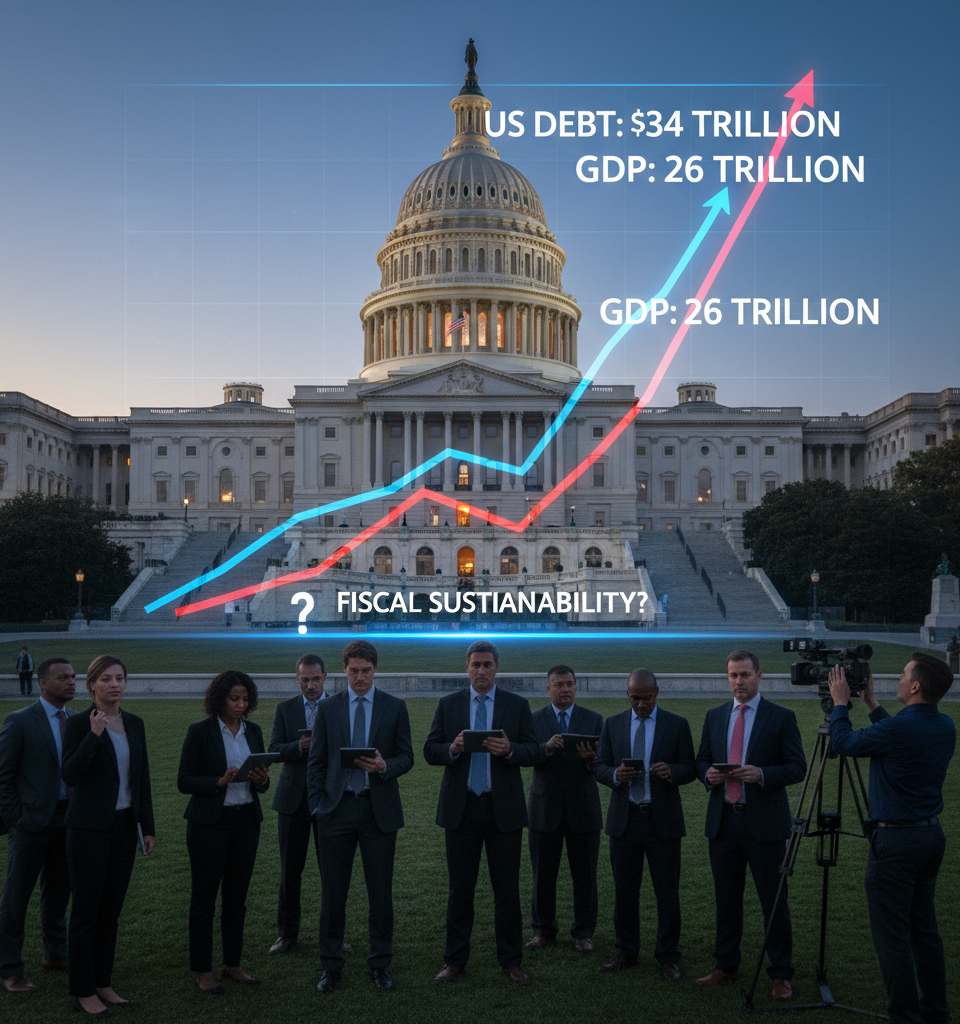
The United States national debt has formally surpassed the nation's total annual economic output, reaching a staggering milestone that has traditionally triggered alarm bells among fiscal conservatives and economists. This development, while numerically stark, was met with a relatively muted response from Washington, spotlighting a growing complacency or perhaps a deeper, more nuanced understanding of the country's complex financial landscape.
Historical Context and Economic Implications
Historically, a debt-to-GDP ratio above 100% has been viewed as a red flag, often signaling potential economic instability, increased borrowing costs, and a drag on future growth. For decades following World War II, the U.S. managed to significantly reduce its debt burden. However, a confluence of factors, including expansive tax cuts, increased defense spending, and particularly the financial crisis of 2008 and the COVID-19 pandemic response, have driven the national debt past the $34 trillion mark. The Gross Domestic Product (GDP) for 2023 hovered around the same figure, establishing this concerning 1:1 ratio. While the raw number is concerning, many economists argue that the interest rate environment and the global demand for U.S. Treasury bonds are more critical metrics than the absolute debt-to-GDP ratio itself.
Key Figures and Market Dynamics
As of early 2024, the U.S. national debt stands at approximately $34.4 trillion, while the nominal GDP hovers near $27.9 trillion. This effectively places the debt-to-GDP ratio around 123%. Despite this seemingly precarious position, demand for U.S. Treasury securities remains robust globally, underscoring the dollar's status as the world's primary reserve currency and the perceived safety of U.S. government debt. This sustained demand keeps borrowing costs relatively lower than they might be for other nations with similar debt profiles, providing Washington with continued fiscal flexibility. However, the interest payments alone on this debt constitute a significant and growing portion of the federal budget, diverting funds that could otherwise be allocated to infrastructure, education, or research.
Impact on Global Markets and Investment
The sheer volume of U.S. debt and its implications resonate throughout global financial markets. While immediate panic has been averted due to the dollar's unique standing, prolonged high debt levels can eventually erode investor confidence. A sustained decrease in this confidence could lead to higher interest rates for U.S. borrowing, impacting everything from mortgage rates to corporate investment. Furthermore, the substantial government borrowing can crowd out private investment, as the government competes for available capital, potentially stifling long-term economic dynamism.
Expert Perspectives
Many economists, while acknowledging the headline-grabbing nature of the debt-to-GDP ratio, emphasize the sustainability of the debt, rather than its absolute size. "The real problem isn't the current debt level per se, but the trajectory of spending and the lack of a credible long-term fiscal plan," states Dr. Evelyn Reed, a senior fellow at the Peterson Institute for International Economics. "Unfunded liabilities from Social Security and Medicare present a far greater structural challenge than merely the current debt-to-GDP ratio." Other analysts highlight the importance of economic growth: a faster-growing economy can more easily service a larger debt burden, making policies that foster productivity and innovation crucial.
Future Implications and Policy Debates
Looking ahead, the U.S. faces significant fiscal challenges. Projections from the Congressional Budget Office (CBO) indicate that without policy changes, both annual deficits and the national debt will continue to rise rapidly in the coming decades, primarily driven by rising healthcare costs and an aging population. The political will to address these issues through spending cuts, tax increases, or a combination of both remains elusive in a deeply polarized Washington. Future policy debates will likely center on entitlement reform, defense spending, and tax code revisions. How these debates unfold will determine the long-term fiscal health of the nation and its standing in the global economy, moving beyond the simple arithmetic of debt versus GDP.
Potential Scenarios
One scenario involves a gradual but persistent increase in inflation, as the Federal Reserve might be pressured to monetize debt. Another possibility is a future fiscal crisis if global confidence in U.S. debt falters, leading to a sharp increase in interest rates and a rapid decline in the dollar's value. Conversely, robust economic growth, driven by technological advancements or strategic investments, could help naturally reduce the debt-to-GDP ratio over time without drastic austerity measures. The immediate future, however, points toward continued reliance on global markets to finance the nation's obligations, while the debate over sustainable fiscal policy intensifies. The U.S. government's ability to maintain low borrowing costs is paramount to averting a more severe financial reckoning.
Conclusion
The recent milestone of national debt surpassing economic output serves as a potent reminder of the nation's fiscal challenges. While the immediate implications may be downplayed by some, the underlying structural issues in federal spending and revenue generation require urgent and bipartisan attention to ensure long-term economic stability and prosperity. The road ahead demands difficult choices and a commitment to fiscal responsibility beyond short-term political gains.