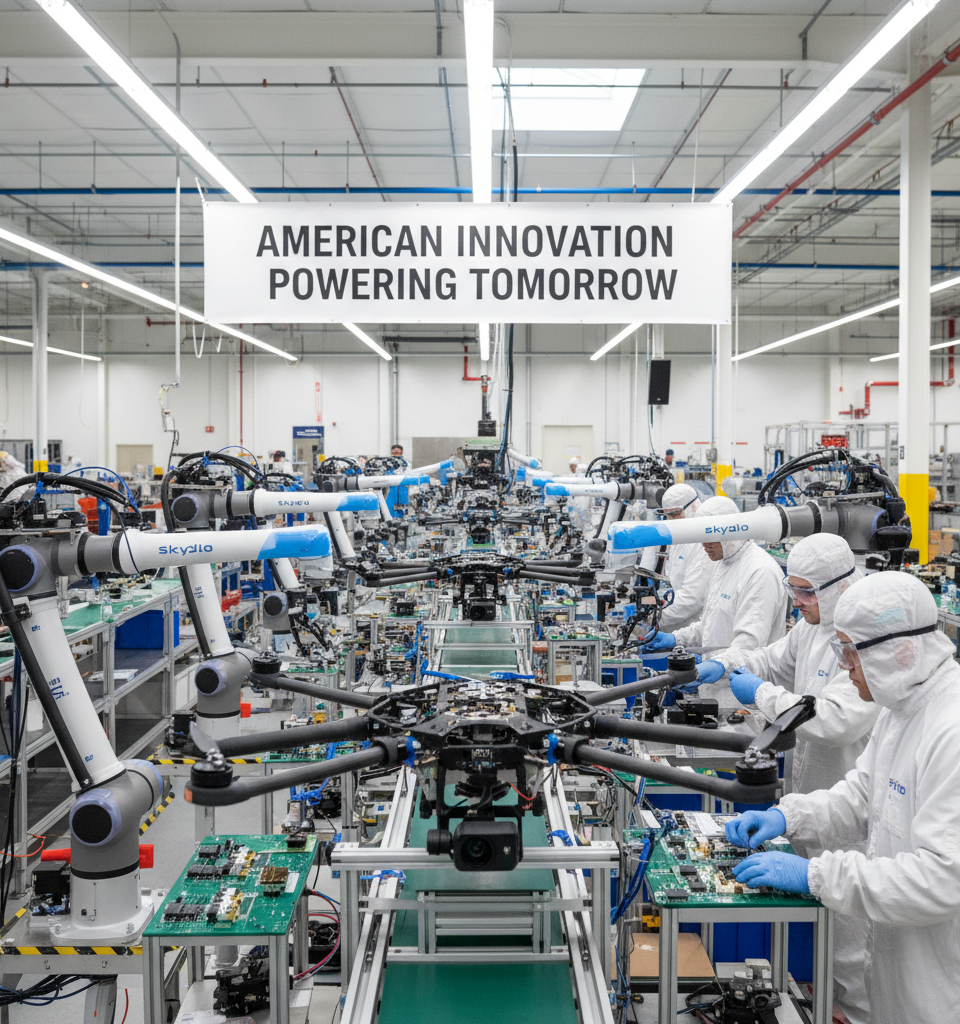
In a significant strategic pivot for American manufacturing and national security, Skydio, the nation's largest drone producer, announced late April its commitment to invest $3.5 billion over the next half-decade. This substantial capital injection is earmarked for a massive expansion, including a new factory five times the size of its current facility, the creation of over 2,000 direct jobs, an additional 3,000 supplier jobs, and the establishment of a robust domestic component supply chain. This initiative directly responds to the U.S. government's growing restrictions on foreign-made drones, particularly those from China, which have been cited as national security risks, despite their technological prowess.
Context and Background
For years, the global drone market has been dominated by foreign manufacturers, with Chinese companies like DJI leading in both technological innovation and market share. However, escalating geopolitical tensions and growing concerns over data security and potential espionage have led the U.S. government to impose strict bans and restrictions on the procurement and use of these drones by federal agencies, and increasingly, by state and local entities. This regulatory environment has inadvertently created a significant void in the market, pushing American companies to rapidly scale up and fill the demand for secure, domestically produced alternatives. The challenge, however, has been the perceived technological gap and the maturity of the U.S. drone manufacturing ecosystem.
Key Details of Skydio's Expansion
Skydio's bold investment signifies a critical step towards re-establishing American leadership in the drone sector. The announced expansion includes a state-of-the-art manufacturing facility, five times the footprint of its existing operations, designed to ramp up production significantly. The company anticipates generating more than 2,000 direct employment opportunities in manufacturing, engineering, and research and development, alongside an estimated 3,000 indirect jobs within its supplier network. A core pillar of this initiative is the development of a resilient domestic supply chain, aiming to reduce reliance on foreign components and ensure the security and integrity of its products from raw materials to final assembly. This move is positioned not just as a business expansion, but as a commitment to bolstering national security and technological sovereignty.
Industry and Market Impact
This investment by Skydio is poised to have a ripple effect across the entire U.S. drone industry. It signals a potential turning point, encouraging other American firms to increase their own manufacturing capabilities and invest in R&D. The demand generated by government contracts and increasing private sector adoption of secure drones could catalyze the growth of a robust domestic ecosystem for drone components, software, and services. While the immediate impact is on securing federal and enterprise-level contracts, the long-term vision includes making American-made drones competitive on a global scale, both in terms of technology and cost. The ban on foreign drones has effectively created a protected market for domestic producers, providing a critical incubation period for growth.
Expert Perspective
Industry analysts view Skydio's announcement as a necessary, albeit challenging, step towards U.S. self-reliance in drone technology. "This is a monumental undertaking, not just for Skydio, but for the entire American industrial base," commented Dr. Eleanor Vance, a senior aerospace analyst. "Building a competitive drone industry from the ground up, especially one that can match the cost efficiencies and technological advancements of established foreign players, will require sustained investment, innovation, and a strong government partnership." Experts underscore that while the current focus is on closing the manufacturing gap, the greater challenge will be fostering rapid innovation to ensure American drones remain at the cutting edge of autonomous flight, AI, and mission-specific applications.
What's Next
The coming years will be crucial for Skydio and the broader U.S. drone industry. Successful execution of this expansion plan will largely depend on navigating complex supply chain challenges, attracting skilled labor, and continuous innovation. While the current regulatory environment favors domestic production, the ultimate goal is to create products that are competitive globally, regardless of protectionist policies. Future developments are expected to include further announcements from other American drone manufacturers, increased government funding for drone R&D, and potentially, regulatory frameworks that incentivize domestic procurement for a wider range of applications, beyond just defense and security. The trajectory of this industry will not only define America's technological future but also its national security posture in the rapidly evolving landscape of autonomous systems.