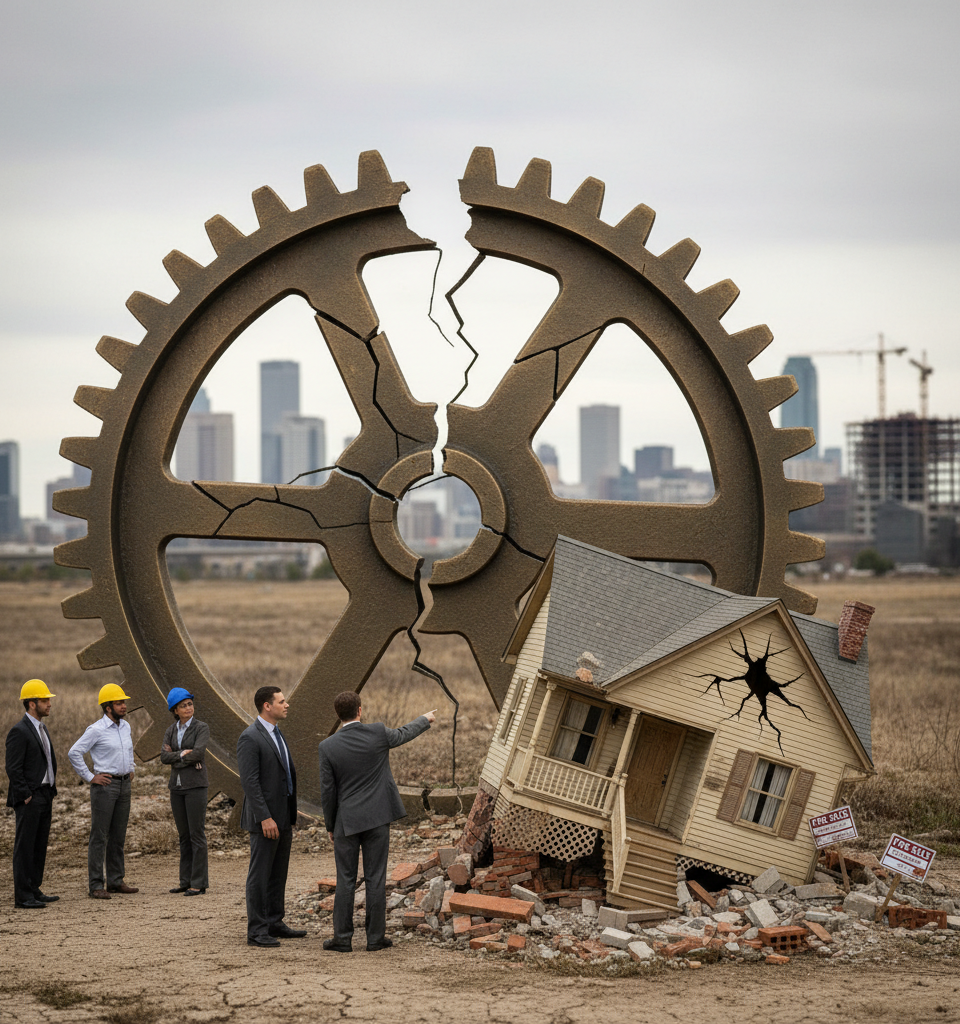
The U.S. economy, often described as its engine, is increasingly showing signs of stress, a development that is already notably impacting the housing market. This potential weakening of broader economic conditions has drawn attention to underlying vulnerabilities, which some analysts are characterizing as a 'hidden recession' for a significant portion of the populace. The implications of this slowdown are far-reaching, particularly for sectors highly sensitive to economic shifts, with real estate currently at the forefront of feeling these pressures.
Context of Economic Shifts
For an extended period, the U.S. economy demonstrated robust growth, characterized by strong employment figures and consumer spending. However, recent observations suggest a divergence from this trajectory, prompting closer scrutiny from economists and financial observers. The notion of a 'hidden recession' suggests that while headline economic indicators might still present a picture of resilience, a deeper look reveals contractionary forces affecting everyday Americans, such as stagnating real wages, increasing cost of living, or sector-specific downturns that aggregate into broader economic malaise. This phenomenon, if it deepens, could signal a more significant deceleration than currently acknowledged by official metrics.
The Real Estate Tremor
Just last week, discussions began surfacing regarding the subtle yet significant shifts occurring within the housing market. These shifts are now being directly linked to the broader economic slowdown. The housing sector, often a bellwether for economic health, is highly susceptible to factors such as interest rates, consumer confidence, and employment stability. As the economic engine sputters, potential homebuyers may face tighter lending conditions, reduced purchasing power, or increased uncertainty about future financial stability, leading to a cooling effect on demand. Similarly, existing homeowners might experience fluctuating property values or challenges related to refinancing.
Interconnected Economic Factors
The identified cracks in the economic engine are not isolated but are likely interconnected with several macroeconomic factors. These could include persistent inflation eroding purchasing power, a tightening of monetary policy by the Federal Reserve, or shifts in global trade dynamics impacting domestic production and employment. The specific mechanisms through which these factors are translating into economic strain for Americans are complex, but the cumulative effect is now visibly manifesting in market behavior, particularly in housing. For instance, rising interest rates, a common tool to combat inflation, directly increase the cost of mortgages, thereby dampening housing affordability and demand.
Broader Market Impact
Beyond just housing, a weakening U.S. economic engine could have cascading effects across various industries. Reduced consumer spending, a typical outcome of economic uncertainty or 'hidden recessionary' pressures, would impact retail, automotive, and leisure sectors. Businesses might respond by scaling back investments, pausing hiring, or even initiating layoffs, further exacerbating the economic slowdown. Financial markets could also react with increased volatility as investors adjust to a less optimistic economic outlook. The interconnectedness of modern economies means a slowdown in one critical area often precipitates challenges in others.
What Lies Ahead
The immediate future of the U.S. economy and its housing market will largely depend on the severity and duration of these emerging stresses. Policymakers will be closely monitoring economic data for clearer signals of recessionary trends or recovery. Businesses and consumers alike will need to adapt to potentially evolving economic conditions. The trajectory of inflation, employment figures, and consumer sentiment will be critical indicators to watch. Should the economic engine continue to show signs of weakening, further interventions or adjustments in financial strategies may become necessary to mitigate the impact on households and industries, especially the critical housing sector, which is already demonstrating sensitivity to these broader economic shifts.