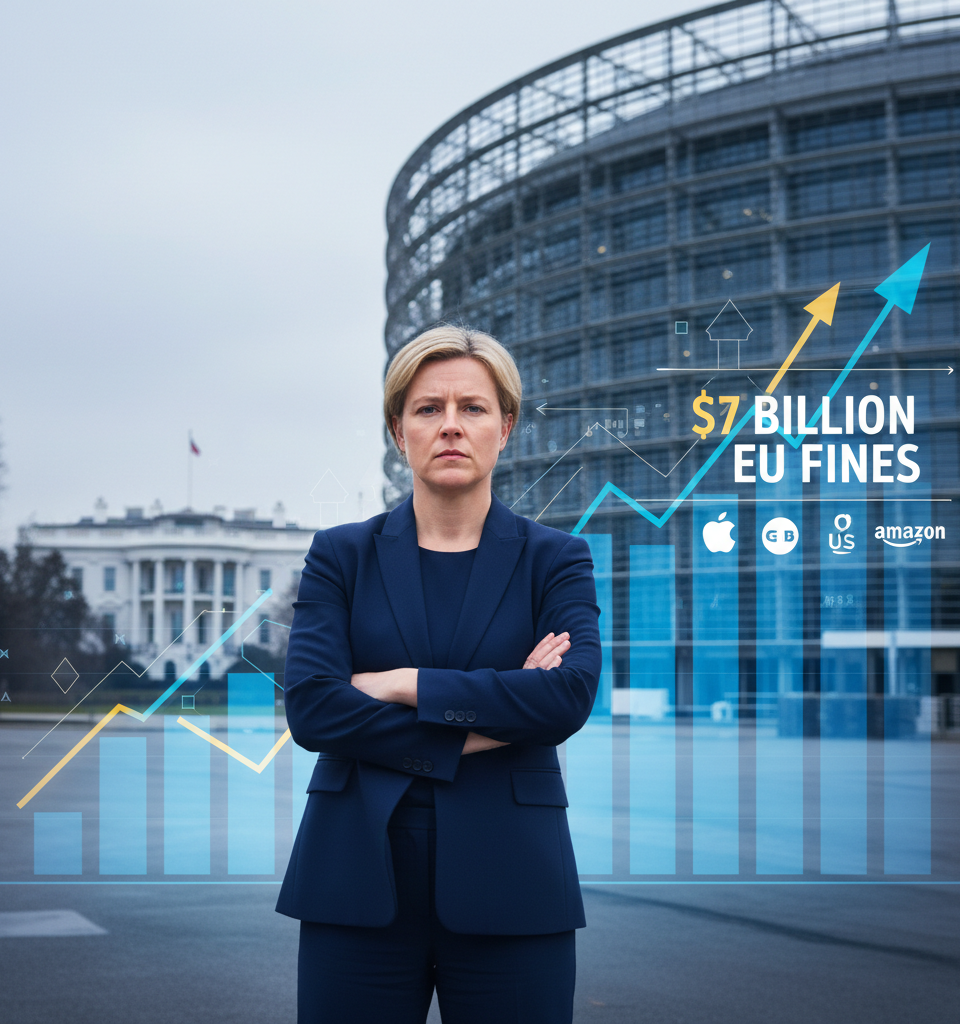
Brussels, Belgium – A significant geopolitical and economic confrontation is unfolding between the European Union and the United States, centered on the EU's aggressive enforcement of antitrust regulations against American technology behemoths. Over the past two years, the European Commission has imposed more than $7 billion in fines on major U.S. tech firms, igniting fervent protests and accusations of protectionism from the Trump administration. This escalating financial pressure and diplomatic friction highlight a fundamental divergence in regulatory philosophies and concerns over market dominance within the digital sphere.
This increasingly acrimonious relationship underscores a broader struggle for economic influence and regulatory sovereignty in the global technology landscape. The European Union, under the leadership of Competition Commissioner Margrethe Vestager, has consistently positioned itself as a champion of fair competition, arguing that these fines are necessary to prevent anti-competitive practices that stifle innovation and harm consumers. However, the Trump administration views these actions as economically punitive and politically motivated, a direct assault on successful American companies and a veiled attempt to gain an advantage for European competitors. The chasm between these perspectives is widening, threatening to strain transatlantic trade relations further at a time of existing trade tensions.
Key among the European Commission's actions are multi-billion dollar penalties levied against Google. In July 2018, Google was fined a record €4.34 billion (approximately $5 billion at the time) for illegally using its Android mobile operating system to cement its dominant search engine position. This followed a previous €2.42 billion ($2.8 billion) fine in June 2017 for abusing its dominant position as a search engine by promoting its own shopping comparison service. While Google has repeatedly denied wrongdoing and is appealing these decisions, the sheer magnitude of these fines signals a severe commitment from European regulators to rein in perceived market abuses. Other American tech giants, though not specifically named in public aggregates for this period, have also faced scrutiny and potential fines or forced operational changes, contributing to the cumulative total and the broader American grievance.
The implications of these regulatory penalties extend far beyond the balance sheets of individual companies. For the technology industry, particularly in the U.S., the EU's stance represents a formidable regulatory hurdle that could reshape business models, product development, and market entry strategies. Companies are now faced with the prospect of designing services not just for global competitiveness, but also to meticulously conform to the EU's stringent competition rules, which often differ significantly from U.S. antitrust interpretations. This could lead to a fragmentation of digital services and platforms, where offerings might be tailored differently for European markets than for the rest of the world, potentially increasing operational costs and complexity.
Financial analysts and tech policy experts are divided on the long-term impact. Some argue that the EU’s actions, while costly in the short term, could ultimately foster a more level playing field, encouraging greater innovation from smaller players and benefitting consumers through increased choice and fairer pricing. "The European Commission is sending a clear message that market dominance does not equate to unchecked power," stated Dr. Eleanor Vance, a London-based antitrust economist. "While the fines are substantial, they reflect a robust commitment to competition principles that are vital for long-term market health, though the political rhetoric certainly complicates the underlying economic motivations." Others caution that punitive measures could stifle investment, particularly in R&D, and lead to reduced market presence for innovative companies in Europe, ultimately harming European consumers by limiting access to cutting-edge technologies and services developed by U.S. firms.
Looking ahead, the confrontational approach shows little sign of de-escalation. The European Commission has indicated its continued vigilance, with several ongoing investigations into other major tech players. Concurrently, the Trump administration is expected to maintain its vocal opposition, potentially exploring diplomatic or trade-related countermeasures, though direct retaliatory tariffs against European goods in response to tech fines would be an unprecedented escalation. The potential for the U.S. to launch its own antitrust investigations into these same companies, spurred by the EU's example and growing calls for similar regulation domestically, also looms large. This transatlantic regulatory battle is set to define the future of digital commerce and global market governance for years to come, profoundly impacting businesses, consumers, and international relations.
Further, the debate within the U.S. around regulating its own tech giants could be influenced by the EU's assertive stance. As American policymakers increasingly scrutinize issues of data privacy, market concentration, and content moderation, the European model of aggressive antitrust enforcement may serve as a template or a cautionary tale. The long-term outcome will depend heavily on the political will of both blocs to find a cooperative framework for digital regulation, or conversely, to persist in a potentially damaging regulatory arms race.