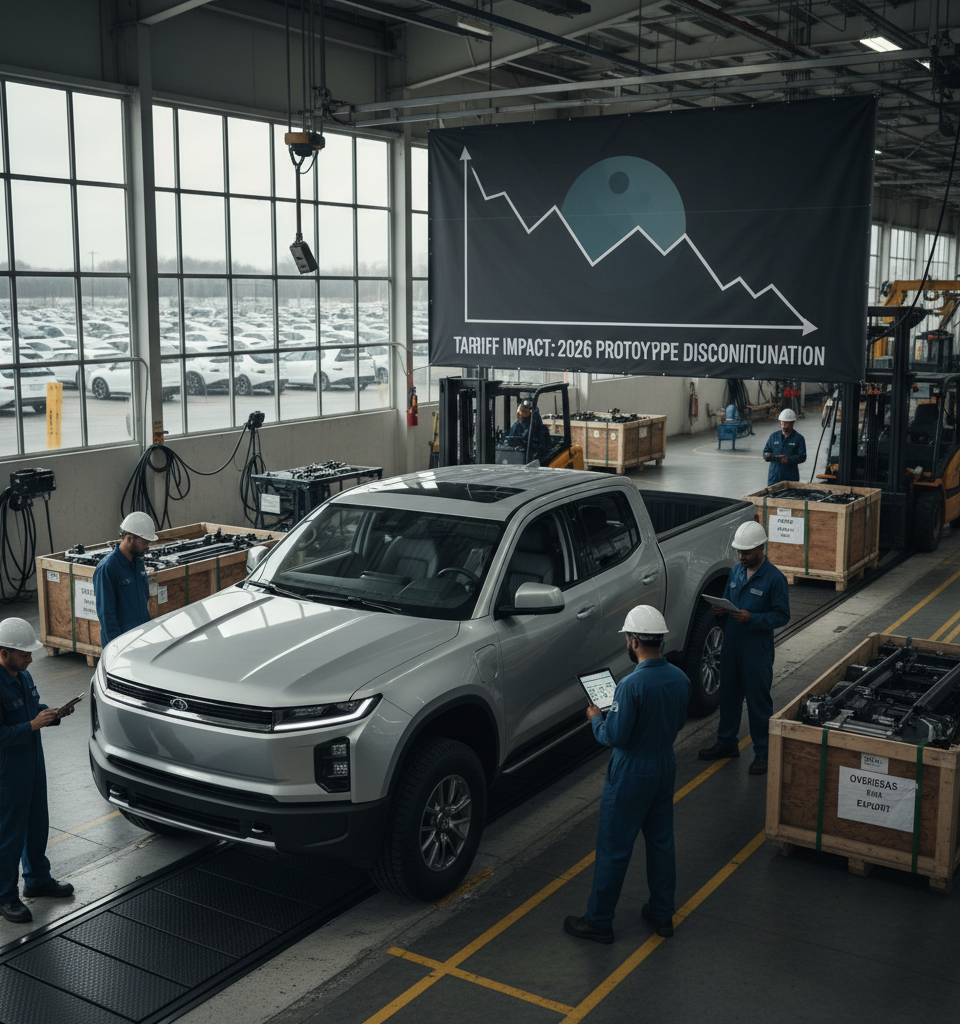
The American electric vehicle market is bracing for a notable contraction in available models by 2026, a development largely attributed to strategic shifts driven by geopolitical and economic pressures rather than inherent product shortcomings. At least a dozen EV models, spanning a wide array of manufacturers, are slated for discontinuation, a pause in sales, or outright cancellation in the United States this year. This roster includes prominent vehicles such as certain iterations of Tesla's Model S and Model X, Honda's ambitious 0 Series, Volvo's EX30, BMW's i4 and iX, and Hyundai’s Kona Electric, signaling a significant recalibration within the burgeoning EV sector.
Context of a Shifting Landscape
S. electric vehicle market, challenging the narrative of unbridled expansion that has defined the segment for the past decade. While consumer adoption of EVs continues to grow, albeit at a slower pace than initially projected by some, the primary drivers behind these exits are complex, with tariffs emerging as a pivotal factor.
S. market strategies. This move, aimed at protecting domestic manufacturing and countering what the administration views as unfair trade practices, has inadvertently accelerated the retrenchment of certain models, particularly those with complex international supply chains or those manufactured in regions impacted by trade disputes.
Tariffs and Supply Chain Realities
The impact of these tariffs extends beyond directly imported Chinese EVs. Many global automakers, including European and Asian brands, utilize components or even entire vehicle platforms sourced from — or with significant ties to — China. For instance, models like the Volvo EX30, while marketed by a European brand, are produced in China, directly subjecting them to the heightened tariffs. This economic reality significantly inflates their landed cost in the U.S., rendering them uncompetitive against domestically produced alternatives or models sourced from tariff-exempt regions. Companies are finding that the cost of absorbing these tariffs or passing them onto consumers makes these vehicles economically unviable for the U.S. market.
Industry and Market Implications
The withdrawal of these models will inevitably reshape the competitive landscape of the U.S. EV market. While it may reduce consumer choice in the short term, particularly in certain segments like more affordable compact SUVs or higher-end luxury sedans, it also presents an opportunity for domestic manufacturers to capture greater market share. However, the broader implication is a potential slowdown in the overall transition to electric vehicles if consumers perceive a reduction in variety or if prices for remaining models are driven upwards. The move underscores a growing trend of automotive localization, where governments are incentivizing or mandating regional production to secure supply chains and boost local economies, often at the expense of globalized manufacturing strategies.
Expert Analysis on Geopolitical Impact
Automotive industry analysts widely contend that these discontinuations are a direct symptom of the ongoing trade war, rather than a failure of the vehicles themselves. Dr. Eleanor Vance, an automotive economist at the Institute for Global Trade Studies, recently commented, "These aren't products that failed to find buyers; these are victims of policy. The immediate impact of a 100% tariff is a market shutdown for affected imports. Companies cannot compete when their sticker price effectively doubles due to duties alone." This sentiment is echoed across financial markets, with investors closely watching how major automakers will adapt their global production and sales strategies in response to an increasingly fragmented and politicized automotive trade environment.
The Path Forward: Localization and Adaptation
Looking ahead, the U.S. EV market is poised for a period of strategic re-alignment. Car manufacturers are likely to accelerate investments in North American manufacturing facilities to circumvent tariffs and qualify for incentives under acts like the Inflation Reduction Act. This will mean a stronger emphasis on 'Made in America' or 'Made in North America' EVs. Consumers can expect a more consolidated market with fewer imported options, while the focus will pivot to models that can be profitably produced within the tariff-free zones. Furthermore, the geopolitical climate suggests that trade policies will continue to play a significant role in shaping product availability and pricing, necessitating constant adaptation from global automotive players to navigate these evolving complexities.
Ultimately, the current wave of EV model discontinuations is a stark indicator of how non-market forces, particularly government trade policies, are exerting profound influence over industry dynamics. The ambition for a rapid EV transition in the U.S. is now being carefully balanced against the imperative of economic nationalism and strategic competition, leading to a leaner, more regionally focused electric vehicle market by 2026 and beyond.