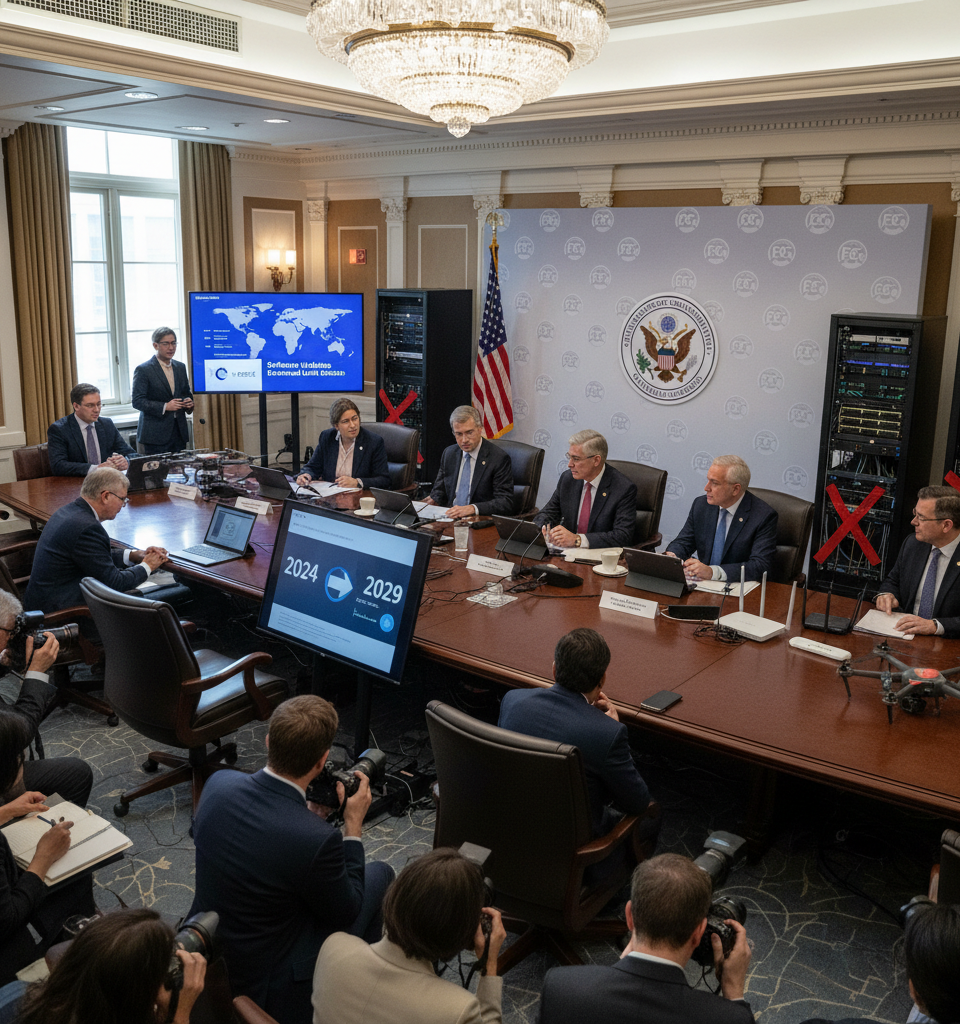
Washington D.C. – The Federal Communications Commission (FCC) announced a crucial reprieve this week, permitting devices from manufacturers deemed national security risks, primarily drones and Wi-Fi routers, to continue receiving critical software and firmware updates until January 2029. This decision, formalized through a public notice, addresses a pressing operational and security dilemma: how to manage devices already in circulation that are critical for various sectors, ranging from public safety to basic household internet access, while still upholding federal bans on new procurements from suspect vendors.
Background to the Ban
The FCC’s original ban targeted companies like Huawei and ZTE, citing national security threats stemming from their alleged ties to foreign governments, particularly China. These concerns have intensified over several years, culminating in the Secure and Trusted Communications Networks Act of 2019, which directed the FCC to develop and maintain a list of communications equipment and services deemed to pose an unacceptable risk to U.S. national security. This initiative, often referred to as the “Covered List,” includes a range of equipment, from cellular base stations to surveillance cameras. The current update allowance reflects a pragmatic approach to a complex issue, acknowledging that an immediate, absolute cessation of updates could inadvertently create new vulnerabilities for systems that rely on these devices.
Key Details and Rationale
Under the new directive, affected entities, including businesses, government agencies, and individual consumers, can continue to receive security patches, bug fixes, and other essential firmware updates for devices purchased before the ban's full enforcement. The FCC stated that this grace period is designed to prevent a potential cybersecurity vacuum, where unpatched devices become easy targets for malicious actors. An unpatched router, for instance, could become a gateway for cyberattacks into home or corporate networks, while vulnerable drones could be exploited for data exfiltration or operational disruption. The specified date of January 2029 suggests a five-year window for a complete transition away from these devices, balancing immediate security needs with long-term strategic goals.
Industry and Market Impact
This decision significantly impacts various sectors. For telecommunication carriers and internet service providers, many of whom utilized equipment from now-banned vendors due to their competitive pricing and robust features, the extension offers a vital opportunity to plan and execute a gradual replacement strategy without immediately compromising network integrity or service reliability. Manufacturers on the Covered List, while still unable to sell new equipment in the U.S., retain a temporary obligation and incentive to support their existing customer base, albeit under strict conditions monitored by the FCC. The cost of replacing this infrastructure is substantial, estimated to be in the billions of dollars for rural carriers alone, highlighting the economic intricacies of such geopolitical decisions.
Expert Perspectives
Cybersecurity experts have largely praised the FCC's nuanced approach. Dr. Evelyn Clarke, a professor of cybersecurity at Georgetown University, commented, "This isn't an endorsement of the banned technology, but rather a realistic assessment of the risks associated with suddenly cutting off critical updates. Leaving millions of active devices vulnerable would create a significantly larger national security problem in the short to medium term." She added that the 2029 deadline provides a clear roadmap for divestment while mitigating immediate threats. Conversely, some hardware security advocates argue that any continued interaction with these vendors, even for updates, maintains a level of risk, urging for an accelerated replacement timeline where feasible.
The Road Ahead
The five-year extension is not without its operational complexities. It necessitates continued oversight by the FCC and other federal agencies to ensure that updates do not introduce new backdoors or malicious functionalities. Moreover, the directive underscores the ongoing challenge of supply chain security in a globally interconnected world. Looking ahead, the U.S. government is expected to continue its efforts encouraging the development and adoption of trusted communication technologies from allied nations and domestic manufacturers. This period will be crucial for public and private entities to secure funding and establish clear strategies for the complete removal and replacement of equipment from sanctioned vendors, ideally leveraging secure alternatives by the 2029 deadline to solidify U.S. communication infrastructure against future threats.