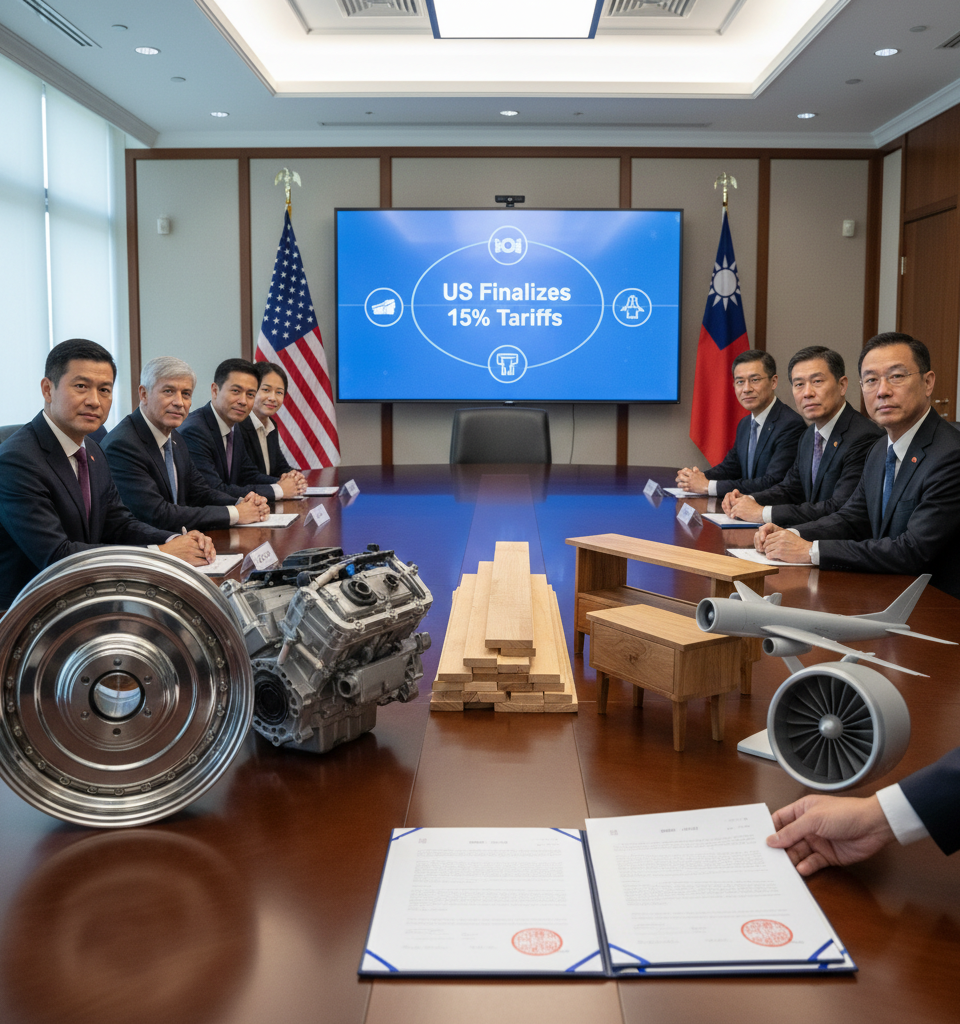
The United States government has officially set new tariffs at 15% on a range of imports from Taiwan, including auto parts, wood products, and aircraft parts. This move finalizes an agreement first outlined in a January framework accord with Taiwan, and is specifically focused on adjustments to existing Section 232 tariffs.
Context and Background
Section 232 of the Trade Expansion Act of 1962 allows the U.S. President to impose tariffs on imported goods if the Commerce Department determines that those imports threaten national security. These tariffs have been a contentious tool in U.S. trade policy, particularly since their expanded use in recent years. The January framework agreement signaled an intent to refine and modify the application of these tariffs concerning Taiwan, and today's announcement confirms the specifics of that adjustment. The decision reflects ongoing diplomatic and trade discussions between Washington and Taipei, navigating complex economic relationships amidst evolving global supply chains and strategic considerations.
Key Details of the Agreement
The finalized agreement stipulates a uniform 15% tariff rate across three distinct categories of goods originating from Taiwan: auto parts, wood products, and aircraft parts. While the specific list of sub-categories within these broad classifications has not been fully detailed in this announcement, the focus is clearly defined. This targeted approach suggests a careful evaluation of supply chains and manufacturing capabilities where such tariffs are deemed necessary. The explicit mention of the tariffs being a direct outgrowth of the January framework accord underscores a deliberated process rather than an abrupt policy shift.
Industry and Market Impact
The imposition of a 15% tariff on these particular sectors is expected to have varied impacts. Manufacturers and consumers in the United States reliant on Taiwanese auto parts may see increased costs, which could potentially translate into higher prices for vehicles or repair services. Similarly, industries utilizing imported wood and aircraft components from Taiwan will need to adjust their sourcing strategies or absorb the added expense. For Taiwan, these tariffs could prompt its industries to diversify export markets or seek exemptions where possible, though the narrow focus on Section 232 suggests a specific U.S. policy objective rather than broad economic pressure.
Expert Perspective
Trade analysts suggest that this targeted tariff application reflects a strategic balancing act by the U.S. administration. "These aren't broad-brush tariffs; they're very specific to product categories and rooted in national security considerations under Section 232, as previously discussed with Taipei," notes one trade policy expert. "It indicates a desire to address particular vulnerabilities or perceived unfair trade practices without destabilizing the broader U.S.-Taiwan economic relationship, which remains crucial for technological cooperation and regional stability." The precision of the tariffs implies a negotiated outcome aimed at addressing particular concerns while maintaining overall alliance strength.
Future Implications
Looking ahead, the implementation of these tariffs will be closely monitored for their actual economic effects on both U.S. and Taiwanese industries. There is potential for further consultations between the two economies regarding the impact and any necessary adjustments. The ongoing dialogue between the U.S. and Taiwan on trade issues is likely to continue, with future discussions possibly addressing compliance, enforcement, or the scope of existing agreements. This move also sets a precedent for how the U.S. might apply or modify Section 232 tariffs in other bilateral trade relationships, emphasizing a tailored and negotiated approach over unilateral, sweeping measures.