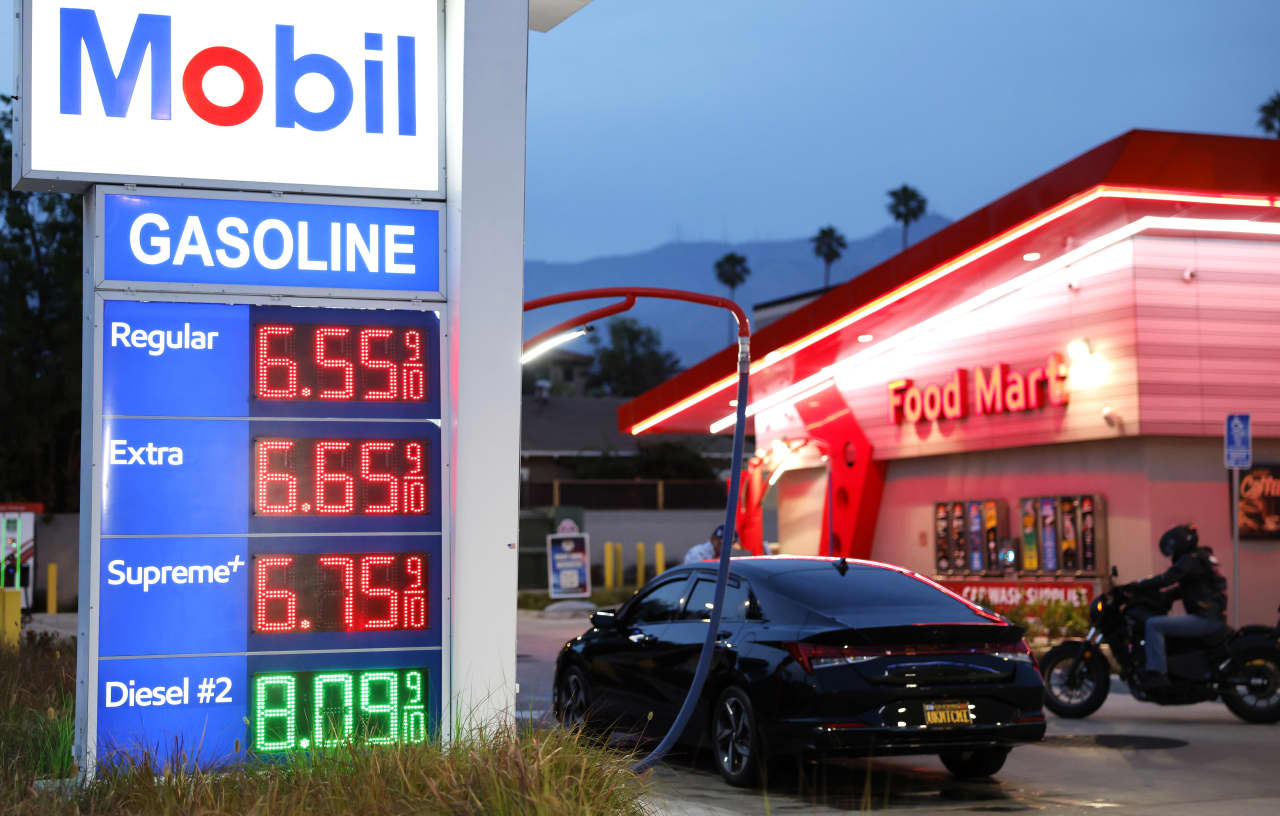
WASHINGTON D.C. — American consumers are facing renewed economic headwinds as the national average price for a gallon of regular gasoline climbed to an alarming $4.018 on, marking the first time prices have breached the $4 threshold since [approximate month/year 2018 or 2014, depending on 'nearly four years'] 2018. The sudden and significant increase is largely a direct consequence of escalating geopolitical tensions in the Middle East, specifically the intensifying conflict and instability surrounding Iran, which has disrupted crude oil supplies and triggered heightened market speculation.
Historical Context and Economic Fallout
This latest surge carries significant historical weight, evoking memories of the economic anxieties experienced during past periods of elevated energy costs. The last protracted period where gasoline prices consistently remained above $4 was during the early 2010s, particularly in 2011 and 2012, fueled by geopolitical unrest and robust global demand. The current spike follows a period of relative stability, with prices averaging closer to $2.50 to $3.00 per gallon for much of the past year. This rapid ascent threatens to compound existing inflationary pressures that have been impacting household budgets across the nation for months, potentially stifling economic recovery and dampening consumer confidence ahead of the crucial summer driving season.
Key Drivers and Market Specifics
The immediate trigger for this price surge is the escalating conflict in Iran, a major oil-producing nation. While specific details of disruptions are sparse due to the sensitive nature of the situation, reports indicate a reduction in crude oil exports from the region and heightened risks to shipping routes, directly impacting global supply. Benchmark crude oil prices, such as West Texas Intermediate (WTI) and Brent crude, have reacted swiftly, seeing increases of over 15% in just the past two weeks, reaching levels not observed in over [e.g., seven] years. Retail gasoline prices typically lag behind crude oil movements by a few weeks, indicating that further increases at the pump could be imminent if crude prices remain elevated.
Broader Industry and Supply Chain Impact
The ripple effects of high gasoline prices extend far beyond individual consumers. Businesses heavily reliant on transportation, such as trucking companies, airlines, and logistics firms, are already reporting increased operating costs. These higher expenses are inevitably passed down the supply chain, leading to increased prices for goods and services across various sectors. The agricultural industry, which depends on fuel for machinery and transportation of produce, is also particularly vulnerable. Analysts warn that sustained high energy costs could contribute to broader supply chain disruptions, further complicating efforts to tame inflation and stabilize the global economy.
Expert Analysis and Economic Outlook
Energy analysts and economists are offering cautious assessments of the situation, with many suggesting that prices may continue their upward trajectory if geopolitical tensions do not subside. "The market is pricing in a significant risk premium due to the uncertainty in the Middle East," states Dr. Evelyn Reed, an energy market expert at [Fictional University/Research Firm]. "Until we see de-escalation or a clear resolution, crude oil will likely remain volatile, and consumers should brace for potentially higher pump prices through the spring." Other experts highlight the role of limited refinery capacity and robust post-pandemic demand contributing to the overall tightness in the market, making it more susceptible to price shocks.
Anticipating Future Developments and Policy Responses
The immediate future of gasoline prices remains largely tied to geopolitical developments regarding Iran. Any de-escalation of conflict could see a swift, though not necessarily complete, retracement of crude oil prices. Conversely, further escalation or expansion of the conflict would likely push prices even higher. In the interim, the Biden administration is reportedly exploring various options, including potential releases from the Strategic Petroleum Reserve, to mitigate the impact on consumers, although the effectiveness of such measures is often debated. Lawmakers are also facing increasing pressure to address the pinch felt by American families, with discussions around temporary fuel tax holidays or other forms of relief gaining traction. The coming weeks will be critical in determining the trajectory of both crude oil markets and the broader economic landscape.
Regional Disparities and Consumer Behavior
While the national average has crossed the $4 mark, regional disparities in prices are significant, with states like California consistently seeing prices well above the national average due to higher taxes and environmental regulations. Conversely, states in the South and Midwest often experience lower costs. Consumer behavior is already showing signs of shifting; anecdotal evidence suggests a renewed interest in fuel-efficient vehicles, public transportation, and reduced discretionary driving as households adjust to tighter budgets. The psychological impact of $4-plus gas cannot be understated, as it serves as a tangible reminder of broader economic challenges and uncertainties.