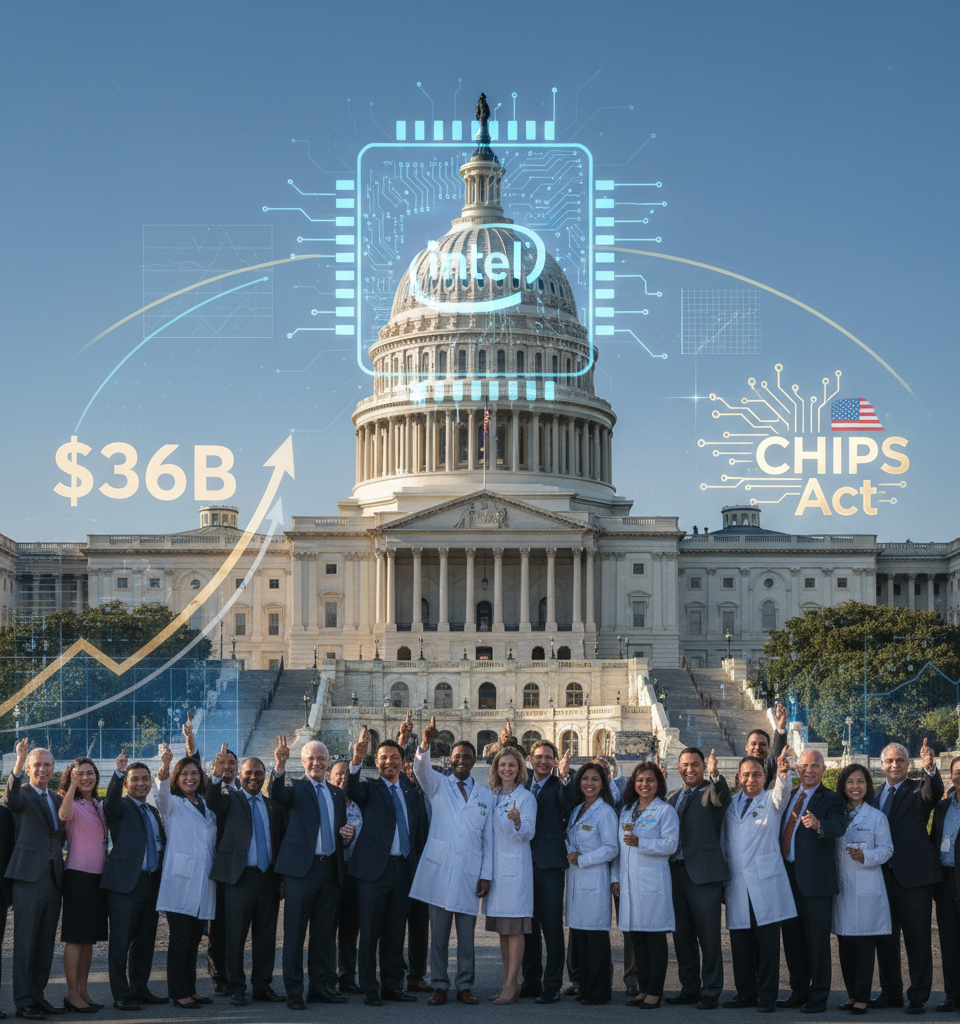
The United States government has seen a remarkable return on its investment in Intel, with its 9.9% stake in the semiconductor giant skyrocketing by approximately 300% to an estimated $36 billion. This impressive gain stems from a strategic decision made last August under the Trump administration, which converted $8.9 billion in CHIPS Act grants and Secure Enclave funds into equity at a conversion price of $20.47 per share. The dramatic valuation increase, equating to an unrealized gain of roughly $26.5 billion, follows Intel's stellar first-quarter earnings report, which propelled its stock price more than 20%.
Context and Background
This development underscores the dual objectives of the CHIPS and Science Act of 2022: to revitalize domestic semiconductor manufacturing and to provide a tangible return on taxpayer investment. The initial conversion of substantial grant funding, intended to bolster US chip production capabilities and national security infrastructure, into a direct equity stake was an unconventional move. While government grants are typically outright disbursements, the decision to take an ownership position aimed to secure a long-term interest in Intel's success and potentially recoup public funds. The recent surge in Intel's stock validates, at least in the short term, this innovative — and at the time, somewhat contentious — financial strategy.
Key Details and Figures
The initial investment of $8.9 billion, comprised of allocations from the CHIPS Act and funds designated for secure computing initiatives, was executed when Intel shares were trading at $20.47. Following its impressive Q1 earnings report, which significantly surpassed analyst expectations, Intel's stock experienced a substantial rally. This performance propelled the market value of the government's 9.9% holding to approximately $36 billion. The $26.5 billion unrealized gain represents one of the most substantial returns seen on a government-backed investment in recent memory. This financial boon comes as Intel continues its aggressive strategy to regain its technological edge and expand its foundry operations in the U.S., a core tenet of the CHIPS Act's goals.
Industry and Market Impact
The financial success of the government's Intel stake sends a powerful signal to the broader semiconductor industry and the investment community. It demonstrates that strategic, large-scale government intervention, particularly in critical sectors, can yield significant financial benefits alongside national security and economic development objectives. This could encourage further public-private partnerships and innovative financing structures in other strategic industries. For the semiconductor market, Intel's strong performance and the rising value of its shares reinforce confidence in the company's turnaround efforts and the long-term demand for advanced chip technology, especially as global competition intensifies and supply chain resilience remains a priority.
Expert Perspective Market analysts and policy experts are weighing in on the implications.
"This is a monumental win for the taxpayer and showcases the potential for government investments to not just stimulate an industry but also generate substantial financial returns," stated Dr. Eleanor Vance, a senior economist specializing in industrial policy. Others emphasize the timing of the conversion, noting the perceived undervaluation of Intel shares at the time. "The foresight to convert grants into equity when Intel was navigating a challenging period has paid off handsomely," commented a technology sector analyst from a prominent investment bank, who wished to remain anonymous. However, some caution that while the current return is impressive, the semiconductor industry is highly cyclical and subject to rapid technological shifts, warranting continued vigilance on the part of the government regarding its substantial holding.
What’s Next: Future Implications
Looking ahead, the question of what the U.S. government intends to do with its now highly valuable stake in Intel remains. Options include holding the shares for continued long-term appreciation, potentially using the proceeds to reinvest in other critical domestic industries, or divesting to directly benefit the national treasury. Any decision will likely be subject to significant political and economic considerations. Furthermore, this success story may set a precedent for how future federal support mechanisms are structured, potentially leading to more equity-based agreements in other strategic sectors identified for government investment. The ongoing performance of Intel, particularly its progress in leading-edge process technology and foundry services, will continue to be a key indicator for both the market and policymakers. The substantial unrealized gains could provide a significant fiscal dividend, potentially offsetting other national expenditures or funding future initiatives. The government's continued involvement as a major shareholder could also provide a unique form of oversight and influence, ensuring that Intel's strategic direction aligns with national interests in semiconductor sovereignty and technological leadership. This unprecedented scenario will be closely watched as a model for future large-scale public-private collaborations aimed at strengthening critical domestic industries.