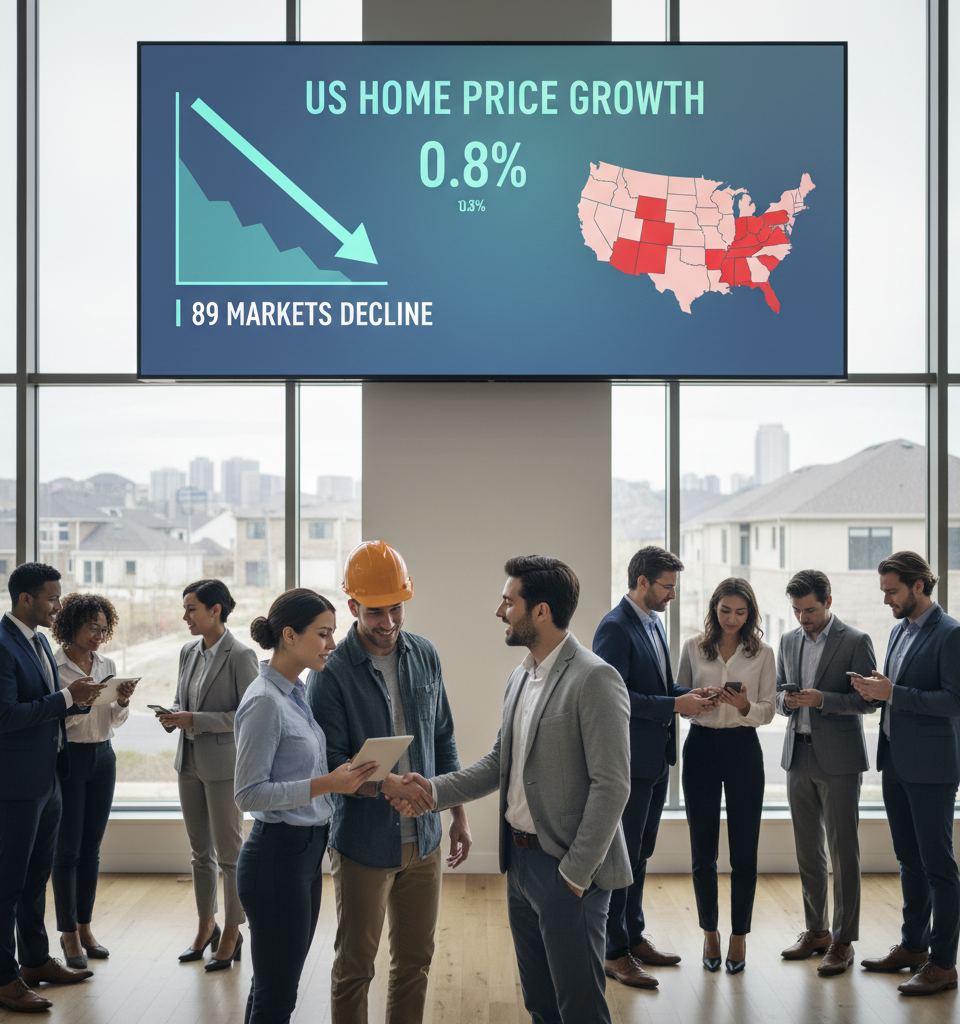
WASHINGTON D.C. — The U.S. housing market is experiencing a notable cooling trend, with national home prices advancing by a mere +0.8% annually between March 2025 and March 2026, according to a recent analysis of the Zillow Home Value Index. This figure marks a significant deceleration from the +1.2% growth observed in the preceding year. While national year-over-year growth has shown recent signs of stabilization, ticking slightly upward from a trough of -0.01% in August 2025, a deeper dive into regional data reveals a more concerning picture: 89 individual housing markets are now registering outright price declines.
This shift in momentum underscores a pivotal moment for the real estate sector. For years, observers have grown accustomed to robust, often double-digit, home price escalation. The current slowdown suggests a recalibration, potentially driven by a confluence of factors including elevated interest rates, constrained affordability, and shifting buyer sentiment. This deceleration, while potentially offering some relief to prospective homebuyers, also signals increased volatility and uncertainty for homeowners and investors in specific regions.
Key findings from the analysis highlight the national average's precarious position. The +0.8% year-over-year growth from March 2025 to March 2026 represents one of the slowest rates of appreciation in recent memory, a stark contrast to the boom periods witnessed during and immediately after the pandemic. Furthermore, the fact that nearly a hundred markets are experiencing negative price growth indicates that the national average is buoyed by a smaller number of high-performing areas, masking significant localized downturns across the country.
The broader industry impact of this slowdown is multifaceted. Builders may face increased inventory challenges and slower sales, potentially leading to a reduction in new construction starts. Lenders could see a tightening of mortgage standards as the risk profile of some markets changes. For real estate agents, the market demands heightened expertise in guiding clients through more nuanced transactions, where pricing strategies become paramount in a less bullish environment. The overall ripple effect could extend to related sectors such as home improvement and furnishing.
Experts are closely monitoring these trends, with many noting the divergent paths of national averages versus local market realities. "The headline national number can be deceptive," stated Dr. Eleanor Vance, a senior economist at Real Estate Analytics Group. "While stabilization around zero growth nationally might sound benign, the widespread pockets of negative price movement indicate that specific local economies are feeling significant pressure. This isn't a uniform slowdown; it's a highly targeted correction in many areas that previously saw unsustainable growth." Other analysts point to the ongoing battle between limited inventory and affordability constraints as key drivers shaping current market dynamics.
Looking ahead, the trajectory of home prices will likely hinge on several critical factors. Interest rate movements by the Federal Reserve, the pace of inflation, and the broader economic health—particularly employment figures—will play significant roles. Market observers will also be watching for any policy interventions designed to stimulate housing demand or supply. The current environment suggests sustained pressure on affordability, making future price growth highly sensitive to changes in buying power. Further regional divergences are anticipated, with some markets potentially recovering faster than others, depending on local economic resilience and housing supply conditions.
The first half of the year will be crucial in determining whether the current stabilization holds or if the trends in declining markets begin to exert greater downward pressure on the national average. Homebuyers and sellers alike are advised to approach the market with caution, armed with detailed local data and expert guidance, as the era of easy appreciation appears to be firmly behind us.