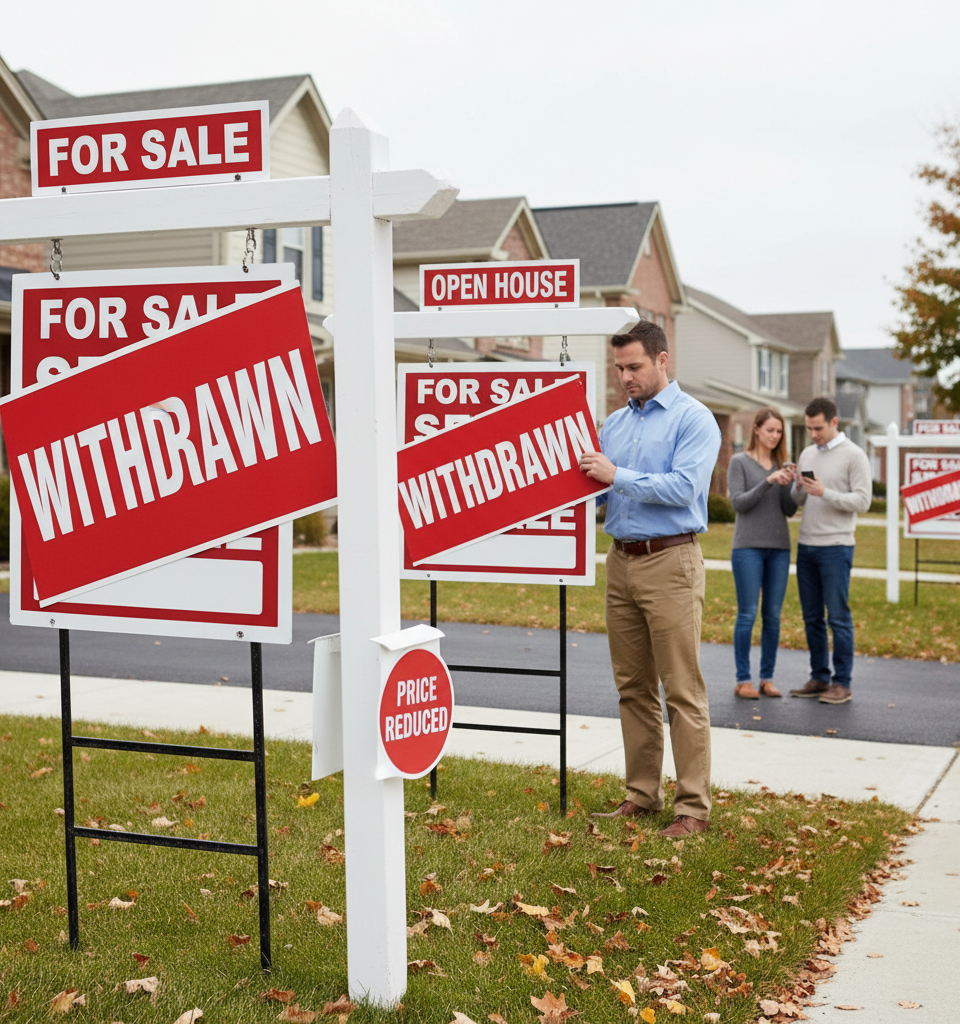
U.S. home sellers are increasingly opting to withdraw their properties from the market, a trend highlighted by the fact that 5.8 percent of all nationwide listings were pulled in April. This figure ties for the highest share recorded since March 2020, signaling a growing disconnect between seller expectations and buyer willingness to pay amidst evolving market conditions. The widespread withdrawal suggests sellers are contending with a new reality where buyers are holding firm on price, leading to a noticeable contraction in available housing stock. This dynamic is unfolding as asking prices register their most significant annual decline since 2017, underscoring a recalibration in the housing sector.
This recent surge in withdrawn listings underscores a critical shift in the housing market's equilibrium. Historically, a robust seller's market has often seen properties move quickly and at or above asking prices. However, the current environment indicates a period where the traditional leverage sellers once enjoyed is diminishing. The decision by nearly 6% of sellers to remove their homes rather than accept lower offers suggests a reluctance to capitulate to the prevailing buyer sentiment, possibly driven by various factors including attachment to original price expectations or the financial implications of selling at a reduced value.
The 5.8 percent share of pulled listings in April is a stark indicator of market friction. Comparing this to March 2020, a period marked by profound uncertainty at the onset of a global health crisis, emphasizes the current strength of the pressure points in the market. At that time, many sellers might have pulled listings due to immediate economic fears and lockdowns. Today, the motivation appears more directly linked to pricing disagreements, as buyers are not ceding ground on their perceived fair value, leading to prolonged listing periods and eventual withdrawals.
Simultaneously, the housing market is experiencing its most pronounced annual drop in asking prices since 2017. While the exact percentage of this decline was not specified, its characterization as the "steepest" in nearly a decade highlights a broader trend of price corrections. This decline is likely influencing seller decisions; faced with the prospect of having to lower their asking prices significantly to attract buyers, many are choosing to temporarily exit the market in hopes of more favorable conditions returning in the future. This creates a challenging environment for both buyers seeking immediate purchases and sellers aiming for optimal returns.
The broader impact on the housing market could manifest in several ways. A sustained period of high listing withdrawals could lead to a tighter inventory of homes for sale, which in theory could support prices, but only if demand remains consistent or grows. However, if buyers continue to resist current pricing, this reduced inventory may not translate into higher sales volume or quicker transactions. Instead, it could contribute to a stalemate, where fewer transactions occur but prices remain relatively sticky at the lower end of the spectrum, reflecting the current downward trend in asking prices.
Market analysts are likely observing these trends closely to understand their long-term implications. The current situation suggests a potential inflection point where the market is attempting to find a new equilibrium after periods of rapid appreciation. Expert opinions would likely converge on the idea that sellers who are most motivated will eventually adjust their prices, while others may opt to rent their properties or simply wait for a perceived market rebound. The coming months will be crucial in determining whether this is a temporary pause or the beginning of a more sustained period of market reevaluation.
Looking ahead, the market's trajectory will largely depend on a few key factors: the persistence of buyer price resistance, the willingness of sellers to adjust their expectations, and broader economic indicators such as interest rates and inflation. Should interest rates stabilize or decline, it could potentially inject new buyer confidence and affordability, encouraging some of the withdrawn listings back onto the market. Conversely, continued economic uncertainty could reinforce buyer caution and prolong the current standoff between sellers and buyers, making it difficult for the housing market to regain significant momentum without further price adjustments.