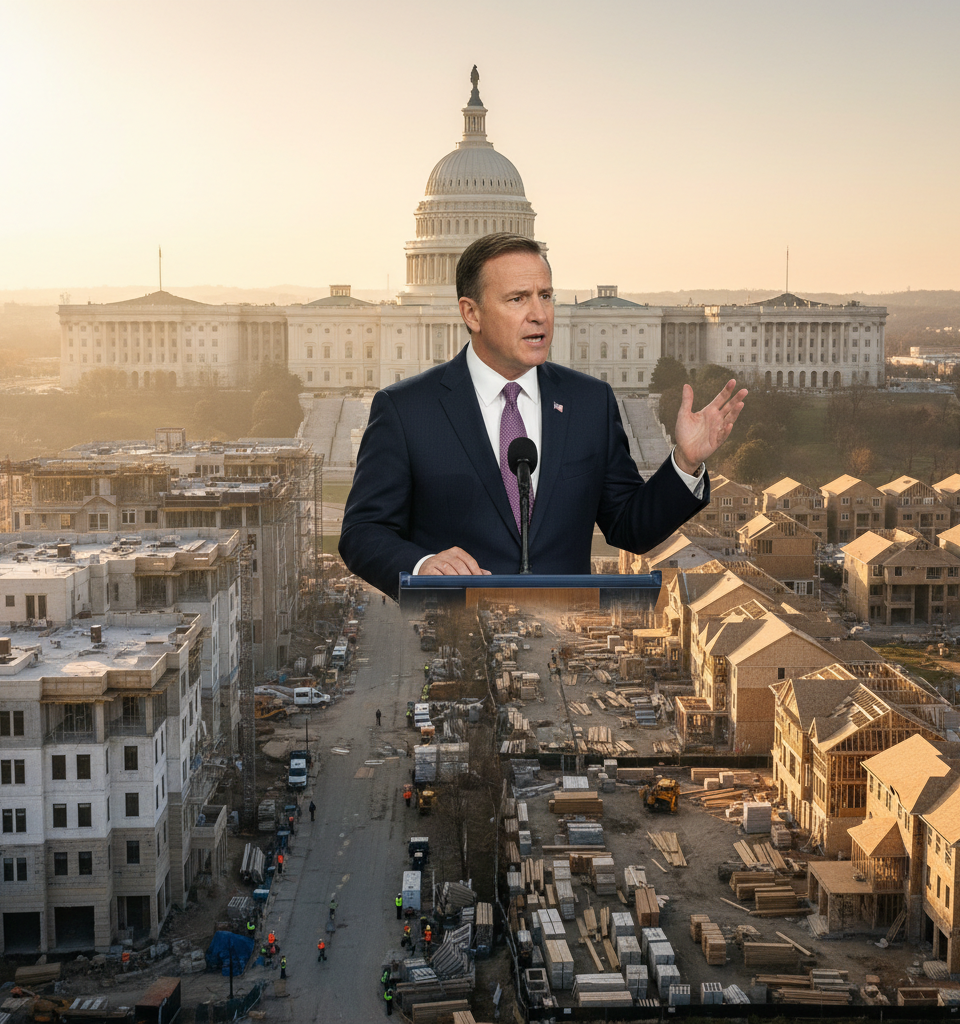
The United States is grappling with a profound housing affordability and availability crisis, a situation exacerbated by what many experts identify as a persistent failure of political will to enact known, effective reforms. This enduring stalemate occurs despite a multitude of well-researched proposals and widespread acknowledgment of the problem's severity across the political spectrum. The core challenge is not a shortage of ideas, but rather a deep-seated reluctance among policymakers to implement the solutions that are most likely to work.
The Pervasive Nature of the Housing Crisis
The current housing dilemma transcends regional boundaries, impacting major metropolitan areas and even expanding into suburban and rural communities. Millions of Americans are struggling with unaffordable rents, a scarcity of starter homes, and protracted waiting lists for subsidized housing. Median home prices have surged by over 40% nationally since 2020, reaching an all-time high of approximately $410,000 in early 2024. Rental costs have also escalated dramatically, with the average national rent for a one-bedroom apartment climbing by 20% in the last three years to nearly $1,400 per month. This affordability crunch significantly strains household budgets, stifles economic mobility, and exacerbates wealth inequality.
Decades of Underinvestment and Restrictive Zoning
Historically, the roots of the current crisis can be traced to decades of underinvestment in housing infrastructure and, critically, the proliferation of restrictive land-use regulations. Zoning ordinances, often designed to preserve neighborhood character or property values, have effectively limited housing density and diversified housing types, primarily favoring single-family homes on large lots. These regulations include height restrictions, minimum lot sizes, onerous parking requirements, and lengthy permitting processes, all of which inflate construction costs and extend development timelines. The National Association of Home Builders estimates that regulation accounts for nearly 24% of the total cost of building a single-family home.
The Paradox of Known Solutions and Political Inertia
Experts consistently point to a range of proven interventions, including zoning reform to allow for higher density and mixed-use developments, increased federal funding for affordable housing initiatives, and streamlined permitting processes. For example, states like California and Oregon have begun to tackle single-family zoning, moving towards allowing duplexes or even fourplexes in traditionally exclusive areas. Yet, such reforms often face fierce NIMBYism (Not In My Backyard) opposition from existing homeowners concerned about property values, traffic congestion, or perceived changes to neighborhood aesthetics. Local political pressure frequently outweighs the broader economic and social benefits of increased housing supply.
Economic and Social Ramifications
Beyond individual financial hardship, the housing crisis has significant macroeconomic implications. It impedes labor mobility, as workers cannot afford to live near job centers, leading to labor shortages in critical industries. Businesses face increased operational costs due to higher wages demanded by employees struggling with rent. From a social perspective, housing instability contributes to increased homelessness, educational underperformance among children, and poorer public health outcomes. The economic output lost due to housing shortages is estimated to be in the hundreds of billions of dollars annually, according to studies by the Upjohn Institute.
Expert Analysis: The Path Forward
Dr. Sarah Johnson, a leading economist specializing in urban development at the Brookings Institute, commented, “The solutions are not revolutionary; they are incremental but require collective political will. We need to shift from a reactive, crisis-driven approach to a proactive, supply-driven strategy. This means robust state-level interventions to override local exclusionary zoning, coupled with sustained federal investment in programs like the Low-Income Housing Tax Credit, which has proven effective but is often underfunded.” She emphasized that public education campaigns are crucial to counter misconceptions about density and its impact on neighborhoods.
Upcoming Policy Debates and Potential Breakthroughs
Looking ahead, several states are considering legislation to preempt local zoning restrictions, a trend that could unlock significant housing development. Federal initiatives, such as the proposed PRO Housing Act, aim to incentivize localities to reduce regulatory barriers. However, the success of these efforts will hinge on overcoming deeply entrenched political opposition and fostering a broader consensus on the necessity of systemic housing reform. The upcoming election cycles will likely feature housing affordability prominently, offering a potential inflection point for policies that could finally address America's persistent housing conundrum or perpetuate the current stalemate.