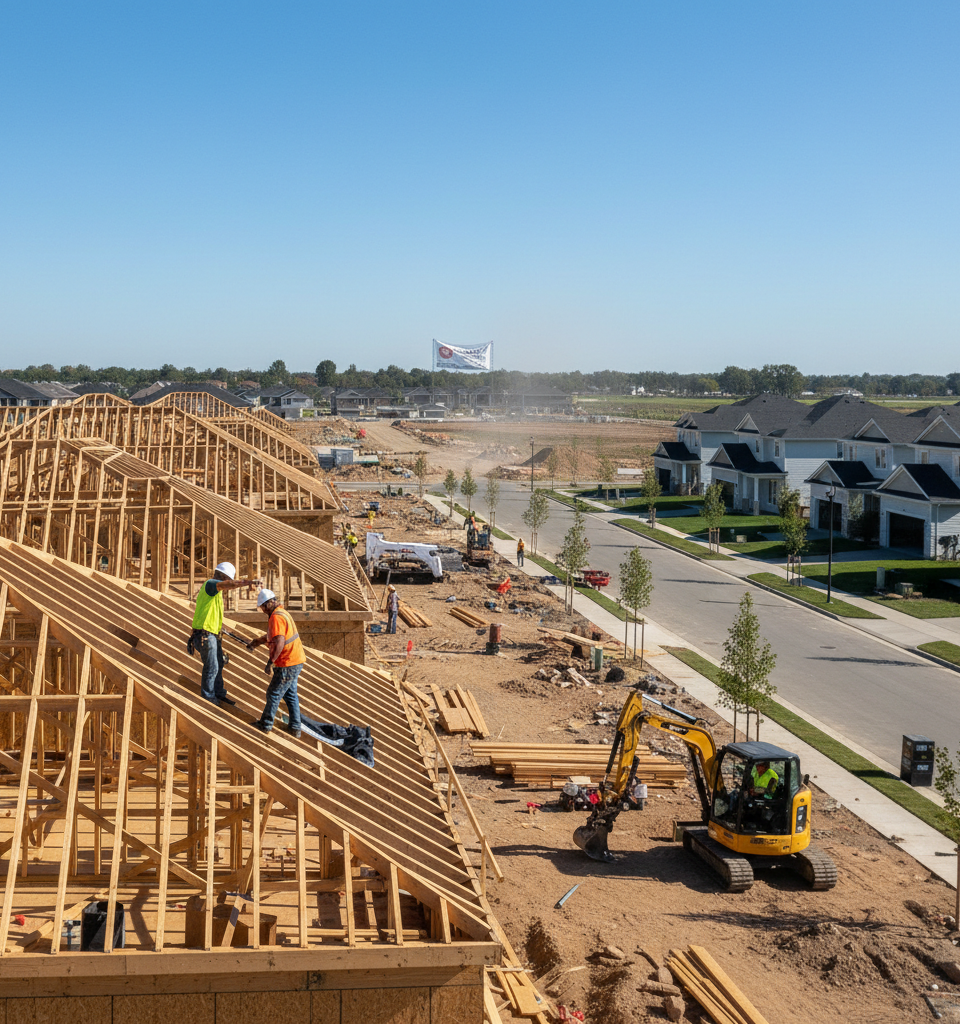
WASHINGTON D.C. – The U.S. housing market presented a paradoxical report in March, as new residential construction unexpectedly accelerated despite a backdrop of decelerating forward-looking indicators. Housing starts climbed to a seasonally adjusted annual rate of 1.5 million units, a significant uptick driven largely by single-family home construction, which reached 1.03 million units. This surge in activity stands in stark contrast to broader cautionary signals, including a notable drop in building permits and completions, suggesting a potential divergence between current construction momentum and future housing supply.
This anomaly in March's data arrives at a critical juncture for the housing sector, which has been grappling with persistent challenges including high mortgage rates, elevated material costs, and a lingering shortage of skilled labor. Historically, housing starts are a key economic indicator, reflecting builder confidence and providing insight into future housing supply. While an increase typically signals strength, the concurrent decline in other key metrics casts a shadow over the sustainability of this recent growth. The National Association of Home Builders (NAHB) has consistently pointed to these headwinds as primary deterrents to more robust and consistent expansion.
Drilling into the specifics, the 1.5 million annualized starts represent a marked improvement over previous months, outpacing most analyst predictions. However, the permits component, a bellwether for future construction, fell by a substantial 10.8% year over year. Similarly, housing completions experienced a significant decline of 13.5% over the same period, suggesting that while builders may be breaking ground on new projects, the pace of delivering completed homes to the market is slowing down. This discrepancy could exacerbate existing inventory shortages in the near term, particularly in certain high-demand metropolitan areas.
The broader industry impact of these figures is nuanced. While the strong starts number offers a glimmer of optimism for construction-related sectors, the overarching slowdown in permits and completions signals continued supply-side constraints. This scenario could keep upward pressure on home prices, making affordability a persistent challenge for potential buyers. Real estate developers, material suppliers, and lenders are all closely monitoring these trends, as they directly influence investment decisions and market strategies.
Economists and housing analysts are cautiously interpreting the March data. "The jump in starts is a welcome surprise, but we cannot ignore the flashing yellow lights from permits and completions," commented Dr. Eleanor Vance, senior housing economist at Global Insights Group. "This suggests that while builders might be pushing through existing backlogs, they are becoming increasingly hesitant to commit to new projects at the same pace, likely due to uncertainty surrounding interest rates and buyer demand." Others point to regional variations, noting that some areas with strong job growth might be outperforming the national average.
Looking ahead, the trajectory of the housing market will largely depend on several macroeconomic factors, chiefly the direction of interest rates and inflation. Should the Federal Reserve signal further rate hikes or maintain elevated rates for an extended period, it could further dampen demand for new construction and depress future permit activity. Conversely, any indication of rate cuts could re-energize the market. Industry stakeholders will be keenly watching upcoming reports on builder confidence, mortgage applications, and existing home sales for clearer indications of where the housing sector is truly headed in the latter half of the year.
Housing Market Divergence: Starts Up, Permits Down
The latest data from the U.S. Census Bureau and the Department of Housing and Urban Development indicates a complex and somewhat contradictory picture for the nation's housing market. While groundbreaking began on more residential units than anticipated, the leading indicators for future supply are contracting, suggesting that the recent surge in starts may not be sustainable without improved market conditions for builders.
Single-Family Homes Lead the Charge
Much of the positive momentum in March's housing starts was concentrated in the single-family segment. This is a crucial detail, as single-family homes represent the largest portion of the housing market and are key to addressing the persistent inventory shortage. However, the overall decline in permits, which encompasses both single and multi-family units, indicates a broader slowdown in future potential construction.
The Supply Chain and Completion Bottlenecks
The notable drop in housing completions underscores ongoing challenges within the construction supply chain and labor market. Even as starts increase, if homes aren't being completed and delivered to the market efficiently, the fundamental issue of housing supply remains unaddressed. This bottleneck contributes to constrained inventory and continued upward pressure on housing prices in many regions across the United States.