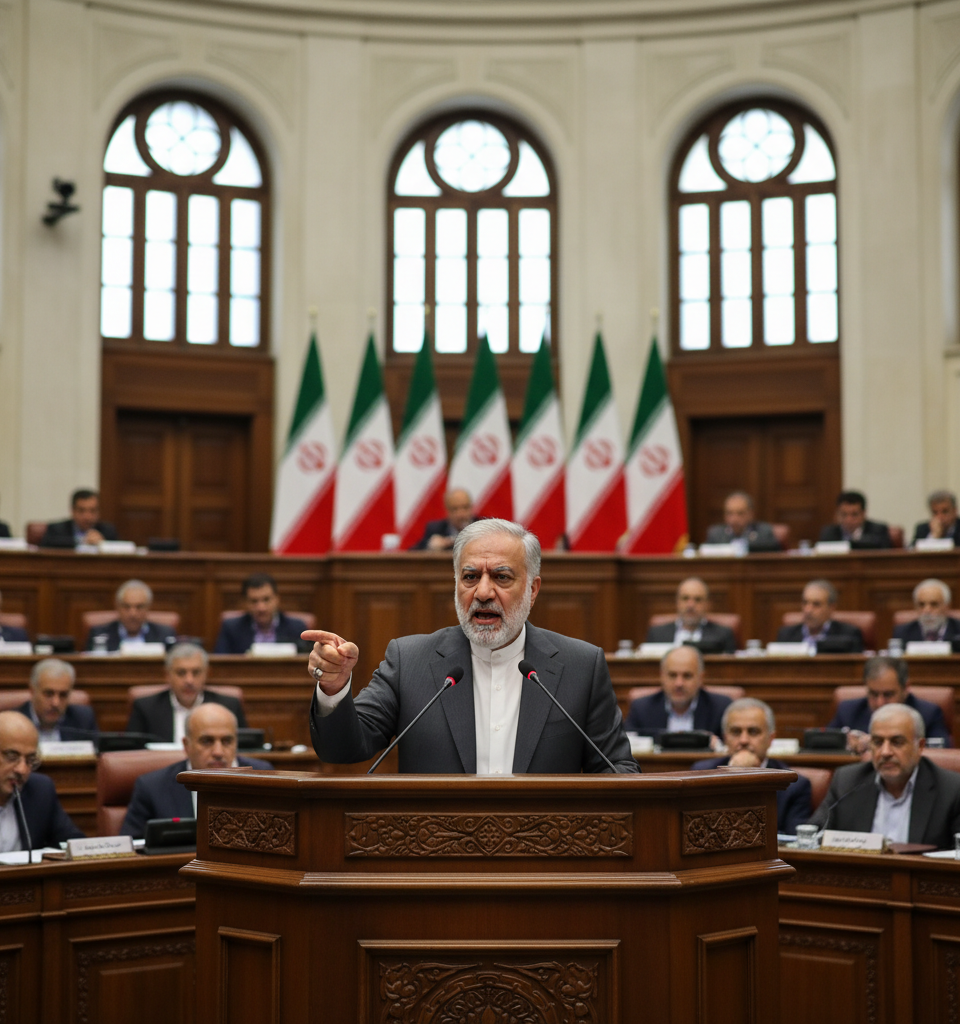
TEHRAN, IRAN – October 26, 2023 – A recently brokered two-week ceasefire agreement between the United States and Iran has been thrown into disarray, with Iran's parliamentary speaker, Mohammad Bagher Ghalibaf, publicly accusing the U.S. of breaching the terms laid out just hours prior. The abrupt accusation, made during a televised address this morning, casts a pall over what was hoped to be a significant step towards de-escalation in the volatile region, threatening to reignite tensions that have simmered for months.
This dramatic development underscores the inherent fragility of diplomatic efforts between the two long-standing adversaries. The ceasefire, announced with considerable fanfare yesterday, was intended to halt ongoing low-level hostilities, primarily involving proxy forces and cyberattacks, and create an opening for more substantive negotiations on strategic issues. Its immediate destabilization highlights the deep-seated mistrust and the myriad of intricate geopolitical factors that complicate any path to lasting peace between Washington and Tehran.
Speaker Ghalibaf did not elaborate on the specific nature of the alleged U.S. violations during his address, stating only that "specific actions taken by American forces in the past 12 hours unequivocally violate the spirit and letter of our agreed understanding." While details remain scant, sources close to the Iranian Revolutionary Guard Corps (IRGC) have privately suggested the alleged breaches relate to surveillance activities and minor troop movements in sensitive zones. The U.S. Department of State has yet to officially respond to Iran's accusations, but an unnamed Pentagon official, speaking off the record, dismissed the claims as "unsubstantiated and designed to deflect." The agreement itself, reportedly brokered through European intermediaries, included commitments from both sides to cease all offensive military activities, halt support for proxy groups in specific active conflict zones, and refrain from engaging in cyber warfare for the stipulated two-week period.
The immediate fallout from this potential unraveling extends beyond diplomatic rhetoric. Oil markets, which had shown a marginal easing yesterday following the ceasefire announcement, are likely to react with renewed volatility. Global crude prices, which had seen a slight dip of approximately 0.5% to $87.50 per barrel for Brent crude in early trading, could easily rebound upwards by 2-3% if the ceasefire completely collapses, reflecting increased geopolitical risk. Shipping lanes in the Strait of Hormuz, a critical choke point for international oil trade, will also face heightened security concerns, potentially increasing insurance premiums for maritime transport.
Security analysts and foreign policy experts are expressing grave concern. Dr. Helena Vance, a Middle East policy expert at the Carnegie Endowment for International Peace, commented, "This swift accusation, regardless of its ultimate veracity, demonstrates the razor-thin margin for error in US-Iran relations. Trust is at an all-time low, and both sides are quick to interpret any action, however minor, as a hostile move. The window for de-escalation appears to be closing rapidly, and we could easily see an immediate reversion to heightened tensions, perhaps even an escalation of tit-for-tat actions." Other experts suggest that hardliners within both administrations may be actively working to undermine any perceived thawing of relations, viewing compromise as weakness.
Beyond the immediate military and economic implications, the failure of this ceasefire would deal a significant blow to the credibility of international diplomatic efforts. European powers, who invested considerable political capital in facilitating the agreement, would find their mediating roles severely challenged. The broader international community, hoping for a pathway to stability in the region, would likely view this as further evidence of an intractable conflict with no easy solutions. The prospect of reinstating the 2015 Joint Comprehensive Plan of Action (JCPOA), already a distant hope, would become more remote.
Looking ahead, the onus falls on both Washington and Tehran to clarify the situation. The U.S. will be pressed to respond to Iran's allegations, ideally with transparency, to either refute them convincingly or acknowledge any misunderstandings. Iran, in turn, will need to provide concrete evidence for its claims to maintain international support for its position. Without swift and decisive action to salvage the agreement, or at least establish clear lines of communication, the two-week ceasefire could transform from a brief glimmer of hope into a stark reminder of the enduring stalemate, potentially paving the way for a more dangerous chapter in this decades-long rivalry.
The coming days will be critical. The international community will be closely watching for any signs of de-escalation or, conversely, a return to the confrontational posture that characterized the lead-up to this ill-fated agreement. The economic and strategic stakes for global stability could not be higher.