A two-week ceasefire between the United States and Iranian-backed factions in Iraq, brokered quietly and commencing this past Monday, has sent ripples through the complex geopolitics of the Middle East. While hailed by some as a crucial step towards de-escalation, this pause in hostilities has simultaneously provoked fierce opposition from influential hardline elements within Iran, who view any direct engagement with Washington as anathema. The truce, a significant development in the fraught relationship between Washington and Tehran, potentially paves the way for direct talks, an outcome deeply unsettling to those who champion Iran's foundational anti-American stance.
Historical Tensions and the Rationale for Truce
The current ceasefire arrives amidst escalating regional tensions, particularly in Iraq and Syria, where Iranian-backed militias and U.S. forces have engaged in a dangerous tit-for-tat. For years, the absence of direct diplomatic channels has exacerbated miscalculation risk. This truce emerges from a recognition by both sides of the perils of uncontained conflict, especially in a region already grappling with the wider implications of the Gaza conflict. The U.S. aims to curb attacks on its personnel and assets, while Iran, facing economic pressures and keen to consolidate its regional influence without direct military confrontation with a superpower, may see a strategic advantage in reducing immediate friction. This move contrasts sharply with decades of "Death to America" rhetoric, a cornerstone of the Islamic Republic since its 1979 revolution.
The Anatomy of Dissent: Hardliners' Fury
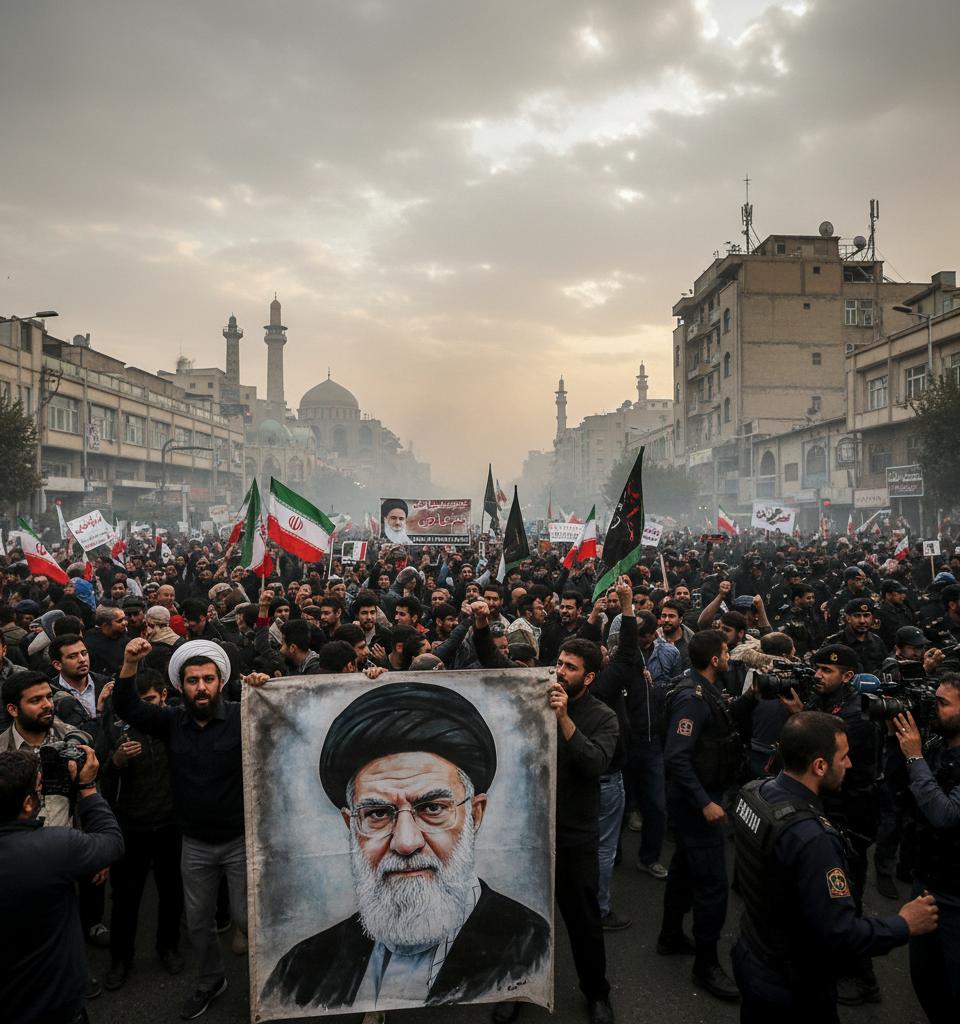
Inside Iran, the ceasefire has been met with incredulity and condemnation from the country's most conservative factions, including elements within the Islamic Revolutionary Guard Corps (IRGC) and influential ultra-conservative media outlets. These groups interpret the agreement as a capitulation to American pressure and a betrayal of revolutionary ideals. Sources close to hardline circles, speaking on condition of anonymity, express concerns that such an agreement legitimizes a dialogue that undermines Iran's long-held principle of resistance against American hegemony. Public criticism has intensified on social media platforms, with hashtags decrying the move as a sell-out. The key point of contention is not merely the ceasefire itself, but the implicit acceptance of future direct negotiations, which hardliners fear will erode Iran's geopolitical leverage and domestic ideological purity.
Regional Repercussions and Market Volatility
The ceasefire's impact extends far beyond the immediate front lines. Energy markets, typically sensitive to Middle Eastern instability, have shown a cautious reaction. While initial reports did not trigger a significant immediate price drop in crude oil — which remained around $78 per barrel for Brent crude in the days following the announcement — analysts suggest that sustained de-escalation could lead to increased stability and potentially a downward pressure on prices over the medium term. Regional powers, including Saudi Arabia and the UAE, are closely monitoring developments, aware that any shift in the U.S.-Iran dynamic could recalibrate their own security postures and foreign policies. Investment in regional infrastructure and economic projects, currently hampered by geopolitical risk, could see a modest uptick if diplomatic efforts gain traction.
Expert Analysis: A Calculated Risk for Tehran
According to Dr. Sarah Parsi, a leading expert on Iranian foreign policy at the Middle East Institute, "This ceasefire represents a calculated risk for Tehran. While domestically unpopular among hardliners, the pragmatists within the regime might view this as an opportunity to alleviate some aspects of crippling sanctions and demonstrate a willingness for strategic de-escalation, especially if it helps consolidate their proxy networks without direct confrontation." She adds, "The U.S., too, is seeking to mitigate regional flare-ups as it pivots to other global challenges. However, the deep-seated mistrust on both sides makes any long-term diplomatic breakthrough incredibly fragile." Parsi notes that the domestic backlash underscores the significant internal political constraints faced by Iran's leadership in pursuing any form of rapprochement with Washington.
The Road Ahead: Navigating Direct Talks and Domestic Opposition
The next steps are fraught with complexities. The two-week truce is widely seen as a probationary period, a test of good faith before any potential move towards formal direct talks. Achieving these talks, let alone any meaningful resolution, will require immense diplomatic skill and a willingness from both Washington and Tehran to make difficult concessions. Iran's leadership, particularly Supreme Leader Ali Khamenei, will need to navigate the vehement opposition from hardliners, who will undoubtedly intensify their rhetoric and potentially their actions to undermine any perceived softening towards the U.S. The sustainability of the ceasefire itself will depend on restraining proxies and ensuring strict adherence to its terms, a challenge given the diverse and often autonomous nature of some Iranian-backed groups. The world watches keenly to see if this fragile truce can evolve from a temporary cessation of hostilities into a genuine pathway for peace, or if hardline resistance will ultimately scuttle the nascent diplomatic effort.